

From Our Grandmothers' Hands
by Christy McKenzie
Photos by Sunny Frantz
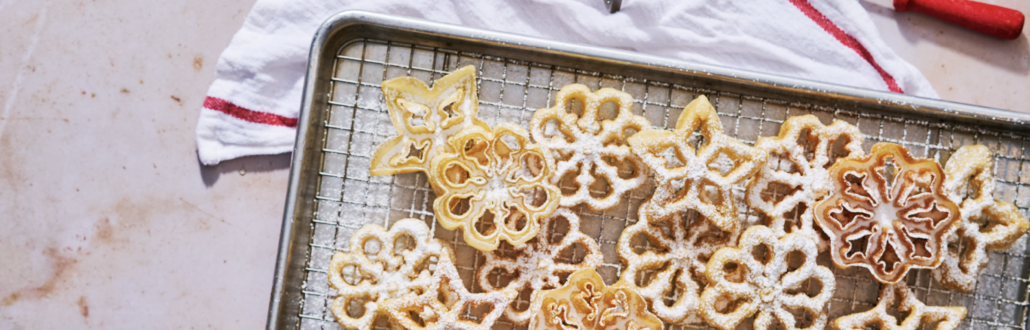
At 7 years old, I walked into my grandmother’s kitchen, high on a ridge in the Driftless region, just outside Richland Center. I scooted right in, kneeling on a chair alongside older cousins; the aroma of fried, sweet dough in the air. Her kitchen was my favorite place, with big windows looking over the land, a dining table that could accommodate a crowd, and a fieldstone fireplace with a small kitchen witch poppet hanging at the mantle, evoking our northern European heritage. The tag around the witch’s neck shared a message that the power to keep roasts from burning, pots from boiling over, and plates from dropping was somehow out of worldly control and in the magical protection she provided this place. Grandma was working over a bubbling pot, making rosettes for the holidays; airy, light fried cookies in the shape of snowflakes that are served with a dusting of sugar. Impossibly simple in theory, but technical in execution!
I hopped in to take part in this master class as she was teaching us how to tell when the oil was just right—using a thermometer, but also knowing what to look for. “Too hot and the batter will burn on the edges before it cooks through, too cool and you will have oil-soaked cookies.” I learned how to heat the rosette irons and keep them clean, how to release the dough, and how to sift the sugar gently, leaving some of the golden cookie peeking through. We gobbled up the ones that didn’t turn out quite right.
This sharing and passing down of holiday food tradition, with all the details that are rarely shared on the recipe card is the real charm — the sense memory and the connection to the people of our past. Taking time to practice these traditions in our kitchens now and adjust them to the pace and space of our modern lives helps tether us to our family history and identity. It gives us space to be present with those memories and make new ones, with a sweet reward.
I love asking friends about their own favorite food traditions and watch for that far off look, that sparkle in the eye, that comes with the delight of recalling a delicious bite or a precious time. Here, we gather together a few of these recipes and stories, providing inspiration for you in your festive kitchens, to share or reclaim your traditions and explore something new, inspired by the magic of our grandmother’s hands.

Grandma Elliott’s Rosettes
A holiday tradition! You'll need special irons for making rosettes for this one. Etsy is a great resource for vintage irons, and a quick google shopping search will yield all kinds of options.
Holiday Pound Cake Memories
from Chef Patience Clark
My favorite baking tradition is making pound cakes before Thanksgiving and Christmas dinner, a tradition that comes from my 98-year-old great-grandmother Louise Dunlap. She's been baking pound cakes since she was a young girl, and her and my Big Momma (grandmother) Melva, have always kept the tradition alive. They both still work together to prepare our family holiday dinners to this day!
I feel like I'm able to connect to my history by preparing and eating things that my ancestors created and/or thrived on. It's always so hard to pinpoint the exact history of the Black Foodways, but one thing we do know is that pound cake was an easy recipe passed down orally to people who couldn't read and write. That is where the name comes from, adding one pound of every ingredient. As time went on, portions were adjusted and leaveners were added to lighten the cake.
Now, I am a descendent that is furthering the innovation of this truly historic dessert. The tradition still shows up at almost every family gathering. And I like to add a modern spin to the pound cakes by diversifying the flavors. I've made strawberry cream pound cake, peach cobbler pound cake, sweet potato pound cake, and many other varieties.

Sweet Potato Pound Cake
A tender and delicious holiday favorite. Recipe inspired by Chef Patience Clark's memory of her Grandmother's pound cake and her reflection of how she modernizes the tradition in her home kitchen.
Recuerdos de Panetón y Chocolate Caliente
con Cynthia Garcia
Viviendo aquí en los estados unidos con mi mama y mi hijo, invitamos a los familiares más cercanos si en caso no vamos a nuestro país. Preparamos nuestro puerco al horno con un delicioso arroz arabe preparado por mami, chocolate caliente y su infaltable panetón en la mesa. Creo que no hay Peruano que deje de tener un panetón en la mesa para la cena navideña. Es una tradición que adoptamos en el transcurso de los siglos de los Italianos que ahora es parte de la costumbre en sudamérica.
Lo que sí extraño mucho es cuando mi madre hacía su chocolatada para todos los niños del barrio. Solíamos ir de compras para darle unos pequeños obsequios a cada niño. 23 de Diciembre, despiertos con el olor a chocolate y cortando los panetones y untarlos de mantequilla y escuchar los niños felices sentados en las mesas, esperando por su chocolate caliente y tajada de panetón. Una pequeña fiesta con los payasos haciéndonos divertir y al final proceder con fila para entregar los obsequios a los niños. Eso es gratitud, la que mis padres me enseñaron, retribuyendo de una manera positiva a la comunidad después de todo lo bueno que pudimos obtener durante el año.
Translation by Jenina Mella:
Living here in the United States with my mother and my son, we invite our closest family members and we share [the holiday] with them if we don’t have plans to return to our own country. We prepare our oven roasted pork with a delicious Arroz Arabe, (a typical Peruvian rice dish prepared for Christmas flavored with garlic, bacon, raisins, angel hair pasta and garnished with parsley) made by my mother, hot chocolate and with the unmissable panetón on the table. I think there is no Peruvian that doesn’t have a paneton on the table for Christmas dinner. It’s a tradition that was adopted in Peru through the course of our history with Italian immigration and that now is part of South American custom.
What I do miss very much is when my mother would make her hot chocolate for all the children from the neighborhood. We would go out shopping to give some small gifts for each child. On December 23, we would wake to the smell of hot chocolate and the cutting of the panetón, to cut them and spread them with butter and to listen to all the happy children sitting at the tables, waiting for their hot chocolate and slice of panetón. A little party with clowns entertaining, and finally making the line to give out our gifts to the children. That is gratitude, what my parents taught me, to reward the community in a positive way after all the good we were able to enjoy during the rest of the year.

Chocolate Caliente
What I do miss very much is when my mother would make her hot chocolate for all the children from the neighborhood. We would go out shopping to give some small gifts for each child. On December 23, we would wake to the smell of hot chocolate and the cutting of the panetón, to cut them and spread them with butter and to listen to all the happy children sitting at the tables, waiting for their hot chocolate and slice of panetón. A little party with clowns entertaining, and finally making the line to give out our gifts to the children. That is gratitude, what my parents taught me, to reward the community in a positive way after all the good we were able to enjoy during the rest of the year. -Cynthia Garcia
Christmas Pudding Memories
from Ronnie Hess
Adapted from an article that first appeared in The Milwaukee Journal Sentinel, December 21, 2008. Republished with permission.
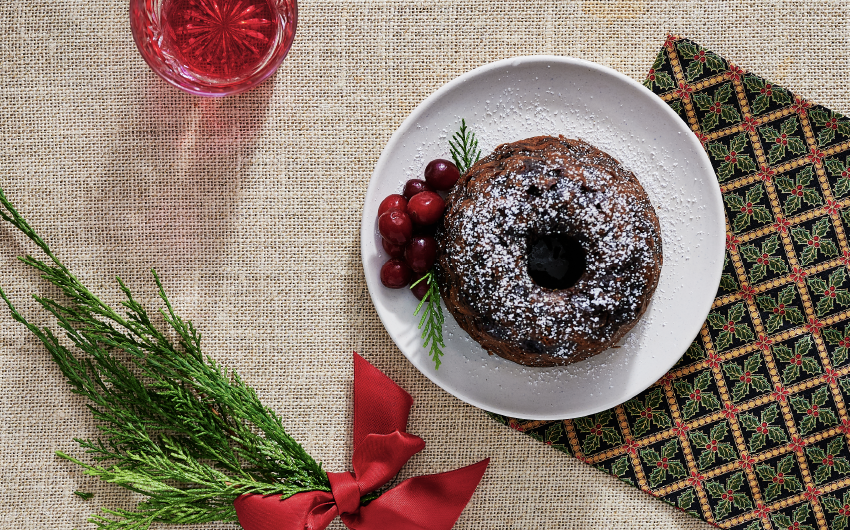
Beyond my mother’s perfect King’s-standard British English, there was food. Perhaps the most important dish was the plum pudding she steamed for hours at Christmas. She brought it to the table almost black, decorated with a sprig of holly, and flaming gently blue with brandy, the crowning dessert after a dinner of roast goose. She never mentioned how Christmas pudding became part of her family’s tradition. There was no family recipe handed down over generations, no special pudding basin taken down from the shelf and covered with cheesecloth for steaming. And my mother didn’t follow any of the British customs associated with the pudding. She never insisted on each of us stirring the dough clockwise, mimicking the sun’s movements; never stuffed it with a silver coin, also for good luck; and never served it with hard sauce. Rather, she would put out a dish of granulated or confectioners’ sugar in deference, she said, to those who had a sweeter tooth than was probably good for them.
Christmas Pudding
Beyond my mother’s perfect King’s-standard British English, there was food. Perhaps the most important dish was the plum pudding she steamed for hours at Christmas. She brought it to the table almost black, decorated with a sprig of holly, and flaming gently blue with brandy, the crowning dessert after a dinner of roast goose. -Ronnie Hess
(Adapted from a recipe by Mrs. Hawkings, in the Devon Women’s Institute Cookery Book, 2nd edition, c. 1960). First published in the Milwaukee Journal Sentinel on December 21, 2008. Republished with permission.