

Collard Greens
Cooking Tips
- Let collards sit for 10 minutes after cutting. This simple trick mysteriously increases their nutritional value.
- Add to soups along with kale, chard or spinach, such as a Portuguese Caldo Verde soup.
- Eat raw in a mixed green salad.
- Steam them and then toss with a little olive oil, garlic, onion, salt and pepper. Or spice it up with some red pepper or jalapenos.
- Collards go well with many Brazilian, Portuguese, Indian and Pakistani dishes.
Details
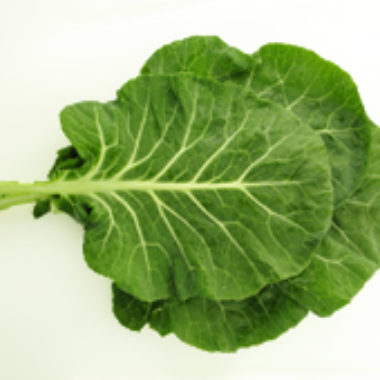
Collard greens are in the same family as cabbage and broccoli and have large, wide leaves that are very nutrient dense. Collard greens are a common dish in the Southern United States and often served with smoked or salted meats. On New Year’s Day, they’re served with black-eyed peas and cornbread as a new year’s luck meal. Look for smaller leaves that are younger and more tender. They should be dark green with no blemishes or signs of mishandling, and not wilted.
Nutrition: With their dark green color, collards are a powerhouse: a 1/2 cup serving of cooked collard greens includes an incredible 500 percent daily value of vitamin K, 150 percent DV of vitamin A, 25 percent DV vitamin C, 20 percent DV of folate and manganese. They also contain good amounts of calcium, dietary fiber, iron, and many other vitamins and minerals. They also contain omega-3 fatty acids, an important fatty acid that is deficient in most Americans’ diets, and have anti-inflammatory properties.

Edible in your mailbox
