

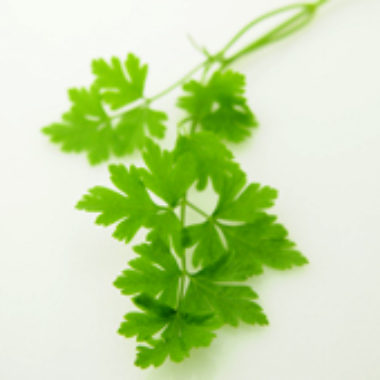
Parsley
Cooking Tips
- Dried parsley tastes more like dust than parsley, so it’s best to always use fresh.
- Since one ounce of parsley is a lot to eat in a day, add it when juicing vegetables to get its health benefits daily.
- Use in omelets, lemony sauces over fish, in rice and pasta, Tabbouleh and more.
Details
The two categories of parsley are curly-leaf and Italian flat-leaf, with various types falling into those categories. Giant Italian is a favorite Italian flat-leaf variety for its bonus of thick stems which can be used like celery to flavor soups and broths (remove when done cooking).
Parsley is easily grown in a windowsill or countertop herb garden for fresh herbs all year long. It is a biannual, but should be treated like an annual since the leaves turn bitter after it produces flowers. If purchasing, look for parsley that is fresh-looking (not limp) and a nice green color.
Nutrition: Parsley is a very nutrient dense herb. One ounce contains 60 percent daily value of vitamin C, 30 percent DV vitamin A, as well as folate, iron, and other vitamins and minerals. It has been said to have antioxidant and anti-cancer properties and be heart-healthy.
Related Recipes

Pizza with Green Garlic Pesto
Spring 2020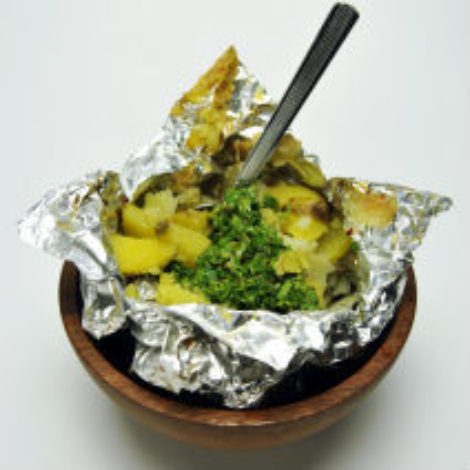
Argentinian Chimichurri
Spring 2020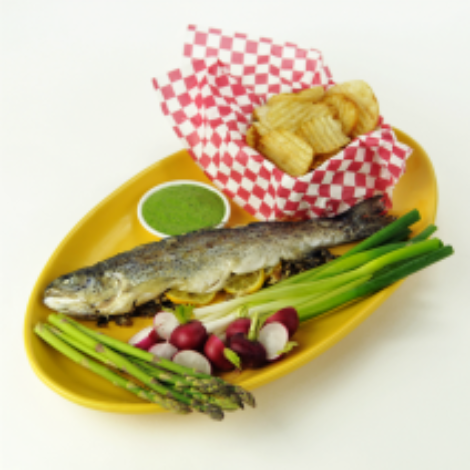
Beth Dooley’s Green Yogurt Sauce
Spring 2020More Recipes With Parsley
Related Stories
Cooking at Home: Pizza with Green Garlic Pesto
Dress Fresh: Herb-centric Dressings & Dips
Sauces of Summer
More Stories With Parsley

Edible in your mailbox
