

It may be nearly 4,000 miles away, but an artisan cheese renaissance strikingly similar to Wisconsin’s shift from commodity to specialty cheese is taking shape across the pond in England.
It may be nearly 4,000 miles away, but an artisan cheese renaissance strikingly similar to Wisconsin’s shift from commodity to specialty cheese is taking shape across the pond in England.
While European Union and American political leaders argue in trade talks over the right to use certain cheese names, such as feta or Parmesan, cheesemakers in Great Britain and Wisconsin are largely staying out of the fray by returning to their roots and rediscovering legacy cheeses or crafting original farmstead varieties with pasturegrazed milk.
For example, in Somerset and Devon Counties in southwest England, a group of Old World Cheddar cheesemakers has banded together to save “heritage” starter cultures collected from the best cheese dairies in the mid-20th century, when there were more than 400 artisan Cheddar makers in Somerset County. Today, just six cheese factories remain.
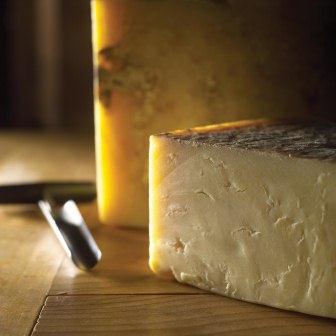
One of those cheesemakers, Jamie Montgomery in North Cadbury, England, uses a rotation of heritage starter cultures each day to avoid phage, a virus that can damage good bacteria. As a result, each day’s cheese tastes slightly different, and experts such as Bronwen Percival, cheese buyer for Neal’s Yard Dairy in London, can taste the difference. Neal’s Yard is an aging facility that partners with English farmhouse cheesemakers to market cheese at its retail shops in London and for export to America.
“Each day’s starter culture delivers its own distinctive spectrum of flavor,” says Percival. “Different customers appreciate different points on that spectrum.” For example, Neal’s Yard Dairy often chooses wheels of Montgomery’s Cheddar made with a certain starter culture that results in a “juicy and sweet” flavor profile to export to their American buyers.
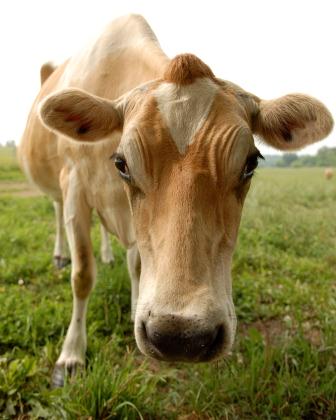 Across the pond in Green County, Wisconsin, where there were once 200 cheese factories in 585 square miles, many of the remaining 13 cheese factories often band together for distribution purposes and meet informally or at trade meetings to exchange cheesemaking ideas. One newer idea gaining traction is transitioning dairy farms from “conventional,” where cows spend their days comfortably roaming large freestall barns, to “pasture-based,” where cows spend the majority of their time on grass. The resulting milk is often coveted by cheesemakers because of its distinctive “grassy” flavor profile.
Bert Paris is one such Green County dairy farmer. He and his family milk a herd of cows near Belleville. They transitioned their farm to managed grazing in 1993. Today, his PastureLand Cooperative, a group of five dairy farmers in southwest Wisconsin, is using their grassbased milk to craft yogurt and cheeses.
“We are allowing the cows to be cows. The result is a healthier cow and a healthier farmer with less stress,” Paris says. “And the milk is truly different. We’re excited to be making some new cheeses that should be on the market later this year.”
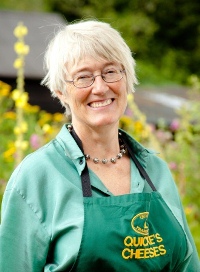 Likewise, managed grazing is also taking root in Devon County, England, where 15 years ago, cheesemaker Mary Quicke made two controversial decisions in a very conservative region. First, she developed the Quicke's cow—a mixture of Kiwi Friesian, Swedish Red and Montbeliarde—because she believed the cross-breed would be hardy, fertile, long-lived and produce the kind of milk she wanted for cheesemaking. Second, she put her cows out to pasture 10 months a year, using a method similar to the Wisconsin version of management intensive rotational grazing. Today, her freestall barns stand empty except for the harshest months of winter: January and February.
The result has been dramatic, says Quickes Dairy lead cheesemaker Malcolm Mitchell, who has made cheese at the dairy for 31 years. "We've always made good cheese, but we haven't always made good cheese consistently. The breeding and grazing practices Mary implemented changed all that."
In addition to commonalities in cheesemaking and dairy farming, Great Britain and Wisconsin have one more trait in common: the turning away from commodity cheese to making more artisan, farmstead and small-batch cheeses.
Kate Arding, a native of England who today works and lives in rural New York, has worked in the farmhouse cheese industry for 20 years, first at Neal's Yard Dairy and later consulting with several Wisconsin cheesemakers developing farmhouse recipes. In her view, America’s cheesemaking industry has far more in common with the United Kingdom than France or Italy.
“The United Kingdom very nearly lost—and in some cases did lose—its traditional farmhouse and small-scale cheesemakers and cheeses in much the same way that the United States did,” Arding says. She says the main reason was the change, starting in the 1950s, in how people bought cheese. The rise of supermarkets and the resulting desire for consistency and convenience placed cheese brokers in a very strong position that essentially dictated the market.
“In the United Kingdom, farmhouse cheesemakers were told there was no longer a demand for their cheeses. And the retailers who wanted farmstead or artisanal cheese were told those cheeses were no longer available,” Arding says.
What saved the English farmhouse cheese industry, she says, was cheesemakers banding together and working with the government to protect and restore their cheesemaking heritages.
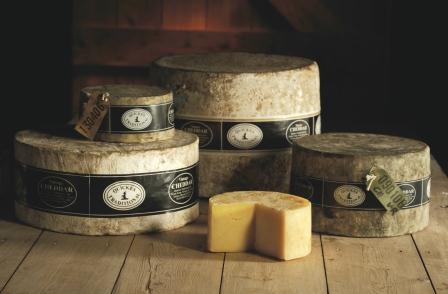
“I believe U.S. cheesemakers can learn a great deal from U.K. producers in the way they interact with government regulators,” Arding says. “Back in the early 1990s, when there was a crisis facing farmhouse cheesemakers in the U.K., the cheesemakers banded together in an effort to have a collective voice. The approach that worked best was not being combative, defensive and scared, but rather constructively targeting the right people. Over time, this changed regulators’ attitudes from being defensive to engaging in dialogue and ultimately working together. It took time, but it worked.”
While American and English cheesemakers have much to learn from and appreciate in each other, cheesemakers and experts from both countries agree that a successful cheese industry comes down to two things: good cheese with a good story. But most important, the cheese must taste good.
“I see a great need for conversation about taste and flavor,” Arding says. “At the end of the day, one can have all the marketing terminology in the world, but if a cheese doesn’t taste good, it won’t sell. As the farmstead and artisanal markets increase, so too does consumer education and the finer development of the consumer palate. Farmstead and artisanal producers have a great advantage and opportunity here to do something that it is much harder for larger scale producers to keep up with and maintain.”
More Stories by This Author

Edible in your mailbox
