

There’s a special place in our hearts for the foods we grew up with. It’s often because of the tastes and memories they evoke and the way they draw together the people we care about. Foodways are our tradition but they aren’t tradition alone. They are also what heals us and the stories that make us, and all it takes to realize this is a little bit of wonder. I can still remember the catalyst for my new relationship with a food I had known my whole life and how that helped me see it in a way I never had before.
I was sick. But my sickness wasn't physical, it was the kind that burrows itself somewhere deep in your heart, and closes the shades so no light can get in. I had gotten so used to it that I never noticed it growing until it took up so much space in me, I could barely breathe. At 20 I left Madison for Minneapolis with $400 in my pocket to be with a new boyfriend. After a few months I found out my romance was really a nightmare. I had no job, was staying at a friend's home, and had nothing but a drug addiction to get me out of bed in the morning. I remember lying in bed on one particular day, the soft glow of dusk enveloping my body. The sickness had taken my breath away, and I was finding it harder and harder to keep going. While staring out the window, one by one, I swallowed the small white, square pills prescribed to me for depression and anxiety. My plan was to take enough pills to end my life, but a quiet will to live stopped me from downing the whole bottle. At this moment, I was 21 and had been in Minneapolis for only a year.
After I spent three days in a hospital, my mother drove 6 hours to get me and take me back to live with her. She frequently cooked for me, but the food would fight its way back up my throat in protest, and I would often give up trying after just one bite. One day after another feeble attempt to eat and another meal wasted, my mom looked at me while I lay crying on the couch. It was an intense look. She looked like she was having a conversation in her head, almost as if she were praying. Suddenly after a few minutes she goes, “I know what to do.”
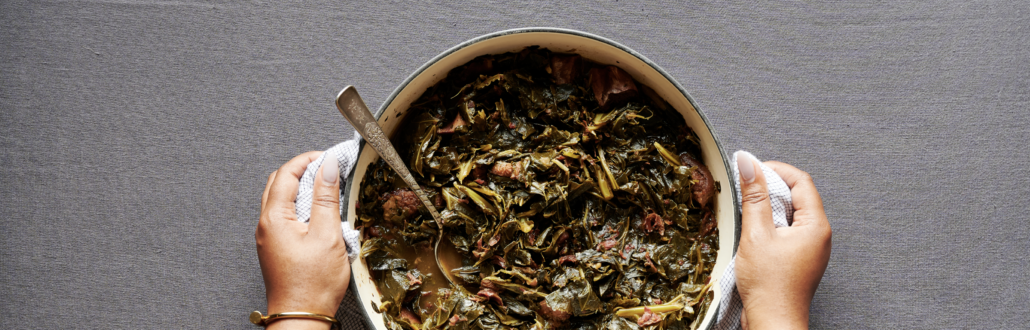
The next day she was gone by the time I woke up. At noon, I heard the rumbling of her black Mercedes in the driveway, and when she walked in the door she carried armfuls of groceries. I didn't get up to see what was in the bags, and I wouldn't have to. As she began to cook, the house filled with the familiar smell that accompanied most of our family gatherings. Smoked meat on the stove sent up signals to my dormant stomach. The rhythmic chopping and scraping of a knife against a cutting board, the sloshing of water filled to about halfway in the sink as the grime on the veggies was washed away. It reminded me of Thanksgiving, Christmas, celebrations of life (also known as funerals) and the occasional Sunday dinner. I smelled greens. Greens are a decadent dish of stewed collard greens and smoked ham hocks typically eaten in African American cuisine. While this dish can be eaten whenever it's desired, its long cooking time, about 2 hours or so, meant that my mom usually saved it for holidays. Despite this, here was my mother making me this special dish on a regular day of the week, way before any holiday or occasion. As I inhaled the buttery air and allowed nostalgia to overtake me, for the first time in months I felt hunger. It slowly snaked its way to the base of my stomach and coiled itself there until my mom finally finished cooking.
She called me to the table she had set for me. Before, I had been eating on the couch watching reruns of Living Single. But she made this meal special. The table looked immaculate. It looked like the type of spread you would create for a large family on Christmas. I was filled with awe as I scanned the glossy yams, the perfectly browned and seasoned baked chicken, and could barely contain my excitement over the large stockpot of greens sitting in front of me. I ate greens my whole life, but today for some reason I looked at this food with awe. What used to be a delicious but still regular part of my life became a hymn that sang a song of healing to the sickness burrowed within me. As I looked at the spread laid out for me, my mother filled my bowl with one scoop of greens with a generous helping of “pot likker,” the nutritious bone broth that makes greens so delicious. My first slurp caused tears to well up in my eyes. I felt like I could taste exactly what my mom's prayers were for me all those months I'd been gone in Minneapolis. I could taste how much she loved me and how much she wanted me to be better and whole. The hunger at the base of my stomach lazily suckled on that first bite before asking for more. I had three more bowls before I felt satisfied enough to stop. Each taste was like an ode to greens.
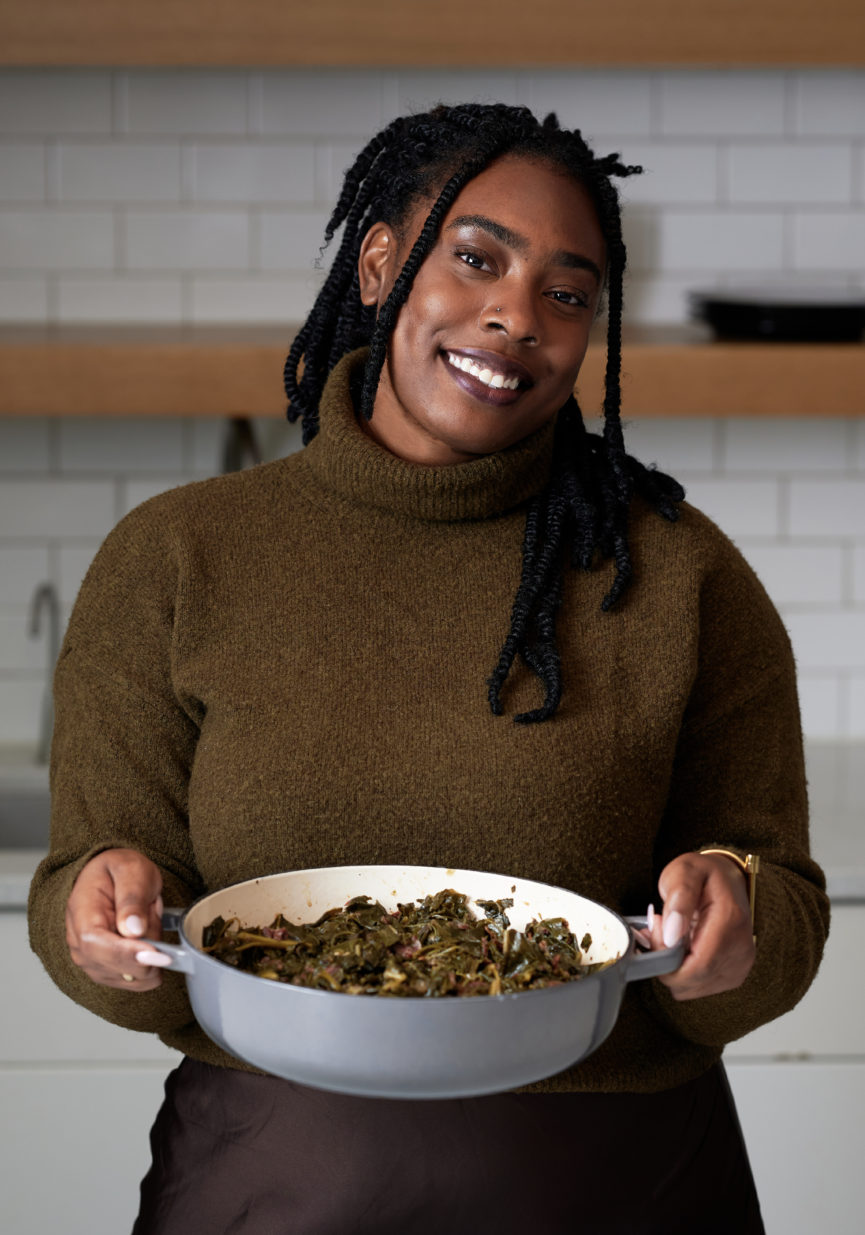
It’s easy to view the food we grew up with as simple dietary selections with no significance other than the flavor they bring to our tables. Without realizing it, we can start treating our foodways as separate from ourselves and not worth the wonder they deserve. When we lack a sense of admiration for our traditions, we can forget that caramel cakes made with our grandma’s weathered hands are just as opulent as a crème brûlée and that a bowl of collard greens can be medicine for melancholy. Next time you find yourself eating the food of your culture, take a moment to look at it with the wonder it deserves. You may discover more about it than you ever knew possible.
More Stories by This Author

Edible in your mailbox
