

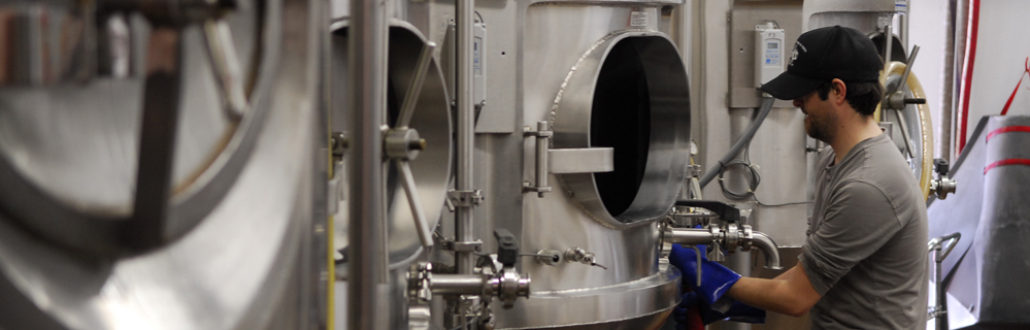
On any given summer Friday night, you’ll find several of Madison’s best brewmasters gathered at Capital Brewery’s open-air Bier Garten, knocking back a few and talking about a new flavor, the latest farmer growing hops in the area or a piece of coveted machinery.
Like a street in New York that has several great delis or a pocket in Silicon Valley with a plethora of video gaming companies, the Madison area over the past decade has become home to a strikingly good lineup of craft breweries. But unlike some businesses, they compete with an air of camaraderie. Producing such beers as New Glarus’s Spotted Cow, Lake Louie’s Warped Speed Scotch Ale and Ale Asylum’s Hopalicious, members of this brewing community challenge, learn from and support each other as they define Madison’s taste.
Collectively, they represent a local beverage movement that, like the local food movement, encourages people to support what is produced in their own area and know more about where their drink come from. The brewers in this story not only brew locally, but most sell only within Wisconsin, or even limited to one part of the state. They each have small but fiercely loyal audiences that help form this close-knit beer community. “People embrace what is theirs,” says Daniel Carey, brewmaster of New Glarus Brewing Co.
Part of their success comes from the undeniable Wisconsin state heritage, rich in beer lore with its German roots and appreciation of a good brew. But why these breweries have flourished in Madison also comes from the city’s influence and the presence of educated, curious, often offbeat customers who will pay a bit more for a truly delicious beer. Especially if that beer is not mass-produced and instead comes right from their own backyard. It’s this common calling—making beer for their hometown—that fosters the sense of respect and friendship among the brewers.
“It’s all the craft beer boys against the big boys,” says Otto Dilba of Ale Asylum. And while the craft beer boys may not be winning in terms of overall dollars, they are when it comes to bottom-line growth and perception as artisan beverage producers. Last year, craft brew sales were up seven percent, while overall beer sales were down, according to the Brewers Association in Boulder, CO. The association defines a craft brewer as “small, independent and traditional.”
Making a living while making good beer (a simple mission with a more intricate execution) fuels the friendship. “All of us here are banded together to help stop people from drinking Miller Genuine Draft and Miller Lite their whole lives,” says Pat Keller of Great Dane Pub and Brewing Company.
This is not to say Madisonians are beer snobs. That would suggest a predilection to something fancier than the best that these small brewers is producing. They’re more like beer geeks. Many of the brewers in this story started their careers homebrewing in their own garage or basement, and the Wine & Hop Shop on Madison’s west side attests to a constant interest in making beer.
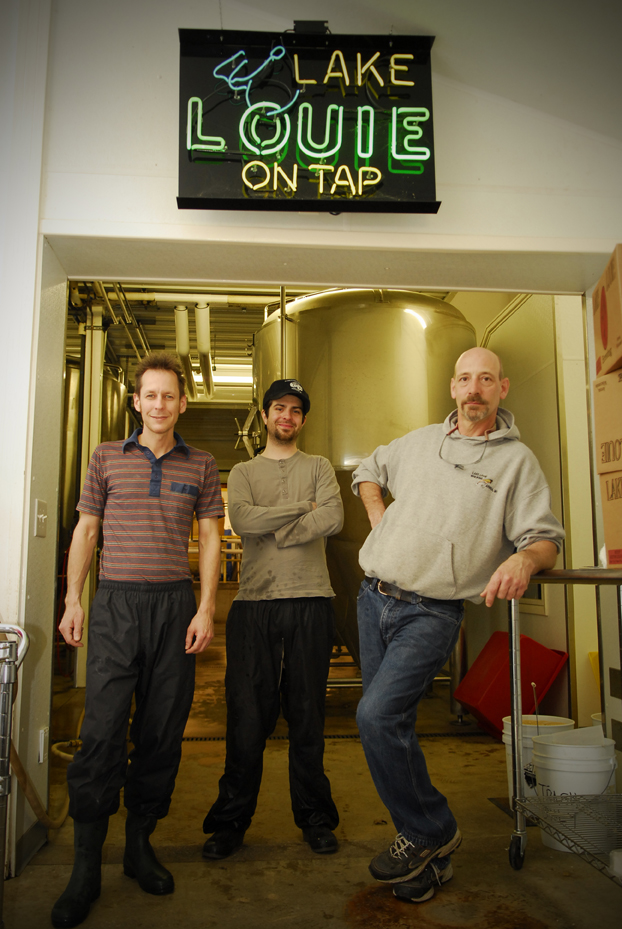
As the brewers work on their common goal, they aid each other. When Tom Porter of Lake Louie Brewing made his first batch in 1999 in the tiny town of Arena, Carey of New Glarus offered him use of his yeast lab. Some of the Great Dane guys came to help out on Porter’s first day. And when Aran Madden and Chris Staples set up Furthermore Beer in Spring Green, Porter showed them around and gave them advice. Many of them have ended up with the same welder or electrician through recommendations. Dilba of Ale Asylum says there’s not a brewer in town he couldn’t go to if he needed a bag or two of malt or hops, and he’d do the same for them. Like people in other businesses who do the same thing and therefore have the same problems and challenges as each other, they have found invaluable advisors among their competitors. Many of their internal challenges are among their common discussions: how to distribute the beer, coming up with the next great recipe, how to manage people when they don’t want to be managed, how to keep the startup vibe while getting bigger. And while they all bask in the fun of their job, they are also the ones who get it when Porter talks about the challenge of strapping seatbelts around kegs in his Geo Prizm for a big delivery day or when Nelson says that making beer is “cool but 90 percent janitorial.”
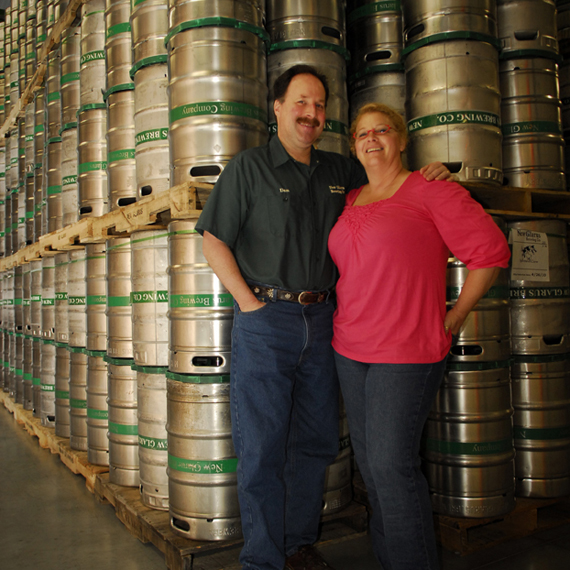
Vital to their communal and individual success is that they genuinely love beer, the art and the science of it, and have made a life of it that often includes their family. New Glarus is run by both Daniel and his wife Deborah Carey, who often takes on public roles for the company. Porter’s 80-year-old parents still help fold the beer boxes at Lake Louie, and his wife, though she has a regular full-time job, does much of the paperwork and accounting. They tried to run the business together but it didn’t work out, though it spawned the “Kiss The Lips” beer name, from a song that has lyrics about the difficulty of kissing the lips at night that yell at you all day long. Nelson says he “baptized” his one-month old grandson at the Bier Garten last year with a few drops of Supper Club beer on his lips.
And because brewing beer is life and work and play all together, it is natural that many of the brewers have become friends. Sometimes they even brew together. About seven years ago, brewers at Capital, Great Dane and Lake Louie decided to make a beer together, which involved heating rocks and some other strange science. Kirby Nelson, the gregarious brewmaster at Capital with the long white ponytail, still keeps in his office photos of that day, where they stood around a very strange brew looking like beer warlocks. Nelson says they called it Frankenstone and remembers it to be among the best five beers he’s ever tasted in his life. They tried it again a year later, but something went very wrong—it blew up. Nelson remembers that Keller disappeared and thought he was dead for sure. Keller reappeared through the smoke, laughing. There were a few real burns and a botched batch. They haven’t tried brewing Frankenstone since.
Despite the occasional explosive setback, local collaborative beermaking is still happening. Supper Club, a classic lager, was born in April this year out of two of the breweries. Nelson and Rob LoBreglio of Great Dane are buddies—they hunt for deer and morel mushrooms together—and they are self-described “co-conspirators” on Supper Club, a beer meant to have “regional soul,” according to Nelson. Growing up in Racine, Nelson remembers going to supper clubs around the state since he was a kid. To him, the club is a place where you hang out, have a good fish fry or Prime Rib, and drink a beer like this one. The beer was originally created to in part benefit the nonprofit Boundless Playgrounds, and has become one of Capital’s better selling brews, though Nelson says he still wants to tweak it slightly. Supper Club’s tagline is “A Wisconsin State of Mind.”
While they are friendly and in many cases real friends, true competition does exist among the brewers. They want each other to succeed next to each other on the tap and the liquor store shelf, but they also have a gamesman-like attitude toward introducing new flavors and keeping the respect of the customers. Porter says he smiled when Nelson visited and asked for a Coon Rock Cream Ale, a beer that is lighter and “can’t hide any sins,” to really see how good his beermaking skills were. Selling in Wisconsin, “you better have your chops up,” Porter says.
The brewmasters at the newer craft breweries around the state point to the success of the earlier guys paving their way by introducing more complex tastes and lessening the six-pack sticker shock of craft brews. Specifically, New Glarus’s Spotted Cow, which still amounts to about half of the brewery’s yearly sales, is brought up again and again as the beer that opened that door with its slightly unusual yet not extreme taste and cow name and label that gives an instant sense of belonging inWisconsin. Nelson says every now and then someone talks about a “cow-killer,” the beer that would overshadow Spotted Cow. He says he doesn’t think that way, that happily, there is room in this town for more than one good cow-like beer.
While Madden says the more established guys have been gracious, he feels like Furthermore has a bit more to prove because they’re still new in town, and though located in Spring Green, contract brew at another location. Furthermore is developing a reputation for unusual flavor combinations including ingredients such as black pepper, and is also setting itself apart by trying a different distribution model. Madden, from Pittsburgh, is working on selling there and in Philadelphia. At the same time, Furthermore pays homage to its local base by brewing Furthermore Proper in honor of Spring Green’s American Player’s Theater, where Madden’s sister Colleen Madden is a longtime company performer.
One of the reasons these craft brews seem so special is that, for the most part, they are still hard to find outside the area, yet people who know beer around the country know many of these local brewers. You’ll hear stories of someone in Minnesota saving a Lake Louie Mr. Mephisto’s Imperial Stout like a bottle of fine wine, or a visitor from California carefully wrapping bottles of Capital Dark like small treasures in a suitcase. And there are the awards, which although everyone will say are not so important, everyone would also like to win. A few highlights: Grumpy Troll in Mt. Horeb won a silver medal for its Rye Bob at the 2010 Brewers Association World Beer Cup, the largest commercial beer competition in the world. Capital was named the number one brewery in America in the 1998 Beverage Testing Institute’s World Beer Championship. And in 2006, Dan Carey was named best brewmaster and New Glarus best brewery at the Great American Beer Festival.
But what really matters to Wisconsinites is whether the beer is good. “There’s a better educated beer drinking public here. They’ll tell you if you’re on or you’re off,” says Porter about his audience. “You can’t sell crap to people in the Midwest.” Dilba of Ale Asylum also credits locals with an unusual “curiosity” that makes them want to try different things, including different craft beers.
Barriques, a Madison purveyor of wine and beer, counts local beers as best sellers in their three locations, according to co-owner MattWeygandt. “I wish our business was about keeping up with demand,” he says of those brewers that are selling every drop they make. He thinks part of the reason for success is that Madison thumbs its nose at establishment brewers, just as it prefers mom-and-pop businesses to big corporations. What Weygandt likes is when people like Tom Porter or Aran Madden personally come in and tell him and his co-workers in detail about the newest offering, so they can in turn be more helpful to the customer in sales and beer-tasting evenings they hold.
Another fairly new reason for these guys to band together is to fight laws and regulations that could impede their work. A group of Wisconsin craft brewers have formed a caucus, and an April party brought about 20 brewers and a handful of lawmakers to the pool hall at Great Dane downtown to hash out the issues. “We want to control our own destiny,” says Nelson. “We’ve got to have a voice.” And it’s clear they are stronger together than apart.
“As Patrick Henry said, ‘We must all hang together, or assuredly, we shall all hang separately,’“ says Carey of New Glarus.
What’s next for these brewers is—and this is amazingly possible—to get even more local than they are now. Many are using some ingredients from the region, but there is a keen interest from the breweries to buy more Wisconsin ingredients (if they’re good enough), and in turn offer uber-local beer. Capital now uses wheat from Washington Island in its Island Wheat beer, and Furthermore puts organic red beets from Shooting Star Farms in Mineral Point in its Thermo Refur and apple cider from Kickapoo Orchards in Fallen Apple, for example. But depending on who you talk to, local hops is either the next great thing or the next “Hopmania” (the latest incarnation of “tulipmania,” a period in the 1600s when a speculative bubble around tulip bulbs emerged in Holland). Wisconsin was a big grower of hops in the late 1800s, and there is hope that hops can reign again here, though skeptics say hops are harder to grow than it seems.
It’s the ultimate local beer cycle, where the ingredients, the maker and the drinker are all within driving distance. And maybe they’ll all hang out together at the Bier Garten.
Lake Louie Mr. Mephisto's Imperial Stout adds body to this chicken taco recipe, making a tasty link between Mexico and small-town Arena, Wisconsin.
More Stories by This Author

Edible in your mailbox
