

Capturing the Best of the Season
To die-hard Wisconsin locavores, the question is, “How do we get through the winter?” The joy of eating seasonally fresh during our Wisconsin harvest season winds down to a dark winter of want. Produce from 2,000 miles and beyond arrives, sometimes looking like a jet lagged tourist. If only it was possible to preserve those gems of summer in a jar.
Happily, it is. Several preservation methods allow you to maintain a locavore “perfect ten” during winter and on into the first drips of spring thaw.
Evolving Food Preservation
The evolution of food preservation recipes and methods are driven by technology, safety and quality. For those who remember their mother’s old Ball Blue Book, “Water canning was the only option available,” says Dr. Barbara Ingham, food science professor-extension specialist at the University of Wisconsin, Madison. “Technology drives changes,” she states. “With the advent of the pressure canner we’ve seen changes in the process. We understand more about the process, and can adjust so that quality is higher.”
She says new acid tolerant organisms emerging within the past 20 years have necessitated changes in the preservation processes, and our expectations are greater because of an expanded marketplace. “When I was growing up we never ate salsa,” says Dr. Ingham. Now she says it’s a favorite canning item.
If you decide to preserve, make sure to use a recipe that has been published by a reputable source. Be suspicious of any recipe published prior to 1994, and if you can’t find an updated version of a family favorite, check for guidance from your local UW Extension Office.
Another helpful tip: Pass by those big boxes of produce at the farmers market labeled “canning special.” Vegetables and fruits should be at (or just before) the peak of freshness. Meat should be as lean as possible. Preservation classes like the UW Extension Master Food Preserver taught by Dr. Ingham provide a solid background and expand upon the do’s and don’ts for those who want to preserve beyond the occasional batch of jelly or pickles. One can also learn more at “canning kitchens,” where groups of friends gather in one kitchen for a preservation marathon—an old tradition that’s making a comeback.
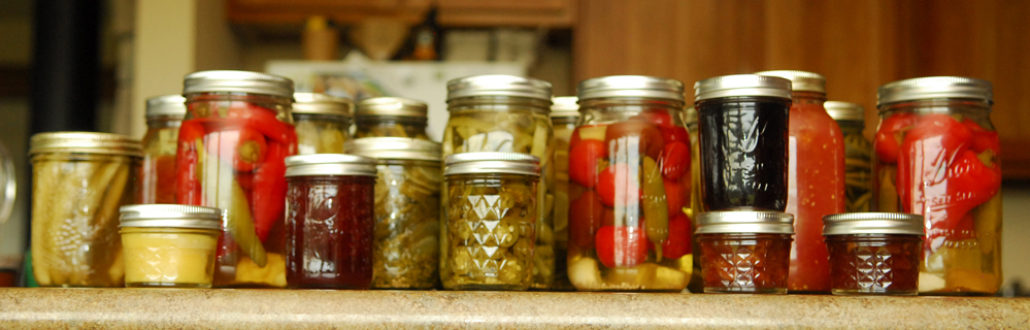
Canning
The standard two-piece vacuum seal system consists of a single-use flat metal lid with a reusable metal screw band. Don’t use Grandma’s old porcelain-lined zinc cap or others that use the rubber rings. Do use Grandma’s beautiful old canning jars, providing a close inspection (particularly around the sealing surface) reveals no chips or cracks.
There are two canning methods: Fruit jams, jellies, conserves and tomato products do best in a boiling water canner, while a pressure canner is used for vegetables and meats requiring higher heat than fruits. A pressure canner is not a pressure cooker. The canner is larger and operates at a different pressure than the cooker. Used and maintained correctly, pressure canners are extremely safe to use. Both water and pressure canning methods provide “shelf safe” storage of fruits, vegetables and meats.
Freezing is Often Best
“One of the best ways to retain nutrients is freezing,” says Dr. Ingham. Process fruits and vegetables the day that they’re harvested. While it’s counterintuitive, you’ll enjoy fresher-tasting results by blanching produce in boiling water or steam before freezing. This stops the growth of microorganisms and the enzymatic process that destroys nutrients and changes the color, flavor and texture of food.
Use rigid plastic containers, bags or canning jars as long as they’re meant for freezing. Remember, any product is vulnerable to freezer burn unless properly stored.
Drying
High sugar and acid content make fruits an excellent candidate for sun drying. A simple rack made of screen or wooden dowels will do. Make sure the screen is safe for contact with food, avoiding “hardware cloth” containing zinc or cadmium.
A home dehydrator does an excellent job of drying fruits, herbs and vegetables. For those looking to make your own meat jerky, Dr. Ingham advises to avoid models called “jerky makers.” She suggests that after drying, place the jerky in a 275 degree oven for ten minutes. “That will be your insurance policy,” she notes.
Pickling and Fermenting
Pickle not just cucumbers, but peppers, onions and mushrooms, along with fruits such as cantaloupe, crab apples and watermelon rind. Also called crock pickles, fermented pickles are made by curing cucumbers or other vegetables in a salt brine for several weeks. If you’re a cabbage fan, sauerkraut is a naturally fermented product.
For Further Exploration
Whether it’s “cold and dry” or “cold and moist” you can store root vegetables, apples and squash in cold storage through winter and beyond. Salt, smoke and heat can be used to cure fish, pork and other meats. Take the mystery out of sausage by making your own.
It's All Good
Recipe creativity is not encouraged. Fresh is best. And for the dedicated locavore, preserving continues the joy of a successful harvest while the fertile fields of summer lie buried beneath blowing snow and creeping ice.
HELPFUL “HOW TO” GUIDES AND MORE INFORMATION:
Dr. Barbara Ingham and the UW-Madison Food Safety and Health website.
National Center for Home Canning, an excellent resource for recipes.
Ball, one of the oldest and most well-known suppliers of canning products.
More Stories by This Author

Edible in your mailbox
