


What does it mean to be a multigenerational farmer? There’s a privilege, of course, that comes with that designation. Many multigenerational farmers inherit their land rather than purchase it. They often have the benefit of lived experience and knowledge passed down over time, as well as established connections and revenue streams. And it’s not just an advantage for the newest generation. As a farmer ages, it’s much easier to relax into retirement when there are children to hand things off to.
But there’s also a responsibility that comes with being a multigenerational farmer, a responsibility rooted in the land. These farmers are links in a chain between the past and present. They’re stewards of the fields and the legacies of their parents, grandparents and great-grandparents—and they’re also stewards for future generations.
Connecting the Past, Present and Future
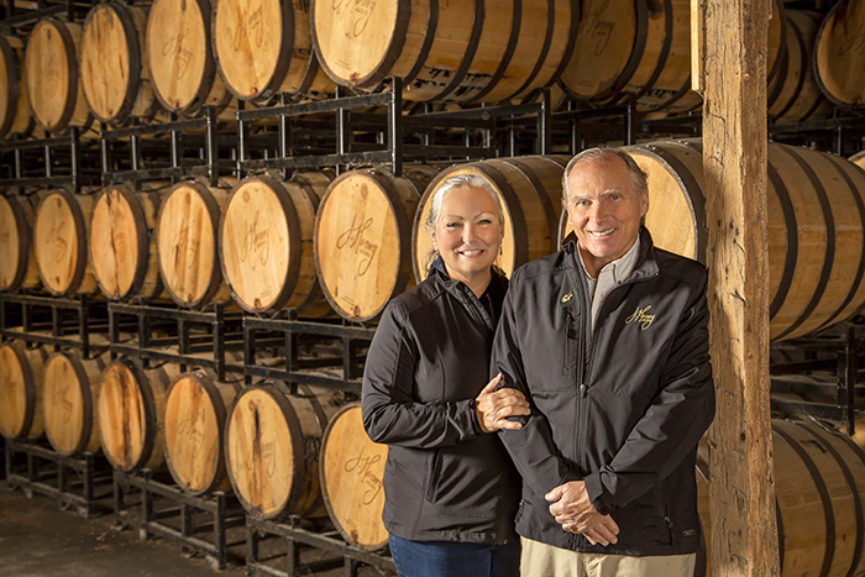
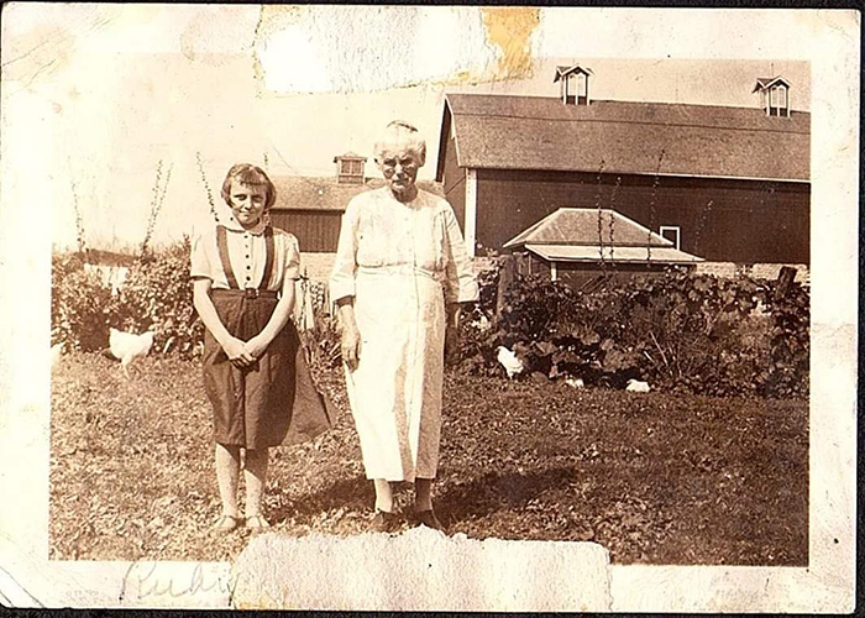
Joe Henry didn’t plan to take over his family farm. Growing up on his father’s seed-corn growing operation in the Village of Dane in the 1960s and ’70s, he learned how to farm, but he never imagined himself a farmer. He went away to college, majoring in finance. But when Henry inherited the farm in the late ’70s and the job market wasn’t promising, he decided to give farming a try.
The timing wasn’t great. Within a few years, the farm crisis of the '80s hit, and Henry was faced with a choice: sell the land where his family had been living and farming since the 1940s, or dig deep and do what it took to make the farm profitable again.
He chose the latter path, and through hard work, perseverance and imagination the farm once again became
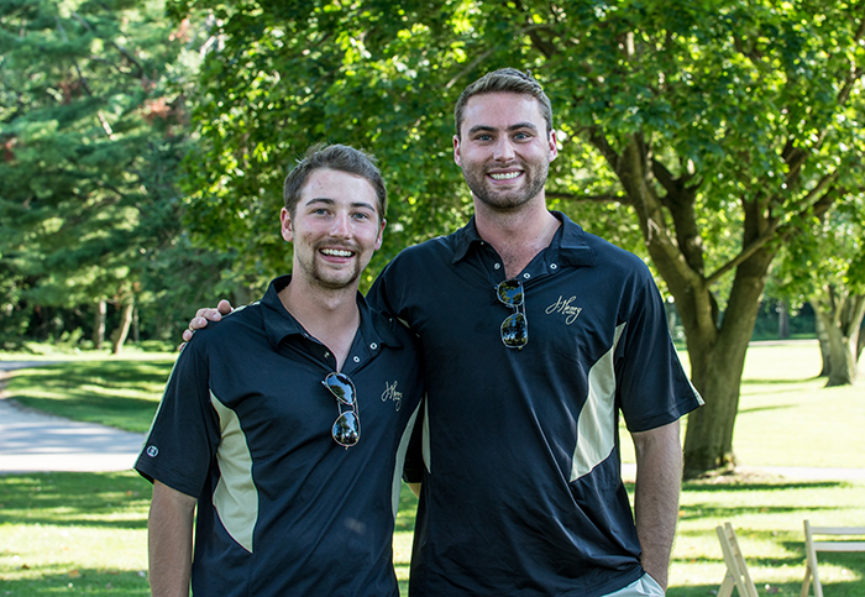
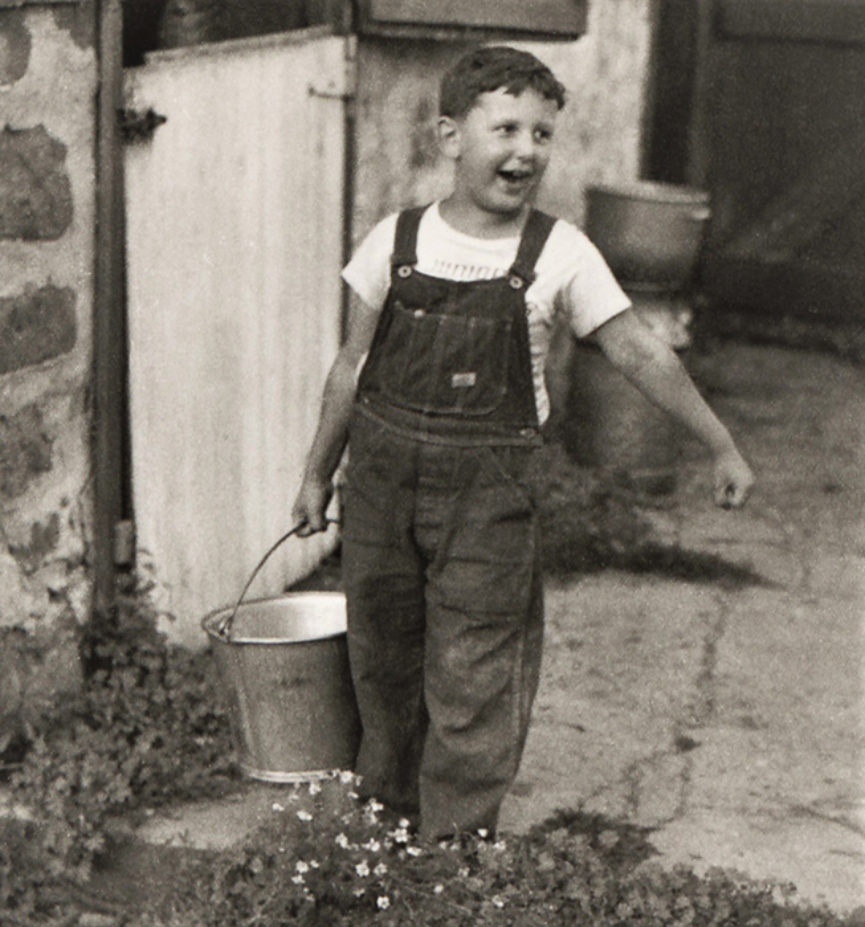
successful. He married in 1985 and together with his wife, Liz, he made the farm a place where their children, Joe Z. and Jack could enjoy a childhood much like their father’s—helping with the chores, cutting their own Christmas trees, playing with the farm dogs and living life to the fullest.
Fast-forward to 2008. Growing seed corn was still the farm’s mainstay, but Henry realized that he needed to diversify, both to ensure the farm would never again be in the position it had been in the ’80s and to create a more exciting facet to the business that might draw his sons back to farming. (Because, like their father before them, neither Joe Z. nor Jack imagined themselves as farmers.) After some thought and a trip to Kentucky, Henry settled on a product that American grain farmers have been crafting to generate extra income since the eighteenth century: distilled grains, specifically bourbon.
And so, J. Henry & Sons bourbon was born.
But this isn’t just any whiskey. It’s not just the distilled essence of corn, wheat and rye. It’s more complex than
that. In each bottle, there’s a blending of the past with the present and an intention for the future. To fully understand that we have to go back in time again, to 1946, when Henry’s dad Jerry first started farming in Dane.
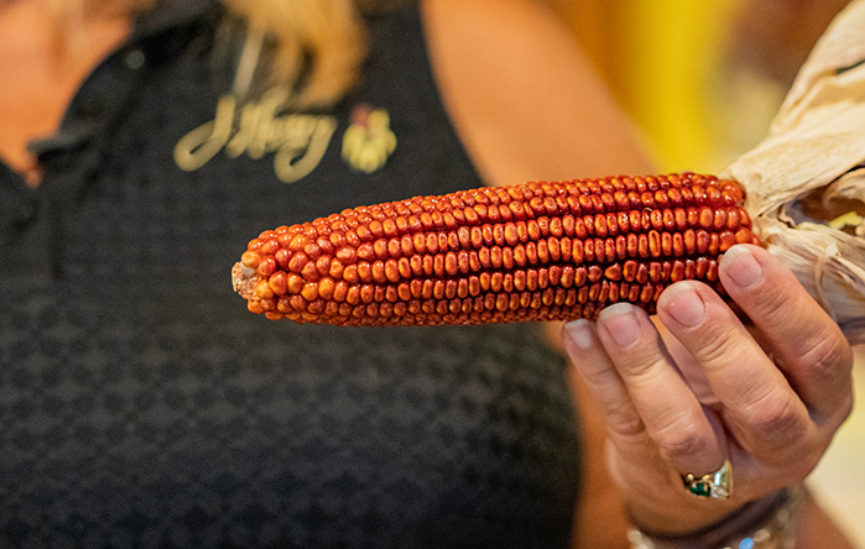
From the 1940s through the ’60s, Jerry grew a unique type of hybridized red corn that was developed by breeders at UW–Madison. This corn hybrid, now considered an heirloom, has long since been abandoned by modern farmers. The quality of the red corn was superior, but the stalks were weak, making it inefficient to harvest, and the starch-to-oil ratio made it much slower to dry than more modern varieties. In fact, by 2008 when Henry decided to try his hand at distilling, the red corn and all its seed stock had completely disappeared. It didn’t exist. But what did exist were the parent inbreds the breeders had used to
create the red corn. Those were locked away in the UW–Madison seed vault.
Henry remembered the red corn from when he was a boy, and with the decision to distill bourbon came the decision to reach into his past and revive the heirloom grain. This meant repropagating or redeveloping the hybrid corn from the original parent inbreds, then growing it in larger and larger quantities until enough seed existed to maintain a steady supply for making bourbon. A similar process was used for the wheat and rye. Even now, the Henrys must save their own seed year after year.
The grains in the Henry’s bourbon connect Joe and his sons to their family’s past, but it doesn’t end there. Over the last five years, they worked with corn breeders to improve the heirloom by strengthening the plant’s stalks. This effort used modern techniques to make the corn more financially sustainable to grow and harvest, without compromising the quality or nature of the grain.
The Henrys are also prioritizing sustainable farming techniques such as crop rotation, the use of cover crops, and erosion control in order to keep the land healthy for future generations. They’re honoring and preserving their past, while drawing on the technologies of the present to create a business that will flourish into the future.
Pivoting Forward
While Michael Dolan’s college classmates were saying they would never go back to the family farm, he was considering abandoning his chemistry studies to become the seventh generation to work his family’s Spring Green farm. Dolan did stay and earn his degree, but shortly after graduation he took his place at Seven Seeds Farm, a highly diversified pastured livestock and cropping operation.
Dolan’s family has farmed their property for more than 150 years. It originally began as a dairy farm, then during Dolan’s childhood his grandmother rented out the land for corn, bean and hay rotation—mono-crops planted and harvested annually. That all changed when Dolan’s parents, Greg and Lea, bought the land with a dream of growing their own food.
“My parents had a mission to raise their own food back in 2007,” says Dolan. “We just started with a little herd of 14 beef cows and a couple pigs. Now we’re feeding a whole community!”
Dolan, along with his wife, Chloe, have built upon his parents’ dream and are now turning an even greater focus towards the health of the land—using methods like intensive, rotational grazing and silvopasture (planting trees within the pasture) to reduce erosion and sequester carbon.
These practices are doing more than just protecting the land, they are also yielding some of the highest quality, certified organic beef, pork and chicken, used by some of southern Wisconsin’s top chefs and available through an online and on-site store in Spring Green.
Dolan’s brother has now joined the farm full-time after graduating from Iowa State University, helping Dolan to adjust, pivot and innovate into the future. Most recently, they planted 12,000 fruit and nut trees, as well as four acres of hazelnuts throughout the farm.
And while it feels like they are just getting started, Dolan and his family are aware of the diligent financial planning needed to ensure the eighth generation can carry on the family business.
“For a lot of farmers, their retirement is the farm itself—it’s their equipment, it’s their land,” says Dolan. “If we can create a system in which we’re able to pass down the farm with minimal debt service to our kids, that’s always our goal. It’s made it seven generations so far, so we don’t want to be the generation to break that.”

Leaving a Legacy
Earl Doudlah passed on much more than just the family farm to son Mark. He shared a mindset to always “think outside of the box.” This philosophy spurred Mark, a sixth generation farmer, to reinvent how they grew food at Doudlah Farms.
For generations, the Doudlah family had been conventional farmers—using chemical fertilizers to promote plant growth and pesticides to get rid of weeds and pests. When Mark began working on the 1,650-acre family farm in Evansville, he too learned how to grow sunflowers, corn and beans with pesticides.
That all changed when Earl was diagnosed in 2008 with mantle cell lymphoma, a form of cancer with higher rates among conventional farmers. Doctors said it was likely caused by years of exposure to pesticides, herbicides, fungicides and degreasers. Earl lost his fight with cancer in 2011. It was a loss that left Mark without his hero and mentor but also propelled him to make a change that would profoundly impact the future of Doudlah Farms.
“I knew I had to make changes and these changes had to be now,” says Doudlah. He dedicated 40 acres of the family farm to trial farming organically. It didn’t go well. All of the experience and knowledge passed down through the generations hadn’t prepared Doudlah for challenges like weed management and caring for soil health.
Doudlah pushed through the early struggles, embracing his father’s mantra to “think outside of the box.” He threw himself into learning how to turn the conventional family farm into one embracing biodynamic, organic and regenerative growing methods. Doudlah was seeking a better future for not only his family and farm but the community at large.
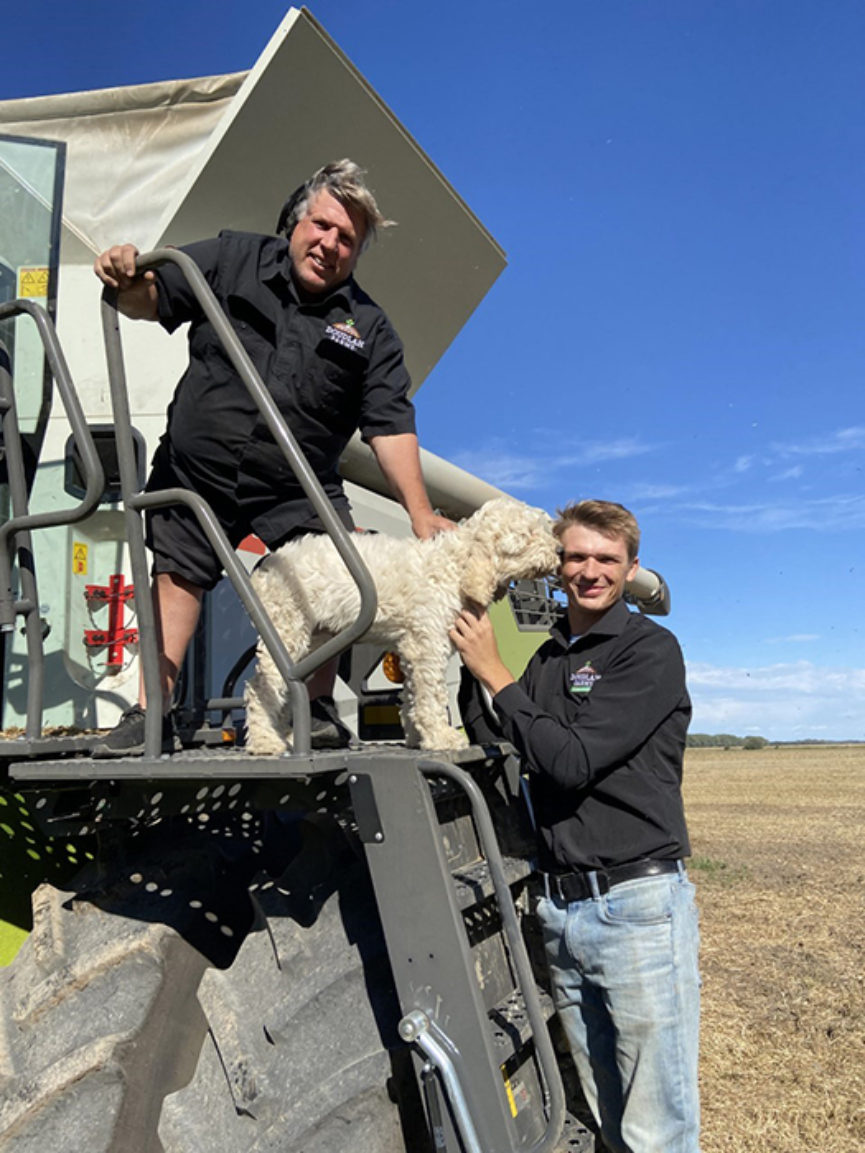
Mark, along with wife Lucy, son Jason, and daughter Emily, now grows certified organic beans, seeds and grains with their products available across the Midwest and East Coast. Jason plans to study agriculture and engineering in college, preparing himself to be the seventh generation to carry on the Doudlah Farm legacy—a
legacy now steeped in concern and care for the health of the environment and people.

Edible in your mailbox
