



An innovative program of the Wisconsin Department of Corrections takes a different approach to working with juvenile offenders.
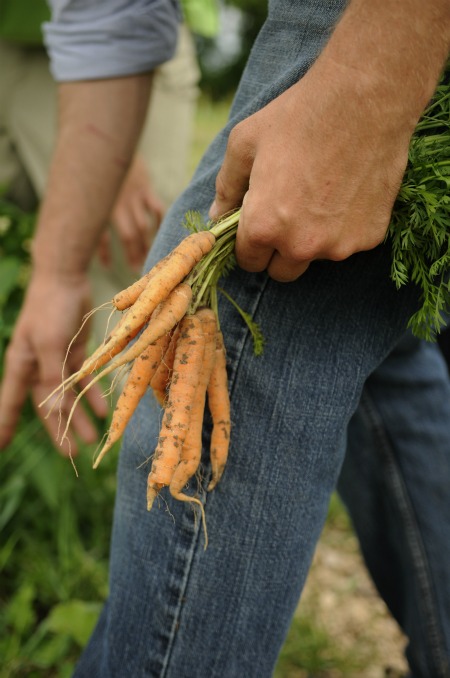
IT’S A STEAMY SUMMER DAY at the Grow Academy market garden, and the vegetables are vibrant. Peas hang heavy on the vine. The early carrots pull up small but taste sweet. A few tomato plants show the early promise of a sun-ripened blush; it won’t be long before they are ready to sell at farmers markets in the Madison area, a short drive from the farm.
In many ways, this one-acre garden plot is typical of the well-tended micro-farms that supply organic produce to farmers markets here in Wisconsin and across the country. But there’s one big difference: the growers managing these vegetables are juvenile offenders who have fallen afoul of the law.
The teen-gardeners at Grow Academy have committed crimes ranging from battery to armed robbery—offenses that would typically result in strict punishment, like placement in a secure setting. Grow Academy, which is run by Wisconsin’s Department of Corrections and opened in June 2014, takes a different approach.
“Research shows that simply punishing kids does not work,” says Nicki Laudolff, a former youth counselor and juvenile probation and parole agent who today serves as Grow Academy’s director. Instead, Laudolff, her staff, and the Grow Academy participants are all engaged in a kind of agricultural experiment. If at-risk teens are given positive support in planting and tending a garden, can they reap not only vegetables but also the practical and social skills they need to thrive in the world outside?
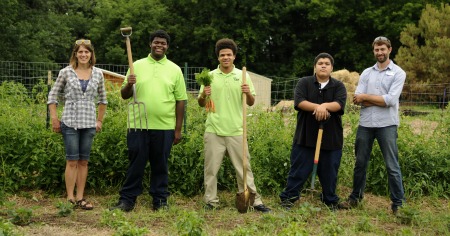
It’s an experiment that’s long overdue, according to Kate Elvidge, the regional chief for Wisconsin’s Northwest Division of Juvenile Corrections. “If you look at the history of programs in juvenile corrections, sometimes what we’ve done just doesn’t work,” she says. “Well, so why don’t we try something new?”
Days at Grow Academy are full. The kids sleep in the main room of the facility on a row of bunk beds, neatly made up with homemade quilts (a gift from women imprisoned at the Taycheedah Correctional Institution). Nearby, a typical steel-sided barn serves as a farm workshop as well as a classroom where participants spend about five hours each day in formal instruction. The rest of their time is split between group and individual therapy, on-the-job training at area businesses and organizations, and—the heart of the program—tending both the market gardens and individual ten-by-ten-foot plots that they plan and grow by themselves.

The gardens serve as a guiding core of the program, says Jonathan Davis, the special education teacher and master gardener who leads the classroom at Grow Academy. One of his assignments, for instance, is designing the students’ individual garden plots. “They learn a lot about gardening but also things like drawing to scale and math,” he says. Other classroom activities include such environment-related tasks as measuring and charting average daily temperatures. “When they first get here, they’re confused and they don’t want to do it,” he says. “But then they get interested—and they’re basically learning how to record, graph and analyze data.”
In the garden itself, instruction comes from personnel from the University of Wisconsin Extension Service and Community GroundWorks, a Madison nonprofit that runs a community garden and CSA neighboring the Mendota Mental Health Institute campus.
The fact that it is a working market garden—the teens sell their produce at the Department of Corrections, Dane County Human Services and the McFarland Farmers Market and profits are set aside for rewards like trips to the movie theater— gives a sense of urgency and relevancy to the work. “You have to be very engaged and very hands-on,” says Laudolff. “There’s just a whole lot of work to be done. After all, we’re running a business here.”
The work extends off the garden plot, as well. Madison Originals, a non-profit trade organization for independent restaurants in the region, helps to bring chefs onto the campus. Two restaurants in particular, Nitty Gritty and Roman Candle have been instrumental in providing on-campus demonstrations and restaurant internships for the students. One student rises at 2:30 a.m. each morning to go off-campus to the FEED Kitchen bakery where he’s employed and learning the trade.

For Sterling, a slight, grey-eyed 15-year-old who recently graduated from the program, the backlog of construction projects on the farm were what first sparked his interest. In particular, he discovered in the corner of the shop a failed experiment in aquaponics—a system that uses live fish to water and fertilize a garden bed. “It was broken and not working right,” says Jennica Skoug, the youth farm manager at Community GroundWorks. “I told him, ‘Sterling, I just don’t have time to fix it.’ But I showed him how it was supposed to work.” With a little ingenuity, some scrap lumber, and an electric drill, Sterling got the system functioning again.
Today, Sterling has moved on from Grow Academy, but he’s still using the skills he learned there. As one of a handful of interns at Community GroundWorks, he gives tours of the farm to Madison schoolchildren. “Before I went to Grow Academy, I knew absolutely nothing about plants,” he says. “Now I have a job working in a garden, and that’s something to enjoy.” It’s not the farming, per se, that he likes; he doesn’t plan to go into an agriculture career. Rather, the internship has given him a new interest: “I really enjoy working with kids,” he says.
Success stories like Sterling’s are due in part to the unique educational approach at Grow Academy. Equally important, according to Laudolff, is a philosophy of encouraging positive behavior instead of punishing infractions.
“These kids have been punished their whole lives, only gaining attention from their community for the negative things they do,” she explains. “We want to help them make better choices for themselves, not punish them for the poor choices in their past.”

To that end, the staff emphasizes rewarding good behavior as well as building positive relationships with the teens. For instance, staff can reward participants with “Grow Bucks,” which can be redeemed for privileges like TV time, for something as seemingly minor as a “please” or “thank-you.” If you reward positive behavior, Laudolff says, “they will do those positive things more, and eventually the negative behaviors tend to be expressed less and less.”
This approach is a far cry from the “zero-tolerance” ethic of the 1980s and 1990s, and it’s quietly changing the way we treat young offenders. For instance, a 2010 study commissioned by the Urban Institute surveyed professionals who work in various roles in juvenile justice and found that “overwhelmingly” they identified a profound need for treatment and “wrap-around” services like jobs training and reentry planning—exactly the kinds of programming offered at Grow Academy.
Behavior doesn’t change overnight; there’s still plenty of sass and even aggression here. But the emotional and practical skills and lasting relationships that students gain in their 120 days in the program serve the needs of at-risk teens more effectively than get-tough programs that treat juvenile offenders as adults. “This is the type of program that will change kids’ lives,” Laudolff says. “I am proud to be a part of that.”
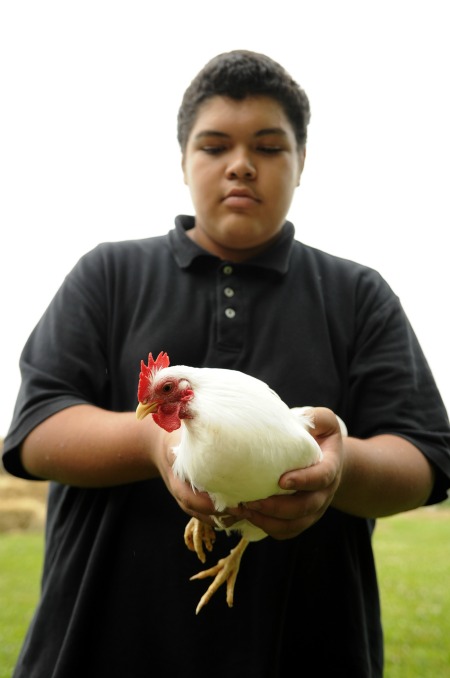
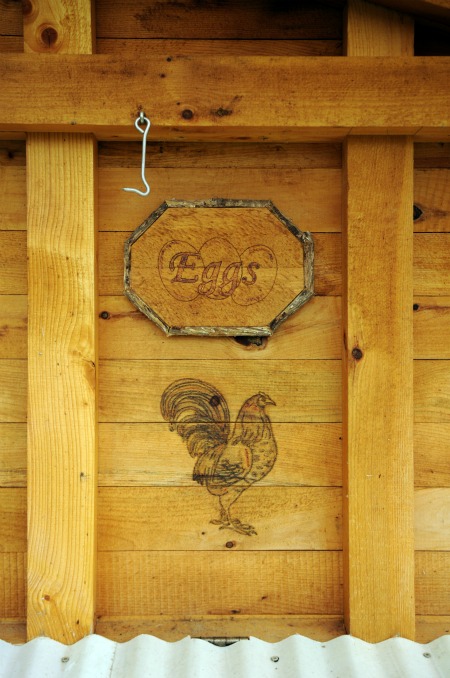
For Carlos, one of the teenagers nearing the end of his time at Grow Academy, that life-change has clearly begun. Soft-spoken and reserved by nature, he’s nonetheless apt to be at the front of the crowd, pointing out a particularly luscious row of vegetables or diving into the flock of chickens to cuddle his favorite bird—the one he can put to sleep by caressing its ears.
Shyly, he shows off the plot he designed in the classroom, now a thriving three-dimensional garden filled with the ingredients his grandmother needs to make her salsa. “It’s a family recipe,” he explains. “She likes to cook a lot. I was able to give her four big piles of cilantro.” There’s plenty more where that came from, as well as peppers, tomatillos and tomatoes bursting out of this lively plot of land. And for Carlos, there’s more than salsa in this earth. “If you’re having a bad day,” he says, “you can come out to your garden and just work.”
Seed by seed, one 100-square-foot plot at a time, the staff at Grow Academy hope to spread this healing power of working the soil. “There’s something really tangible and profound about being able to plant something, nurture it and watch it grow,” says Elvidge. “It’s a metaphor for life.”

Edible in your mailbox
