


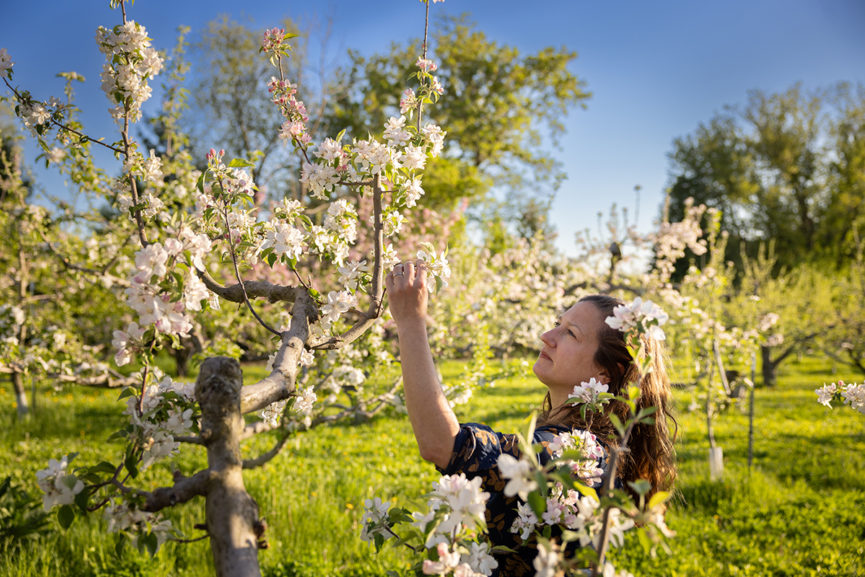
Liz Griffith’s favorite heirloom apple variety is Ashmead’s Kernel. “It has the most intense flavor and it’s very complex as well,” says the co-owner/ head grower at Door Creek Orchard and self-proclaimed apple nerd. “It’s not just sweet and it’s not just tart. It’s sweet, tart, it’s nutty. It’s got honey and floral overtones.”
At the family-owned-and-operated orchard in Cottage Grove, they are growing 97 producing varieties of apples with 56 of those they consider heirloom varieties. Heirloom, or heritage, apples are traditional varieties that have been passed down for generations. “If an apple came out before 1950 then it could be considered an heirloom, but it’s not strictly defined,” says Griffith. “Generally they are older varieties that were not bred for shelf life or travel. They were generally bred for flavor or storage, not refrigeration and/or hard cider-making or baking.”
Today the majority of mass-produced apples are bred for uniformity, shelf life and their ability to be transported long distances. And while some very small modern breeders and growers are considering flavor in their breeding, Griffith says that “Big Apple” (the overall industry) is still breeding for mainly texture with varieties like Honeycrisp and, a more recent release, Cosmic Crisp at the forefront when it comes to texture over taste.
Heirloom apples, however, are notable for their quirky shapes, unique colors and range of flavor profiles, from intensely sweet to highly acidic. “They all have their own personalities and how they want to be stewarded,” says Griffith. “They’re all very distinct, so that’s probably the biggest challenge, it’s just learning what they need and then having the time and money to give it to them every year.” And sometimes it can be many, many years before some of these heirloom varieties even begin bearing fruit. Griffith specifically cites Northern Spy and how it takes 10 years to come into bearing no matter the rootstock.
Northern Spy, along with Calville Blanc d'Hiver, are both heirloom varieties Griffith recommends if you’re looking for a great baking apple. “They tenderize but they will hold their shape,” she says. “Which is what you want in a galette or a tart where you’re seeing the slices of apple.” These varieties, along with Ashmead’s Kernel, typically come available in early October, though snaps of extreme heat and cold in spring and summer have made both growing and predicting availability challenging for Wisconsin orchards. In addition to the challenges of growing heirloom apple varieties, Griffith mentions how the sometimes “ugly apples” can be a tough sell for customers more accustomed to the cosmetic beauty of a Gala or Golden Delicious.
So this fall, look beyond a bumpy exterior or petite size and dive into the world of heirloom apples and all they can offer. Stop by your local orchard or market to talk to the growers and learn which varieties they recommend for cider, applesauce or just eating fresh alongside a favorite cheese. While discovering your new favorite apples, take time to appreciate the variety in flavors, textures and all the hard work local growers put into preserving these historic gems.
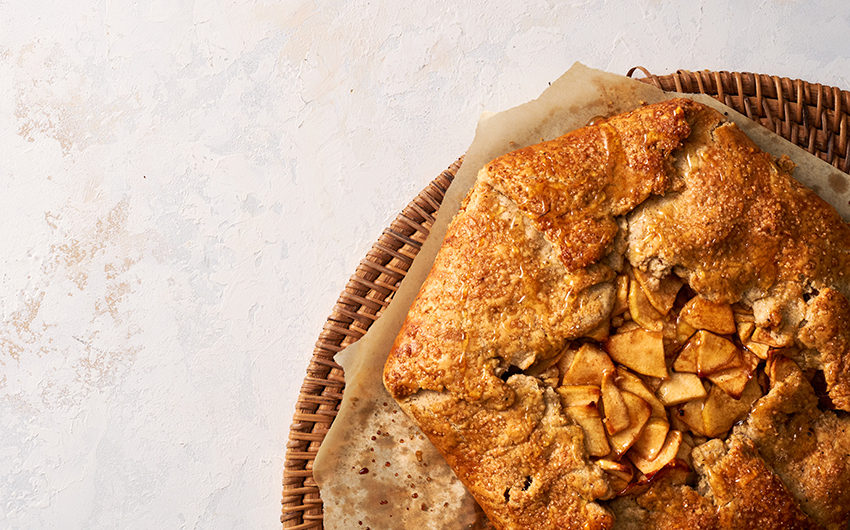
Honey Apple Galette with Hickory Nut Crust
For this galette, use firm and tart apples. Golden Russet and Northern Spy are wonderful choices that are easily available at local orchards. The Calville Blanc D’Hiver at Door Creek Orchard is also a wonderful option if you’re looking for a classic, heritage tart apple. I love to combine a few different varieties of apples because I think it yields a really beautiful flavor.
More Stories by This Author

Edible in your mailbox
