

We take you on an intimate cooking session with a French big city chef and author gone rural in the Driftless.
Arriving at the lush acreage that Chef Monique Hooker calls home, I find her and a young student in her garden waking the beds from a long winter’s sleep. Having been invited to join Monique for an evening of cooking in her own kitchen, I eagerly meet her on the path and head toward the house. After “retiring” from Chicago to the Driftless Region some years ago, Monique and her husband, Phillip, have been turning what was once a rustic sprawl of woods into an edible paradise and building their charming log home to overlook the beautiful hills and valleys of the area.

Coming into Monique’s kitchen is not what one might expect. At first glance, it’s a large open space with a block island in the center, beloved copper cookware from her former Chicago restaurant hanging above, and it’s easy to spot the professional-grade items throughout. However, that’s where “chef ” Monique ends and the culinary enthusiast begins. Fresh herbs and spices litter the counter, family photos and paintings containing quotes about food and family are scattered about the room, and the large windows give the feel of a summer kitchen.
As the warm months come upon us, I have joined Monique, author of Cooking with the Seasons, to experience her take on what the summer bounty has to offer. Today we’re making roasted chicken, ratatouille and a plum tart. Laid out before us are two young birds, fresh herbs and tender garlic, tomatoes, zucchinis and more, and we begin by loosely pulling herbs from their stems, seasoning the chickens liberally. Monique strokes the herbs against the grain to open up their oils, which immediately sends their savory aromas wafting throughout the kitchen.
A robust woman with a thick French accent who is quick to joke, Monique begins setting me up for the meal by discussing her personal passion surrounding growing and cooking food.
Erin: What inspired you to focus so much of your career on seasonal cooking rather than standard French fare?
Monique: I grew up one of 10 and my mother cooked this way so I cook this way. You have everything you need right when you need it. In June, for example, you have fresh chives, young tender garlic, ramps, sage. Into August we have rosemary, basil and thyme. And if you don’t garden yourself, go to the farmers’ market or join a CSA because what they have is what’s growing right now. Not being shipped in from all over the world. I don’t buy fresh tomatoes in March because they don’t grow here then, and you can taste the difference!
E: Some people find this idea intimidating or worry they can’t replicate the recipes that someone of your experience can. What advice can you offer to help them get started?
M: Cook with your senses, not with the recipe. It’s like directions: you can tell someone five different ways to get somewhere. Recipes are the same—they’re just guidelines. I love creating and teaching a recipe and seeing people get comfortable with it and change it. Eat with your nose, smell, create. Don’t try and cook like anyone else. People get discouraged because they can’t do it like some chef on TV or like me when I’m teaching my classes. That’s why I always tell my students if they can’t do it like me—good! Do it like you, play, have fun, find your own way.
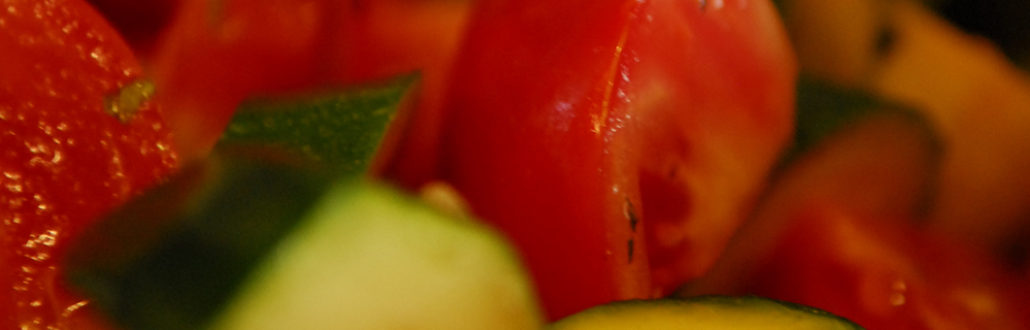
As if to accentuate this point, Monique swiftly chops through tomatoes and summer squash, tossing various-sized chunks into a steaming pot. She adds seasonings from smell and habit, encouraging her student and me to lean over the stewing vegetables and take in the fragrant steam.
E: You live in a rural area known for its bounty of fresh food sources of all kinds, yet when you had your restaurant in Chicago you still sourced your menu locally and seasonally.
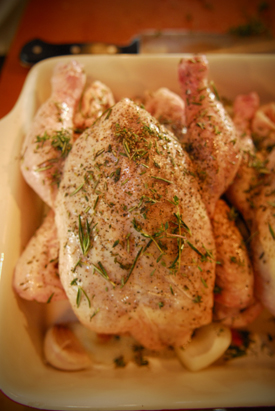
Monique removes a roasted chicken from the pan, placing the perfectly browned bird on her carving plate. She talks us through the carving process, which is amazingly effortless once someone shows you the right way. Tender meat falls from the bone as she gracefully lays out the cuts on the platter.
And seasonal, regional food fresh from the earth is the best medicine your money can buy. We get our food from corporate sources all over the world who are making their local communities sick from their unsustainable practices. Is this what we really want to support? Not to mention feed our families? No, it’s not. We have a wonderful country to sustain, people in our own communities to support. We need to get our families outside, plant a few items, get our kids in the dirt with us, see the joy and wonder as they pick and eat what they grow. That’s what we did with our boys, and if they didn’t like something I always told them they were welcome to go to the neighbors and see if they like what’s on their table any better. And soon enough, they figured out what type of food they were eating over there and stopped complaining! We laugh and set the table to enjoy this enticing meal.
E: One final question: Considering we do live in Wisconsin, where fresh foods are plentiful in the growing and harvest seasons, how does one eat seasonally in the long winter months?
M: Ah, we need to expand our horizons about the preservation of food. Again, many people can, freeze or dry food throughout the summer months, but it might seem daunting for those who have never done it or are in an urban setting where it may be less common. So start small.
Try freezing bulk berries or hanging garlic and onions. Or start shifting in that direction by supporting local food artisans who are fresh canning goods. Krauts, jellies, butters, pickles, pesto, pasta sauce—all of these and more you can find locally from small-batch farmers and processors. The more we support them, the more they will grow, and the better off all of us will be.
As we sit down to share this fresh meal accented with local beers and wine, it’s hard not to appreciate everything Monique has said. It’s in the tenderness of the meat, the earthiness of the herbs, the sunripened juiciness of the tomatoes, the decadent sweetness of the plums. And if the proof of the pudding is in the eating, Monique has made her point.
Monique Hooker is the author of Cooking with the Seasons: A Year in My Kitchen, in which she passes on the lessons - both the wisdom and the recipes - that she learned at her mother's table.

Edible in your mailbox
