


Celebrate with your local food co-op!
Food is big business, and corporations make huge profits from our necessity for nourishment. While there used to be independent grocery stores in almost every neighborhood, people now spend their food dollars at big box stores and delivery services that send profits to corporate headquarters, states and even countries away. There is a different way to buy groceries, a way that keeps your food dollars circulating in your community, uplifts local producers and encourages practices that are good for the environment. If you want to make a difference in your community, love fresh and local food, and support small-scale, traceable food systems - shop at your local food co-op!
Food co-ops are rooted in the communities they serve. They are owned by the people who shop in the store and democratically controlled by a member- elected board of directors. Food co-ops are more than just places to buy groceries; they are community-centered organizations that build local economies, run programs that support local nonprofits, practice democratic and socially responsible business, and provide equitable access to fresh food that nourishes their communities.
Co-ops have roots dating back to the Industrial Revolution. To compete with large factories and maintain the rights of individual workers, in 1844 a group of weavers in Rochdale, England set out to form a new, just and equitable business model. In doing so, they created the basis for these seven unifying principles that all cooperatives operate under today:
Seven Cooperative Principles
• Voluntary and Open Membership
• Democratic Member Control
• Member Economic Participation
• Autonomy & Independence
• Education, Training & Information
• Cooperation Among Cooperative
• Concern for Community
The cooperative principles create a business structure that is fundamentally different from the corporations that value profit before people and the needs of the stakeholders before the communities that support them. From the very start, co-ops practiced equity and valued inclusion, allowing any person to join and giving each member one vote, including members of previously excluded communities. What started in Rochdale, England has grown into a powerful global, respected and effective business model that spans all industries, including utility and communication companies, credit unions, farmer's co-ops, worker’s co-ops, food co-ops and more!
This Co-op Month, shop at your local food co-op, where every purchase works to strengthen your community, support the local economy and grow the cooperative movement. While food co-ops are community-owned, you don’t have to be a member to shop, they are open to everyone.

People's Food Co-op
La Crosse, WI and Rochester, MN • Est. 1973 • PFC.COOP
2 stores • 12,300 owners • $20.9 million in annual sales
29% of sales are local products (local = within 200 miles of each location)
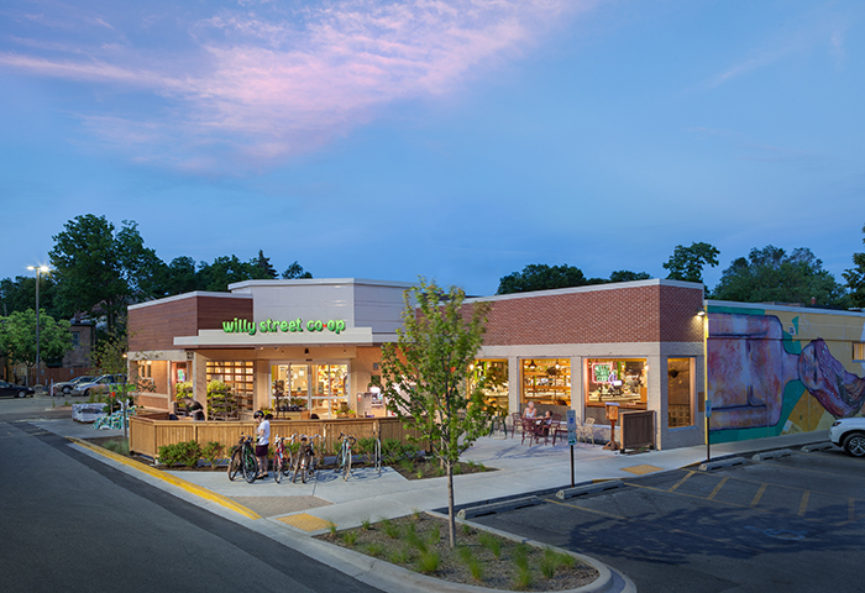
Willy Street Co-op
Madison, WI & Middleton, WI • Est. 1974 • WILLYSTREET.COOP
3 stores and 1 stand-alone community space • 34,000 owners
$65 million in annual sales • Approximately one-third of the products sold are local
(local = within 150 miles of the Wisconsin State Capitol building or anywhere in the state of WI)
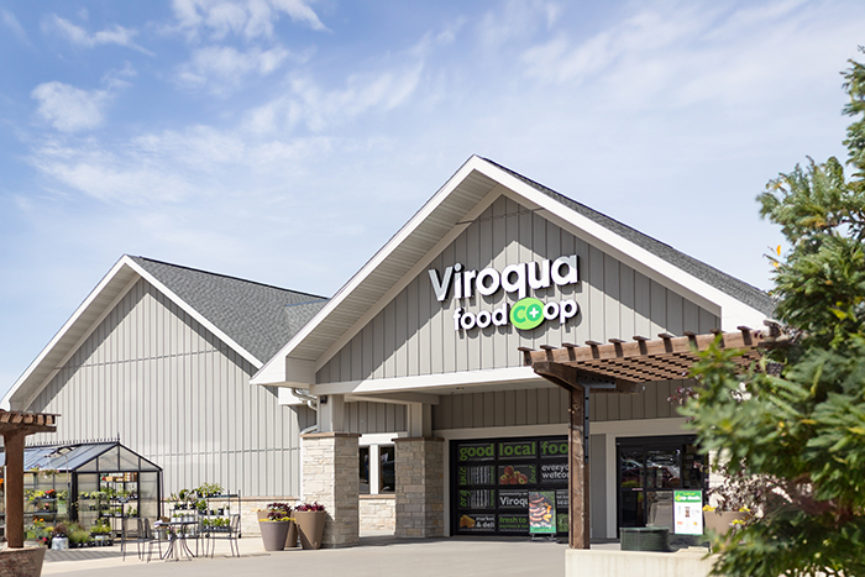
Viroqua Food Co+op
Viroqua, WI • Est. 1995 • VIROQUAFOOD.COOP
1 store • 4,800 owners • $11.1 million in annual sales
30% of sales are local products (local = within 100 miles of their store)

Edible in your mailbox
