

Nourishing Connections: Dining in the Driftless
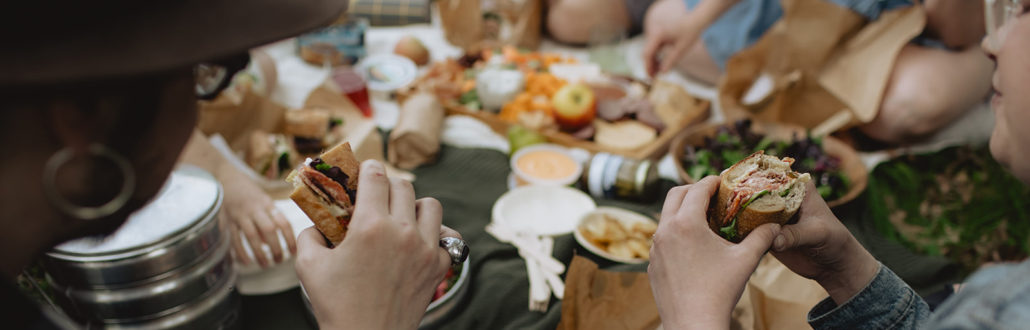
I love the Driftless Area, and I’m hardly alone. Chances are that one of your favorite local haunts is called The Driftless Something. The natural beauty of this region works like an alchemy upon us, its fertile ground nurturing such an astonishing variety of food and farming enterprises that we local foodies are truly spoiled for choice. The chance to take a food-focused road trip from Madison to La Crosse, with stops at a handful of unique spots along the way, felt like a dream; this summer I invite you to turn my dream into your reality.
A journey through the Driftless is an invitation to slow down. Look at a paper map, trace your finger along backcountry roads; whatever your route you’ll pass through towns that are destinations in their own right, while meandering roads treat you to some of the most iconic scenery of our state. You’ll follow the Wisconsin River and cross the Kickapoo, dip down into coulees and crest bluffs where, under a big blue Wisconsin sky, the land rolls out to meet you.
You’ll also see reminders of how vulnerable this land is. Depending on your route, you may drive beside a line of high-voltage power lines that went up in spite of ongoing public dissent and environmental concerns. These power lines, meant to “connect” us, are seen by many as doing the opposite, deepening the disconnect between neighbor and neighbor; between all of us and the Earth.
It’s the lament of our time, this disconnect, one we can seek to remedy in myriad ways. As Robin Wall Kimmerer says in The Serviceberry, her dazzling treatise on living in reciprocity with the natural world: “We live in a time when every choice matters.” Making thoughtful choices about the food we eat is a very tangible way to nurture a web of connections. When you look at the map with an eye to local food systems, it brings to mind the hidden connections created by fungi's mycelium as you trace direct lines between the apples grown at Saint Francis Hermitage and the cider crafted at Brix; between the flour milled at Meadowlark Farms and meals served at SAGRA.
Mount Horeb
For fans of trolls or Tyrol, Mount Horeb is a familiar all-seasons destination, and it holds its own in the realm of local food. Kingsley Gobourne has been working for years to connect eaters with the bounty of local farms, so whether you’re looking for choice cuts of fresh meats, stock for your freezer, or grilling gear, head down Main Street to Gobourne’s new shop: Artemis Provisions and Cheese, where butcher shop meets charcuterie.
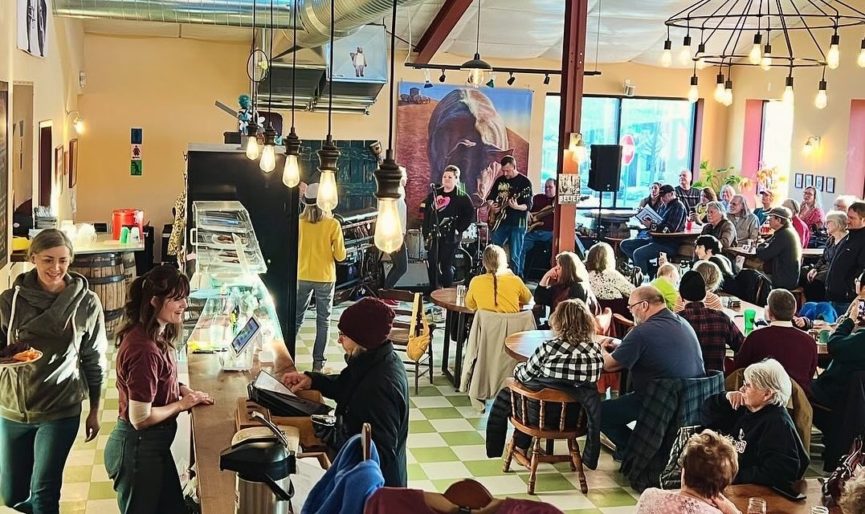
Around the corner and down Second Street you’ll find Brix Cider, a farm-to-table restaurant and cidery that is a hub of local community, spearheaded by the powerhouse team of Marie and Matt Raboin. Deeply enmeshed in the local food and farming community, the Raboins have created a space that brings people together for enjoyment, education and action over glasses of cider and seasonally-inspired food.
Spring Green
“There’s an aura about Spring Green,” says Kyle Adams, owner of Wander Provisions. An easy drive down Highway 14, the town is just far enough from Madison that for many it seems to appear out of the springtime mists just in time for the American Players Theatre season, then fades away again, Brigadoon-like, in the shortening days of autumn. “We are tiny,” she adds, with fewer than 1,600 residents. “We are a really small town, so we are trying to create more reasons for people to come to the area, stay in the area.”
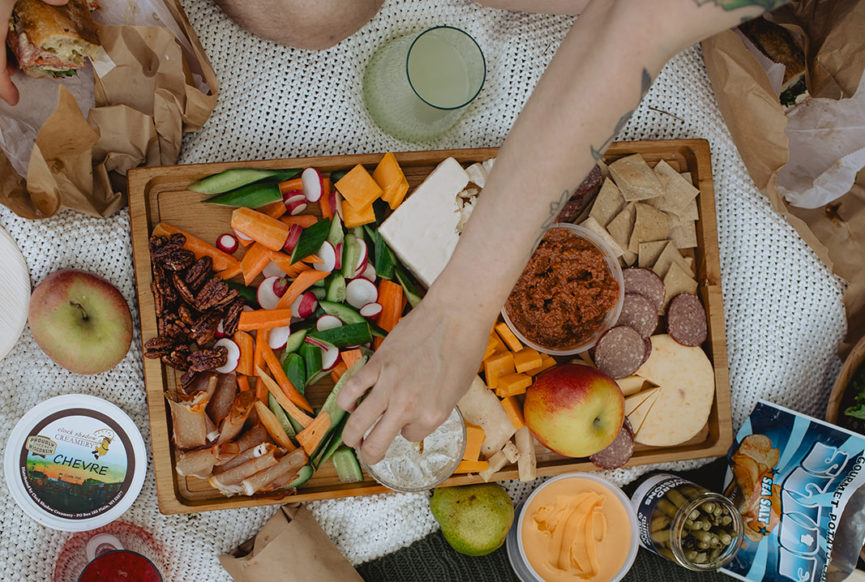
Wander Provisions is certainly one of those reasons. One of several storefronts that make up the Albany Street Shops, this unassuming space will surprise you with its depth and breadth as a Wisconsin-focused deli and specialty grocery offering locally sourced goods. Drop in for counter service at the deli where you’ll find an inviting menu of seasonal sandwiches and salads, or order ahead for picnic lunches, catering and charcuterie arrangements.
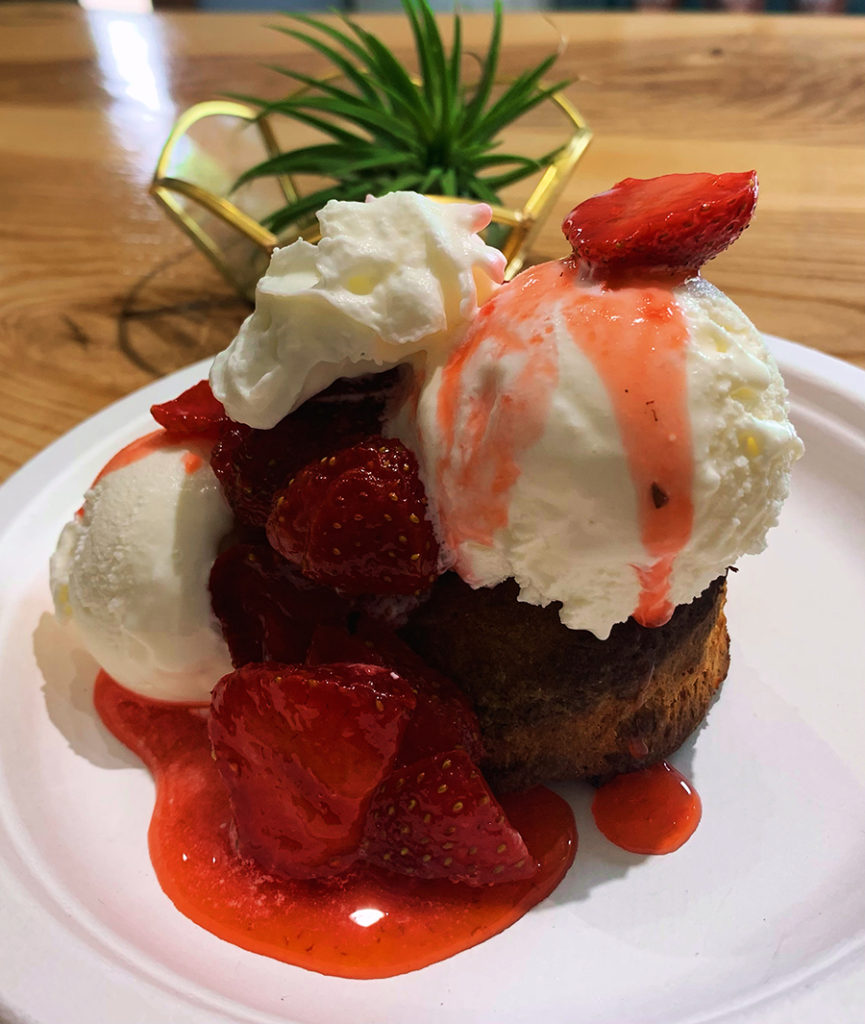
Just next door you’ll find The Frozen Local, an artisan ice cream parlor, bakery and farm store. The shop is an offshoot of Future Fruit Farm, a family orchard in Ridgeway specializing in organic, antique and exotic varieties of pears and apples for over four decades. Witnessing the alarming rate at which Wisconsin is losing its family farms, mother-and-daughter team Ellen and Selena Warsaw-Lane launched this new business to both sustain their own farm and support other local farmers, producers and artisans.
Gays Mills
On Main Street in this town of 500 you’ll find the Kickapoo Exchange Natural Food Co-op, boasting an impressive 50 years of bringing natural and organic food to the Kickapoo Valley. This area, known as the “apple capital of Wisconsin,” hosts another hidden gem, a place that’s vying for top billing even in this list of very unique destinations. Have you ever dreamed of dining on authentic French cuisine, served to your table by French-speaking nuns in a restaurant attached to a monastery nestled in the hills of southwest Wisconsin? Saint Francis’ Hermitage is exactly that and more; nearly everything they serve is grown or raised on their own organic farm.
I get up early to arrive in time for breakfast, and the crepes with organic mushrooms and cheese sauce alone are worth the trip several times over. As is sitting in their unpretentious dining room attended by a nun who serves me fresh-brewed coffee and hot-from-the-oven pain au chocolat while happily and proudly answering all my questions about the hermitage. A whole article could be dedicated to this remarkable place, but rather than take my word for it, I hope you make time to visit yourself. “We raise things the way they like to be raised,” Sister Mari Anne tells me, speaking about their gentle approach to both farming and cooking. “The essence of French cuisine is to let the flavors come through,” without overloading on salt or sugar, to let it all be “what it wants to be.”
Viroqua
Viroqua is a gold mine. Stopping at The Noble Rind to speak with owner Sarah Clemens, she rattles off a list of don’t-miss places—Driftless Café, Wonderstate Coffee, Magpie Gelato, Maybe Lately’s, and many others—more than you could explore in a day. (And if a weekend getaway appeals to you, you’re in luck; the Hotel Fortney, built in 1899, has been restored to its historic grandeur, with fabulous shops on the ground floor and hotel rooms above.)
The seed that became The Noble Rind grew from Clemens’s love of connecting people deeply with the food they eat. We chat over a cup of coffee in her lovely and recently expanded space in the Fortney, and she tells me how it grew from a cheese shop and charcuterie to a full-service deli and now a market with shelves that brim with locally made goods from candles to chocolate to sausage. Locals and tourists alike are drawn to her “old world-style cheese counter” to learn more about types of cheese and the artisans who make them. Everything is cut to-order and wrapped in cheese paper, not plastic, and sampling is encouraged: “Tasting is a part of the whole experience!”
La Crosse
After travelling down two-lane roads and stopping at towns with populations under 5,000, we arrive at our final destination: that beautiful city between the bluffs, La Crosse. Don’t miss the chance to stop at Grandad Bluff, a spot that was voted “the best view in the state,” to look out over the city and the river.
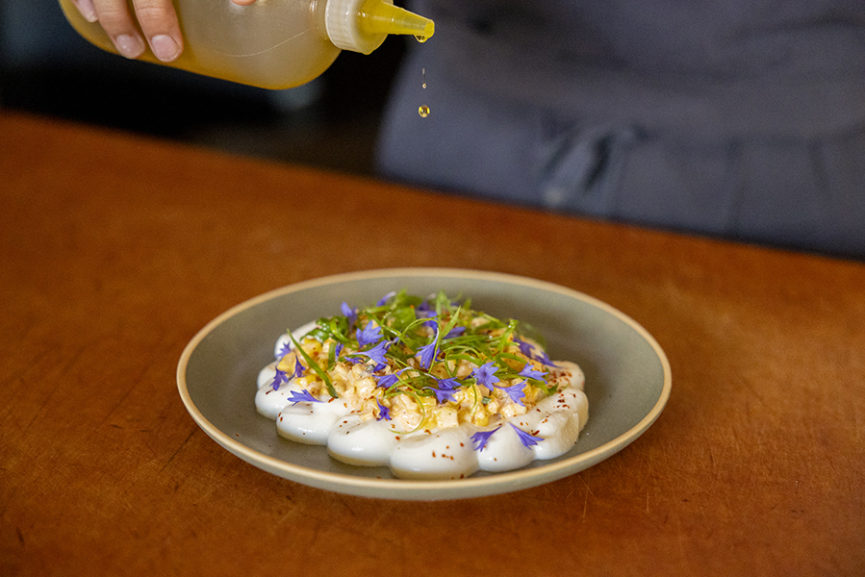
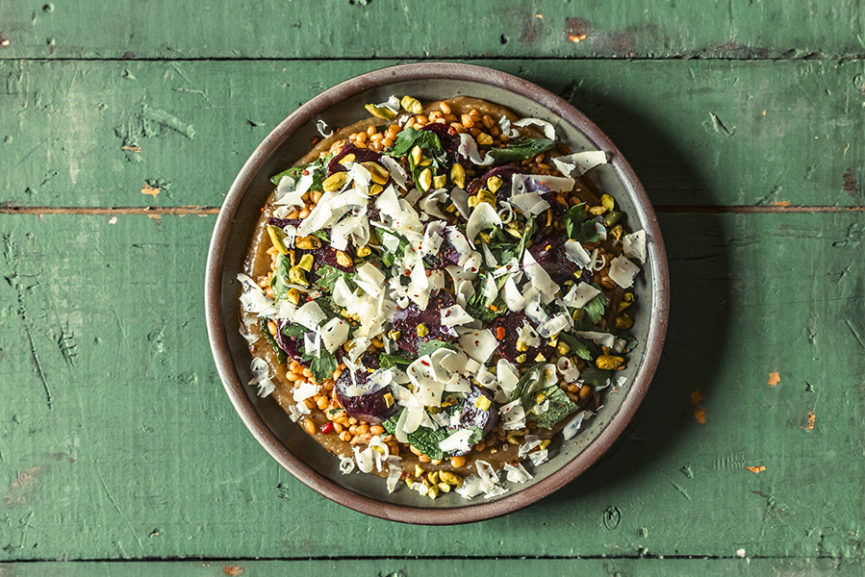
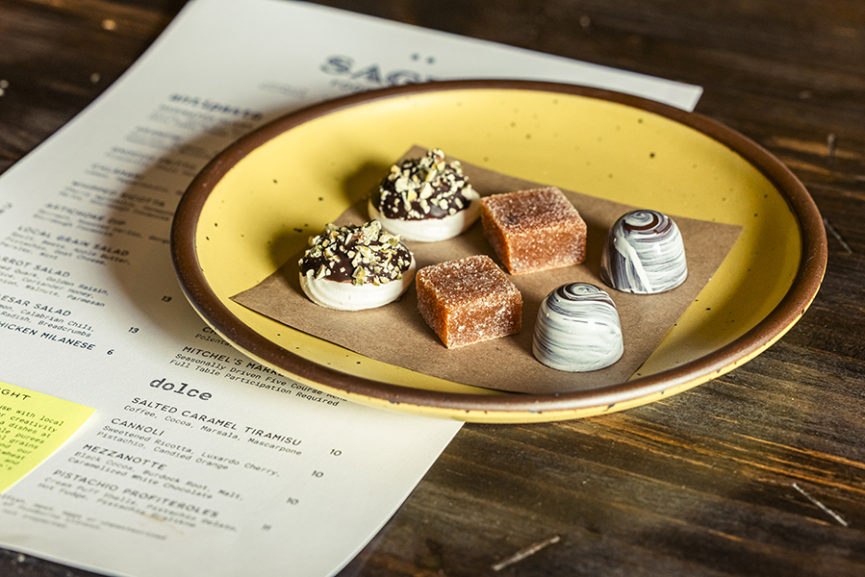
But first: dinner! The Italian word sagra refers to any regionally organized festival linked to local food traditions. The restaurant SAGRA, situated right on the river, lives up to its name. Dining there is a celebration. The joy that chef and owner Mitchel Weber brings to his “seasonally obsessed” menu radiates from every dish. Much of the fresh produce he uses is grown just across the river at Owl Bluff Farm. Paige Manges, who works at both restaurant and farm, speaks to Weber’s “astounding dedication” to seasonal sourcing in partnership with local farmers, which “brings an exciting narrative of enthusiasm for local ingredients, creative sourcing and empowerment.”
Everywhere I go, I hear a variation on this theme. There is an art, a creativity, to the work these people are doing. And art invites us to pause and reflect. Locally focused restaurants and shops are spaces that invite thoughtful, intentional eating and shopping. Kyle Adams talks about how they also contend with an undeniable fact: “Local food, specialty food, tends to be more expensive.” The thing is, specialty shops like hers could not hope, and are not trying, to replace the convenience and affordability of the supermarket. Rather, they aim to inspire us to adopt what Sarah Clemens calls “that European style of grocery shopping where you get a little at a time.”
Although our conversations take place miles apart, Adams echoes Clemen’s sentiment, adding: “the hope would be that even if we do just a little bit more intentional shopping,” that little bit of effort will have big effects on our local economies. Everything is connected, and we nourish these connections when we choose “the places that are known for doing what they do.” Places that support, and are supported by, their communities, and serve up darn good food while they’re at it.
To quote once more from The Serviceberry: “All flourishing is mutual.”
More Stories by This Author

Edible in your mailbox
