
As the sun sets, meshing the orange heat with the azure expanse of the Blue Mounds, the gardeners are hard at work, hoes in hand, studying the ground. This night, there are about ten volunteers weeding and tilling the 60-some rows in a vast garden in Middleton Township.
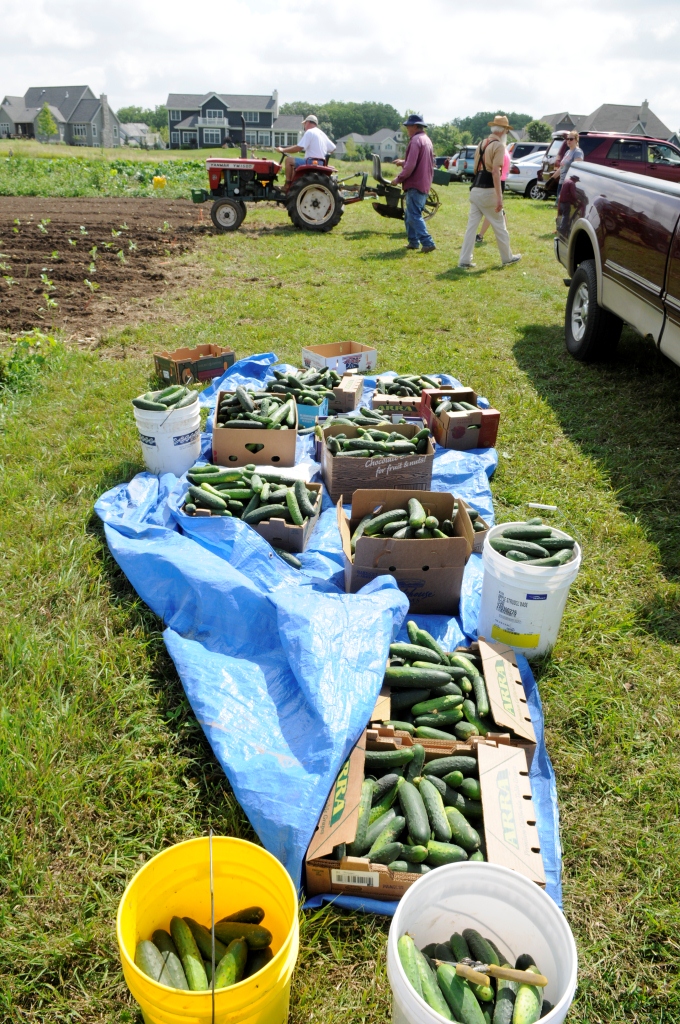
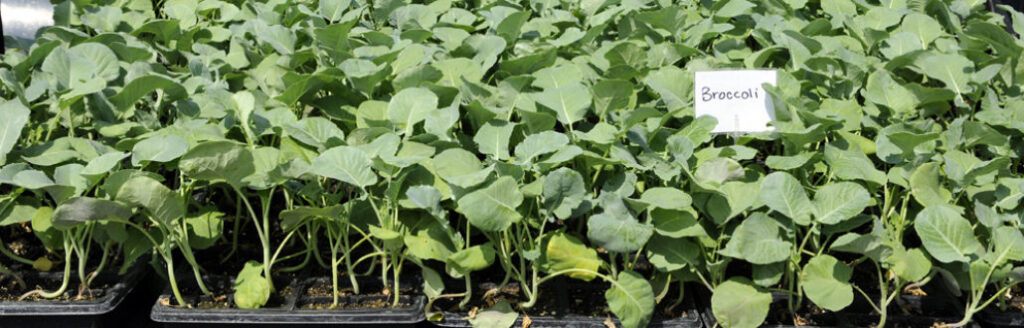
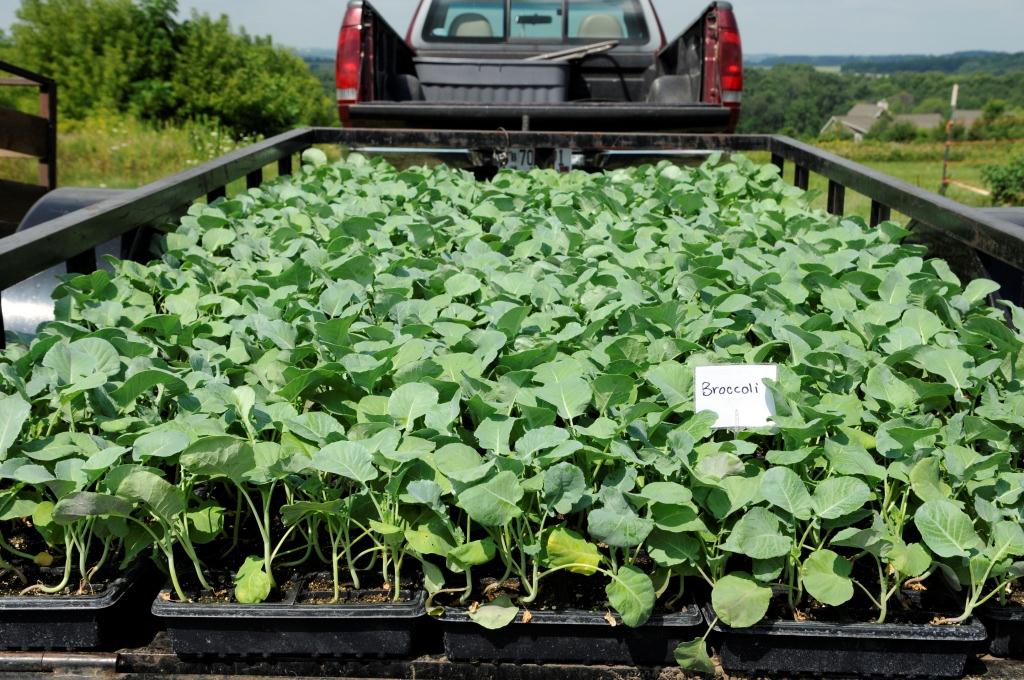
The Hershberger North Garden has neat lines of organized vegetables: broccoli, squash, spring onions, peppers, cabbage, tomatoes, cucumbers, sweet potatoes, watermelon and okra. But these gardeners will not take any home to their own refrigerators or grills. They are part of a weekly work session of the Madison Area Food Pantry Gardens (MAFPG), a group that since 2000 has been providing freshly-grown local produce to people in need.
In 2012, through harvesting, gleaning (gathering extra produce from trees and fields) and donations, the group distributed 171,000 pounds of fresh food to Madison area food pantries. Most of that, about 113,000 pounds, were grown in five gardens on land lent to the MAFPG. All together, the group has about seven acres of gardens in the area.
While the United States reels under food problems from feeding the homeless to childhood obesity, introducing fresh vegetables into the offerings of a food pantry is not often considered. Even the name matches the expectation: A “pantry” is a place to keep foods that don’t spoil; therefore, a “food pantry” will have shelf-stable foods that are easily stored and transported. The MAFPG’s remarkable accomplishment has been offering the healthiest foods possible to the people least likely to be able to afford or find these foods.
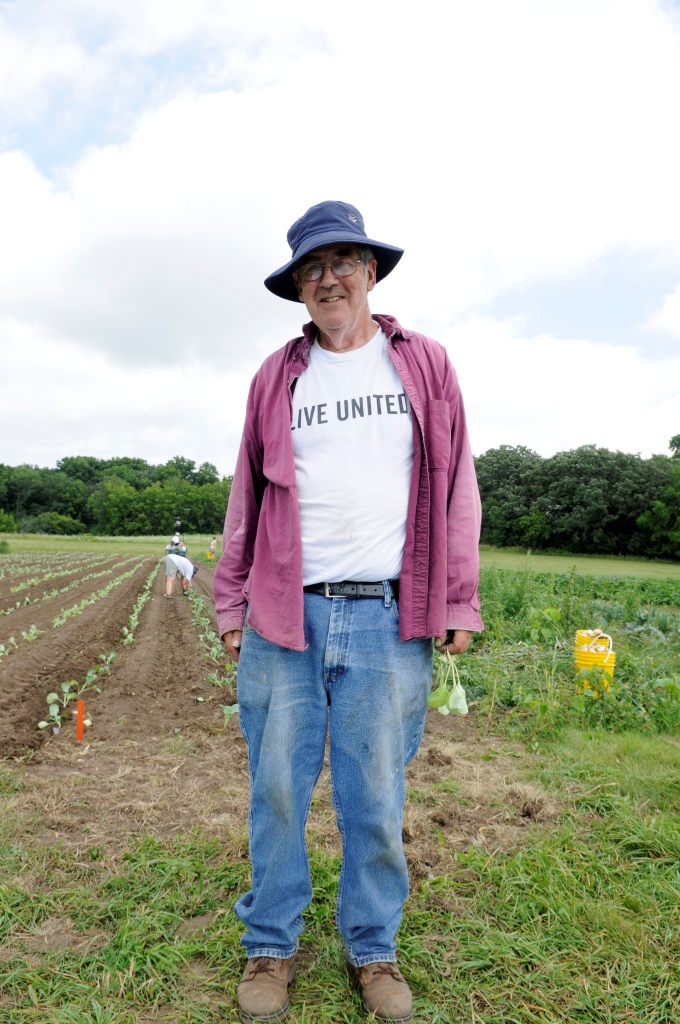
Phil Cox, a retired high school math teacher and MAFPG board vice president, oversees the Hershberger North Garden. He likes tracking the tangible, measurable results of growing food and giving it away. Here at the garden, he sees the progress from planting to harvest and transport to the Community Action Coalition of South Central Wisconsin or the Second Harvest Food Bank of Southern Wisconsin. These two food banks serve about 50 food pantries in the area. “This is immediate gratification,” he says. “We are helping somebody.”
Like gardens themselves, there have been years of fortunate surprise and years of unforeseen disappointment. Some of the best news has come in large numbers. Cox shows off an old tobacco planter equipped with two seats and remembers the time when they were able to plant 2,000 cabbage plants in less than an hour and a half. Another time, he says, they planted 4,400 onion sets by hand. And there was that great moment when they realized they had gleaned 37,000 pounds of cabbage in one year.
But then, one of Cox’s colleagues reminds him of the enormity of the poverty in Dane County. According to the U.S. Census Bureau, about 12 percent, or more than 60,000 people in the county, are living below the poverty level. That means they still have much work to do. “What we did last year is a drop in the bucket,” Cox says.
“It seems like a basic right to
have access to healthy foods.”
– Kristin Zurovitch, volunteer
Their largest plant supplier was lost this year and they had to rely on several more sources to donate plants or seeds. Some years had more land than volunteers. Deer ate all the broccoli, cabbage and lettuce at one site in a season. And there is always the great unknown for a gardener: the weather. A spate of rainstorms this summer battered the plants and encouraged the weeds. Cox shakes his head at the weeds, currently being extracted by a small army of volunteers. He doesn’t like to see weeds, especially because he considers keeping a tidy garden part of the bargain for the free rent of the land.
To do more, they will need more. More volunteers, more donations, more time. All of those who work in the gardens are volunteers. Many are retired with an interest in gardening, but there are also volunteers of varying ages, including middleand high-schoolers and whole families who come to help.
“We may be considered crazy,” he jokes, laughing toward the men and women in work shoes and sun hats in the field.
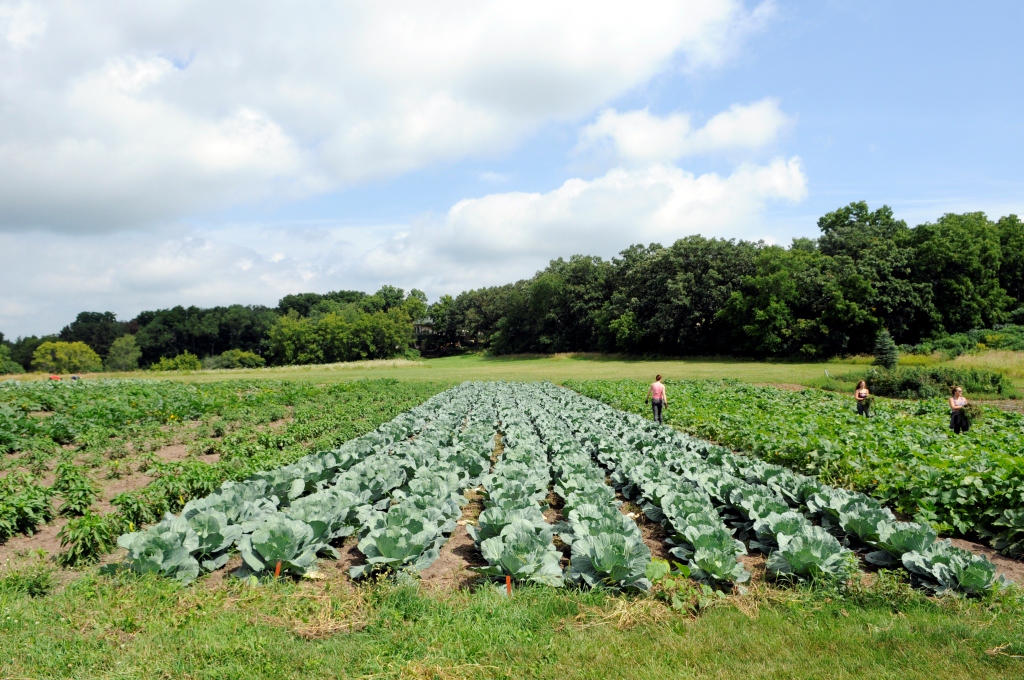
Maryanne Julian is in her 14th year of volunteering for the MAFPG. She’ll only talk about it if she can keep weeding at the same time. Julian had recently lost her job when she started volunteering and realized that people just like her were at the food pantry hoping for some fresh food. She says, “It’s amazing to see the need, and you think ‘that could be me.’”
Kristin Zurovitch, a ten-year volunteer as well as a MAFPG board officer and committee member, says her favorite time is after a big harvest, watching the trucks overflowing with amazing produce pull away from the garden on their way to the food pantries. “It seems like a basic right to have access to healthy foods,” she says.

The two first volunteers of the Madison Area Food Pantry Gardens were co-founders Ken Witte and Emmett Schulte. Witte had retired from Oscar Mayer Foods Corp. and had begun distributing extra food from stores and bakeries to area food pantries. He thought the people receiving those foods should also get fresh produce. It was then that Witte came up with an idea to gather whatever produce was left at the end of the Dane County Farmers’ Market from the farmers willing to donate.
But that still was not enough. Witte began searching for landowners willing to lend him land to grow produce himself.
Schulte, then newly retired from the University of Wisconsin’s soil science department, joined as coordinator of the gardens. That first year, the group raised 50,000 pounds of produce on three acres at three gardens in Fitchburg, Mount Horeb and Middleton Township.
Witte passed away in April of 2013. His widow, Natalie Witte, is still involved with the group. “It was his life; this was his dream,” she says, looking around at the cared-for vegetable plots and enthusiastic volunteers. “It is amazing to think about,” she says, “how these broccoli heads and onion stems will, soon, be food for people.”
That’s where Chris Brockel, food and gardens division manager for the Community Action Coalition (CAC), comes in. Brockel has been working with the MAFPG for ten years, taking in the harvests and distributing them to about 50 area food pantries and shelters, including the Middleton Outreach Ministry, St. Vincent DePaul Food Pantry, the Catholic Multicultural Center, the Salvation Army and the Goodman Community Center. CAC also provides some grant money to the gardens. Brockel has set up systems for cleaning and packing the food, aiming to streamline the process to ultimately offer more food to more people.
Brockel thinks strategically about the way the produce is presented at the food pantries. Some locations package vegetables into CSA-type boxes, others have refrigerated display cases. “The better we make the produce look, the more likely people are to take it,” he says.
Along the way, Brockel has learned a few things about how people feel about vegetables. A purchase of canned refried beans for pantries turned out to be a disaster; people didn’t want them. But when the food pantry gardens grew and dried pinto beans, it was a huge success.
Brockel sometimes gets requests that influence what is planted that year. A few years ago, people started asking for collard greens, which the MAFPG then planted and which are still in huge demand. A big supply of potatoes one year yielded no takers until Brockel realized they were too sandy. After cleaning them off, CAC packaged them in mesh bags for easier transport.
Many people tell him they’re pleased to see food that’s not processed or high in salt content. But he also says as our culture has become used to fast and easy foods, it sometimes takes a bit of sales-work to encourage people to take the time to cook the fresh food. “This is not just food; it’s healthy, good food,” he says.
Education is the next wave of concentration for those at CAC working with the food pantry gardeners. Brockel is hoping to provide ideas about how to cook it, how long it lasts and how to preserve it, perhaps on small cards that come with the food. Also on his wish list is a refrigerated van, which would allow the group to pick up more produce and make deliveries more efficient.
Back at the Hershberger North Garden evening work session, the volunteers rarely stop moving. Cox says he’ll leave the education up to the food pantries because he’s busy enough on the growing side. On Cox’s wish list are more donations and more volunteers. Their motto, simple but profound, is “We plant, we grow, we feed.”
Cox says, “We are doing this because we think it ought to be done.”