

Weeding, hoeing and tilling doesn’t have to be your gardening reality! Megan Cain, the Creative Vegetable Gardener, shows us some low-effort techniques for any garden.
The next month or so is when the majority of planting happens in the vegetable garden. It’s a fun time, but also a very busy time for gardeners. You can save some of that time for other tasks by creating a low maintenance garden that will allow you to spend less time on mundane garden jobs and more time on fun things like garden design, shopping for plants and drinking beer while sitting in your garden!
One of the best ways to set up a garden that is easier to maintain in the long term is to create permanent beds and paths. Once you have done that, then the second step is keeping things mulched. This time (well, every time!) of year my garden is mulched with hay to keep down those early spring weeds. To prep for planting, I take one of the following two steps, depending on what I am planting.
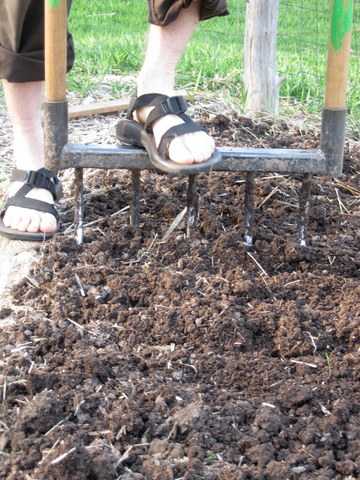
This past weekend we planted about 500 onions in our garden. Because onion seedlings are small and prefer loose soil, we decided to prep the soil before planting. We scraped off the hay mulch and used two of our favorite tools to loosen the soil. The first is a broadfork (see image at right), which you can insert into the soil to aerate it on a deep level without disturbing the soil structure. The second is what we often call “The Don” after the first person we saw use it, but in reality is called a 4-tine cultivator. This tool is more for surface prep, breaking up and smoothing out those clods of clay that many of us have in our garden. All of this prep and planting took less than two hours since we had already set up a good foundation with permanent beds and paths that had been well mulched for the long winter.
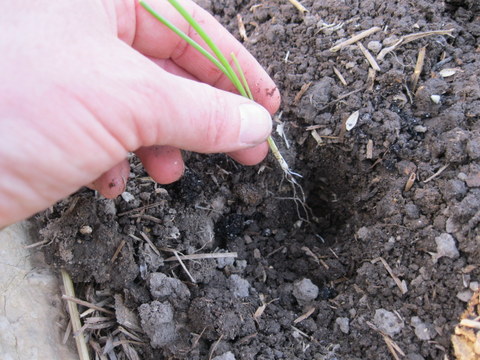
The day after onion planting I planted kale, broccoli and bok choy in my backyard garden. All of the beds are covered in hay mulch, so for planting seedlings I simply created some space in the hay and dug my hole for the seedling. My garden has had permanent beds and paths for many years, so over time I have noticed that many of the beds don’t require much soil prep at all before planting seedlings—because the soil is always kept covered, it doesn’t tend to compact as much as bare soil.
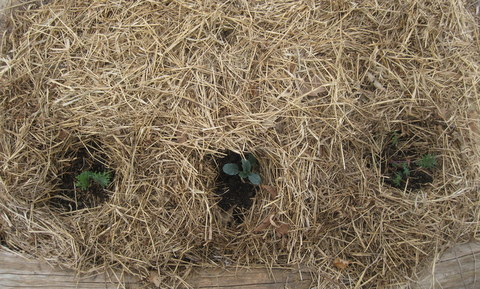
One of my gardens is in a community garden in Madison. Each year when I go to plant my spring crops, I walk past people struggling with shovels and forks to get the weeds out of their garden. This does not have to be your gardening reality! If you keep your garden paths and beds mulched throughout the year you’ll be able to waltz into your garden in spring and just start planting. No hours of weeding, bed layout or soil prep needed, bringing you closer to drinking that cold beer in your beautiful garden.
More Stories by This Author

Edible in your mailbox
