

My journey to understand our family's most contentious condiment
We all have food aversions. It’s normal and sometimes even fun to dislike certain tastes and textures. I absolutely hated eggs—in any form—until a life-changing trip to Denny’s during the formative years of my early twenties. (A proportionate number of Spotted Cows enjoyed beforehand helped me work up the courage to ingest the scrambled, sulfurous blobs.) And while moderate levels of disinclination are understandable, when a food aversion reaches phobia-level extremes, one is compelled to look closer.
Cue: labneh. Also known as strained yogurt, sack yogurt or yogurt cheese, labneh is a popular staple in the Middle East. It’s essentially a thickened cultured milk, similar to Greek yogurt but with more of the whey removed so it develops a spreadable, cream cheese-like consistency. It’s often eaten as a simple dip with olive oil and pita bread, or incorporated into a sandwich with mint, thyme and olives—who wouldn’t love that? My dad, that’s who.
Soft Cheese, Hard No
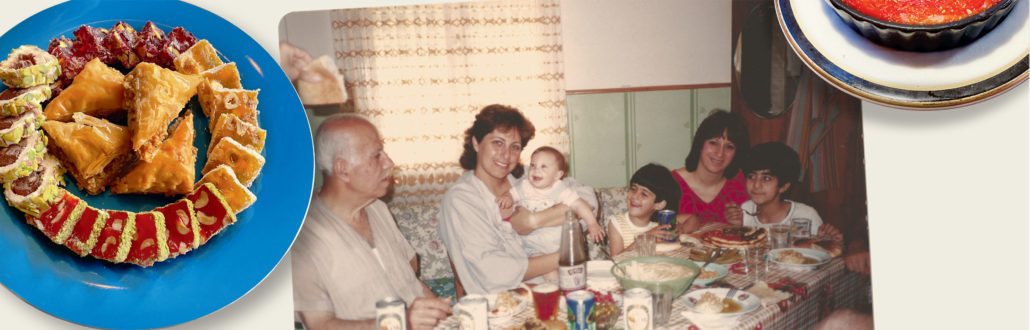
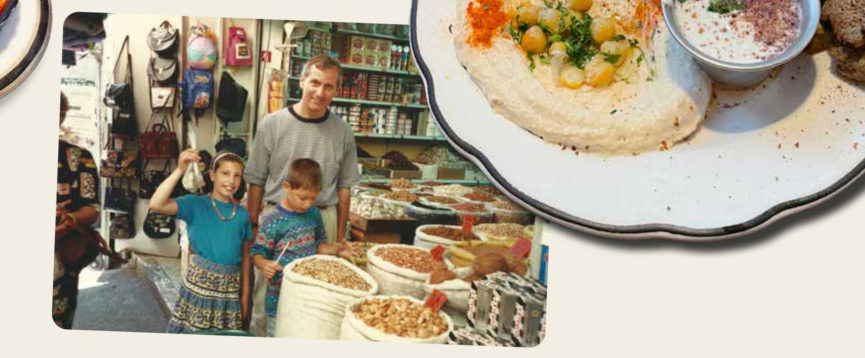
Growing up in the seaside town of Haifa, Israel, and eventually finding his way to Wisconsin, my dad brought with him many food traditions from the Levant, a region along the eastern Mediterranean, that have stuck with our family to this day. Dates and figs were a common healthy treat in our household. Falafel, kibbeh and manaeesh (Lebanese pizza) were always on the menu. On special occasions he would even treat us to the labor-intensive delight of handmade baklava. But the one item that was not allowed to enter our home was the infamous and still-forbidden labneh. Our relatives would frequently share childhood stories about my dad’s hatred for the stuff—explosive tantrums when it was anywhere near him. For reasons unbeknownst to us, he wouldn’t touch it with a ten-foot spoon.
His disdain for labneh carried over into other ingredients as well: mayonnaise, whipped cream, Cool Whip—anything that was soft, white and had a vague semblance of a lactic jiggle was a hard “no.” Because of this unwavering anti-labneh policy in our household, the condiment reached a mythological status in my mind as something I would simply never taste. It wasn’t until my mid-thirties that it dawned on me that I could give it a try on my own. So I decided to set out and try it, and explore what Madison’s Middle Eastern cuisine scene had to offer along the way.
O.G. Curd
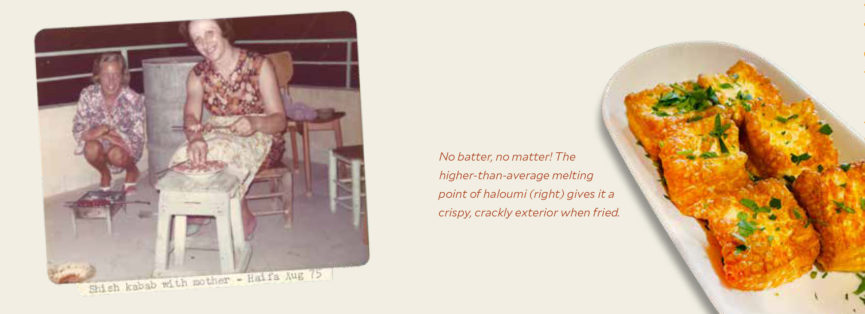
I started my hunt for labneh at Petra Bakery Restaurant on Madison’s near west side. As I scanned the menu for my fermented perpetrator, a different dairy product caught my attention that I couldn’t resist: deep-fried haloumi cubes. Haloumi, a popular cheese in the eastern Mediterranean, is traditionally made with a blend of goat’s and sheep’s milk. Because of its higher-than-average melting point, it’s perfect for grilling and frying. The dish was served hot and modest, with chopped parsley sprinkled over the top, and its exterior bubbling up crispy and golden brown, almost like a fried pork crackling. The first few bites were perfect: warm, salty and delightfully fatty. With a subtle squeak, they reminded me of the ever-popular Wisconsin speciality, cheese curds—without the breading. As I chowed down the crispy morsels, I couldn’t help but imagine how the ancient shepherds of the Levant were onto something great—long before deep fryers and food trucks. I left Petra without having tasted labneh, but on my way out I made sure to grab several Turkish delights and baklava to enjoy later.
Knafeh 'nother?
The next stop on my journey was Taza Mediterranean restaurant in Middleton, where I discovered another cheese-based delight: knafeh. A delicious embodiment of contrasting textures and an iconic Palestinian dessert, knafeh is made using threads of spun pastry soaked in rose-infused syrup and layered over a soft sweet cheese such as nabulsi. Served warm, it’s the most unique, almost contradictory treat: saccharine and savory, crispy and melty, floral and buttery. I savored each stringy, syrupy bite. Still, no sign of labneh, but I knew I was getting closer, after ordering the hearty, cooling and well-spiced fattee—garbanzo beans topped with homemade yogurt and pita.
You’re Getting Shawarma
At this point I decided it would be worth doing a little research before venturing out for my next meal. Earlier that week, a friend had recommended a new-ish spot on Madison’s Willy Street, The Mediterranean Joint. A quick Google search ignited my hopes, listing two yogurt-based appetizers among many other heavy-hitting classics. I popped in late on a Friday evening, optimistic that I would finally get a taste of the elusive labneh. I stepped up to the counter and ordered the haidari yogurt dip plate, only to find, devastatingly, that it was sold out. My dreams crumbled like an aged feta. The taste of labneh was so close, but seemingly more distant than the foothills of Lebanon. Despite my disappointment, I took comfort in knowing that an unknown group of Madison food-lovers must have savored the dish prior to my arrival. I consoled myself with the idea of these anonymous labneh-eaters (and with some of the best shawarma of my life). My hunt for the mysterious yogurt cheese slipped just out of my grasp that evening, but I was lucky to have experienced many other dishes that Madison’s small and vibrant Middle Eastern diaspora has to offer. The experience only strengthened my desire to taste labneh, as I pulled out my phone to figure out next week’s dinner plans. The search continues...
Curious to taste it for yourself? See our recipe for Labneh with Roasted Beets and Feta.
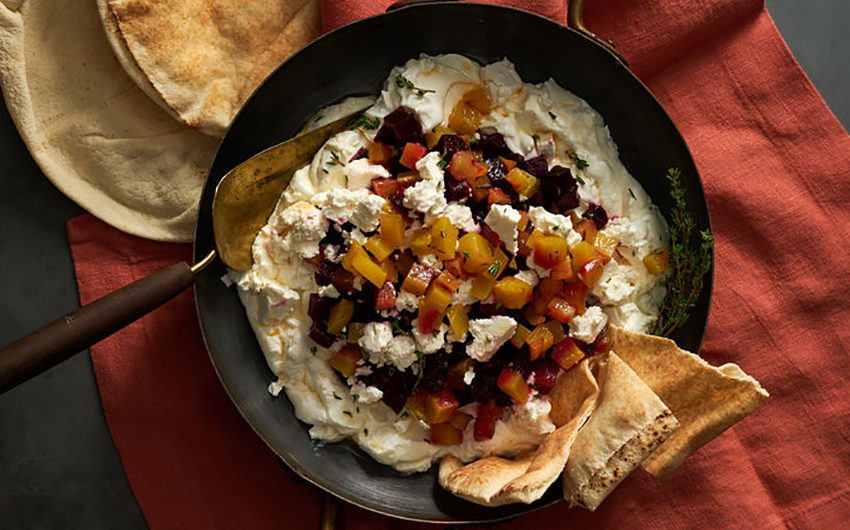
Labneh with Roasted Beets and Feta
Labneh is a Middle Eastern yogurt cheese which can be purchased premade or you can DIY it and make your own very easily. If you are looking for strictly A2 dairy, you can use A2 milk to make your own yogurt or purchase A2 yogurt made from cow’s milk (Bellwether Farms from California makes a delicious one!) or naturally A2/A2 goat’s or sheep’s milk yogurt.
This gorgeous dish, where beets act as an island of red jewels on a cloud of creamy white labneh, can be served as part of a mezze platter at your next potluck or dinner party (even a party for one). This is perfect for dipping with a piece of warm pita or crusty sourdough.
More Stories by This Author

Edible in your mailbox
