

Sourcing Resilience
Southwestern Wisconsin is known for its patchwork of small farms and craft producers. This is part of the idyllic appeal of the Driftless region. But most of the agricultural economy is still based on food and commodities being imported and exported from the state. While the marketing of food sells us the idea of local sourcing, it is increasingly challenging to understand how our food reaches us.
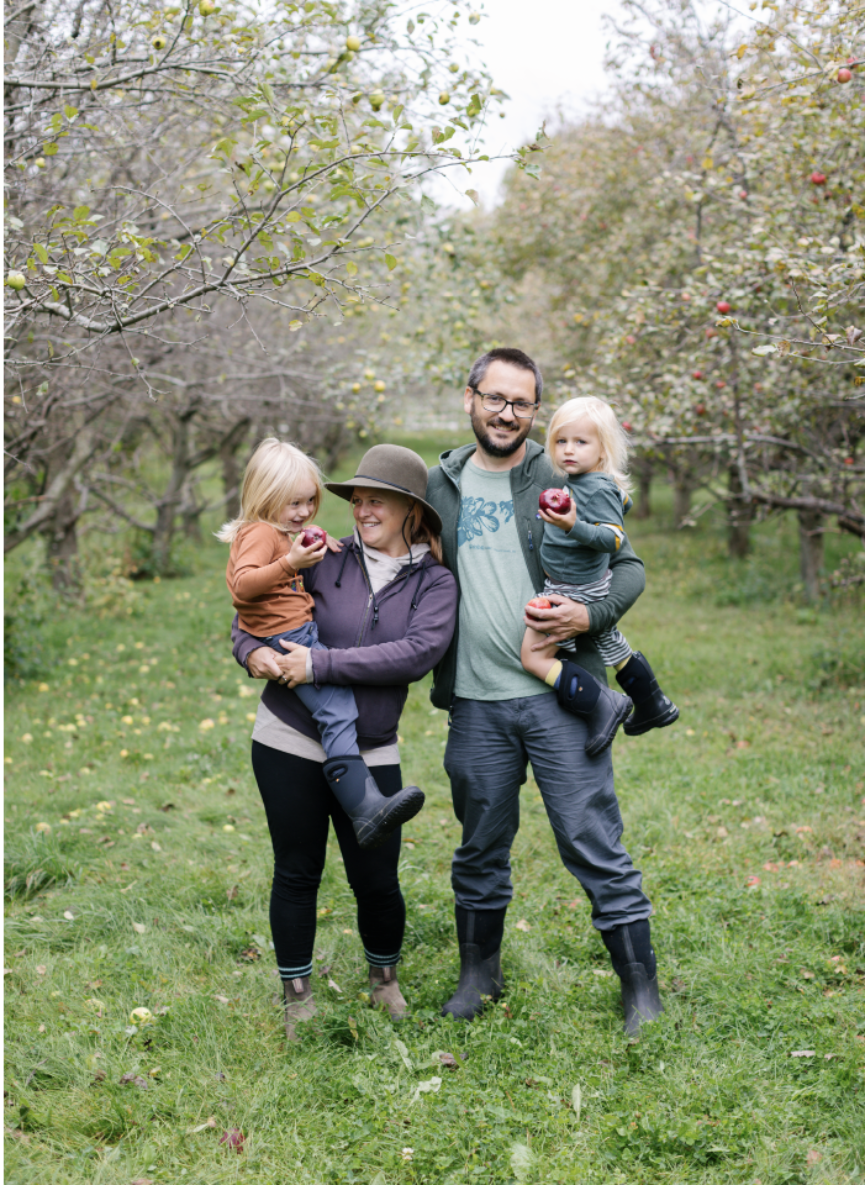
For Marie and Matt Raboin, owners of Mount Horeb restaurant and cidery Brix Cider, sourcing over 90% of their food from regional producers isn’t only a personal mission, it gives the Raboins a framework on which to curate their menu and cider selection. What Brix offers is so starkly seasonal that it unpretentiously teaches the customer what grows in this regional radius and when.
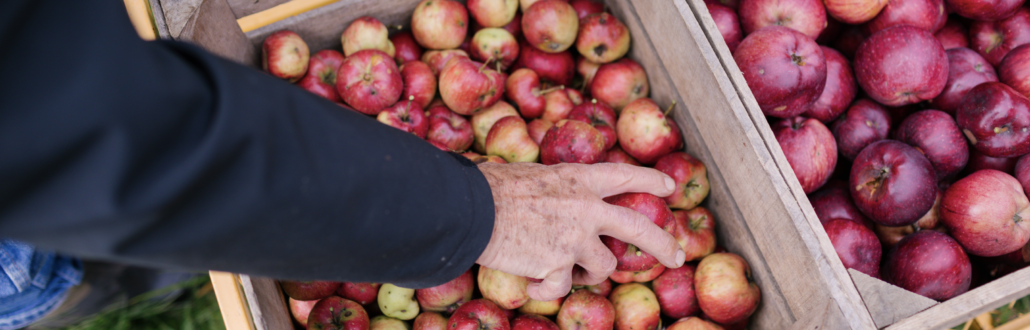
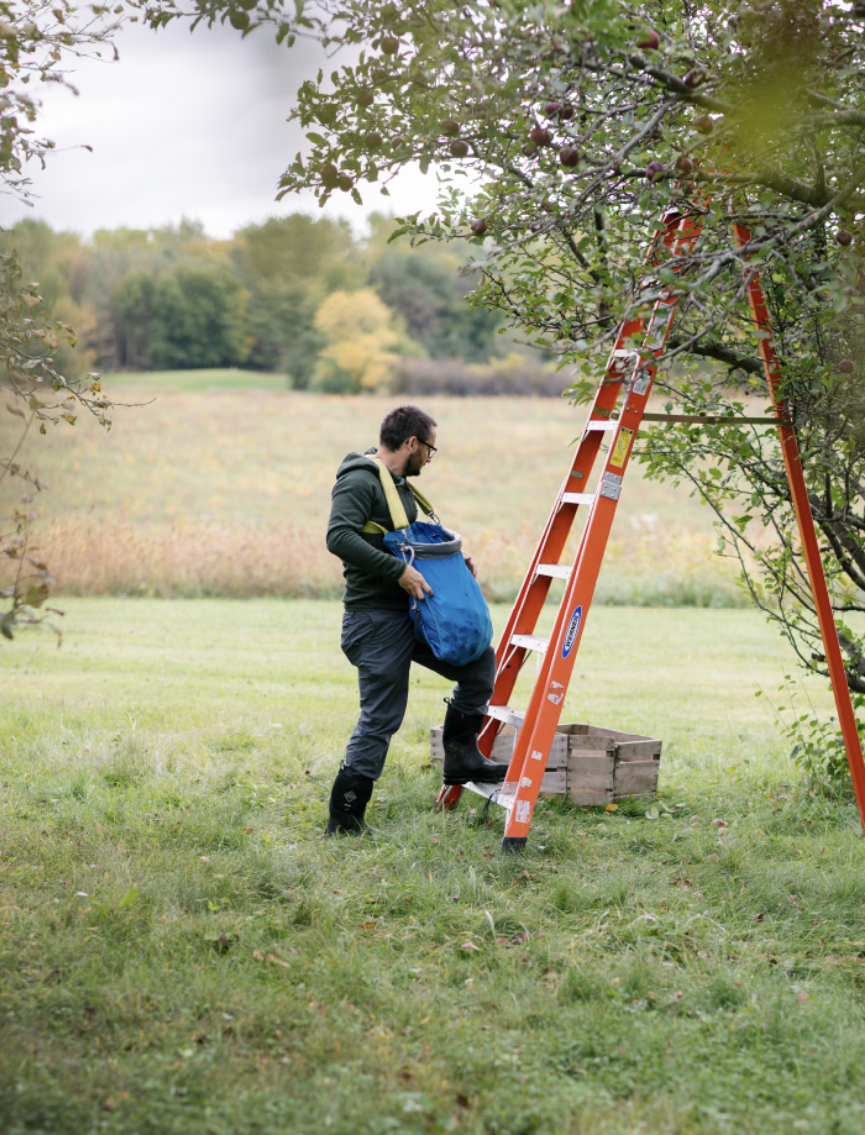
Orcharding is an historic agricultural tradition in Wisconsin, but with our inconsistent weather, growing apples in the state is a nuanced art. Even though an apple may be delicious, it can have imperfections that make it hard to sell by today’s standard of fruit beauty. Marie and Matt offer local orchards an outlet for their second-quality apples that would otherwise be a loss for the farm. Harvesting from over 25 orchards, including their own, the Raboins see the imperfection as a way to add depth to their small-batch ciders. The harvest from each orchard offers unique characteristics and varieties of apples. This diversity creates the opportunity to get creative with other ingredients the landscape has to offer to play off the flavor profile of each harvest. “I don’t know of many cideries that have been as experimental as we have. We’ve focused on locally sourced ingredients and we’ve made ciders with saskatoon, currants, elderberries, elderflowers, honey, maple syrup, tart cherries, plums, pears, seaberries, wild bergamot, chile peppers, pumpkin, black cherry, raspberry, black raspberry, blackberry, gin botanicals, basil, and I’m sure I’m forgetting some,” Matt says as he lists off the ways he and Marie have been creative with their cider-making over the years. “We couldn’t do this if we were trying to recreate the same cider each time.”
The care and intention that the Raboins put towards their sourcing doesn’t stop with their cider production. In April 2020, when the couple was faced with hard decisions about how to move through the pandemic, they felt a deep commitment to their farm partners but knew they couldn’t keep the kitchen open. In an all-nighter brainstorm session, Matt and Marie decided they would offer a grocery delivery service to homes in the Mount Horeb area. Essentially, they would keep ordering from their farms and producers, but instead of cooking, they would drop off custom orders throughout the community. This model worked so well that they continue to feature a makeshift grocery store in the restaurant even now that the kitchen is open at full tilt.
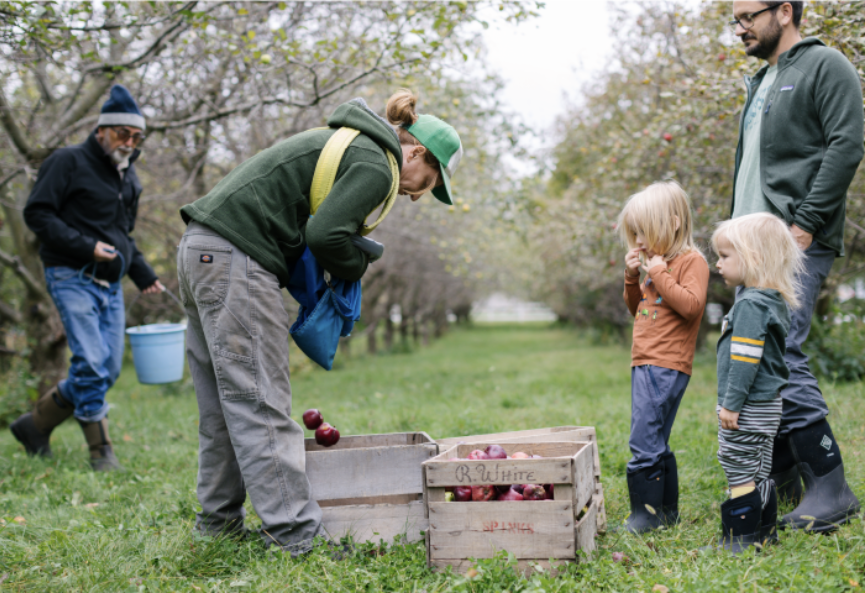
“Local sourcing in general does take some effort,” says Marie. But she sees this as an extension of her commitment to her regional foodshed and the farmers with whom she has developed personal relationships. “I know the farmers, they’re my friends. It’s also awesome to write your friends checks. If you’re going to write out a bunch of checks each week, why do it to someone you don’t know and send the money who knows where?”
While the purpose of creating circular economic strength in southwestern Wisconsin is at the core of Brix Cider, the Raboins want this energy to go beyond their own business. This year Brix Cider was awarded a three-year grant through the USDA Agricultural Marketing Service to put structure around the hyper-localized food sourcing model they have created. The grant opportunity has given Matt and Marie the resources to build a team of partners from UW– Madison to create local sourcing impact analysis and outreach events, as well as to work with a local media company to develop a series of short films that illustrate the depth of their farmer-restaurant relationships.
In the food production and service industry ecosystem, scaling up and streamlining the way people eat and drink continues to move toward consolidation of supply chains. What Brix Cider has shown is that the key to stability isn’t knowing what will be on the menu next month, it’s knowing that you’ve got your neighbor’s back and they’ve got yours.
More Stories by This Author

Edible in your mailbox
