

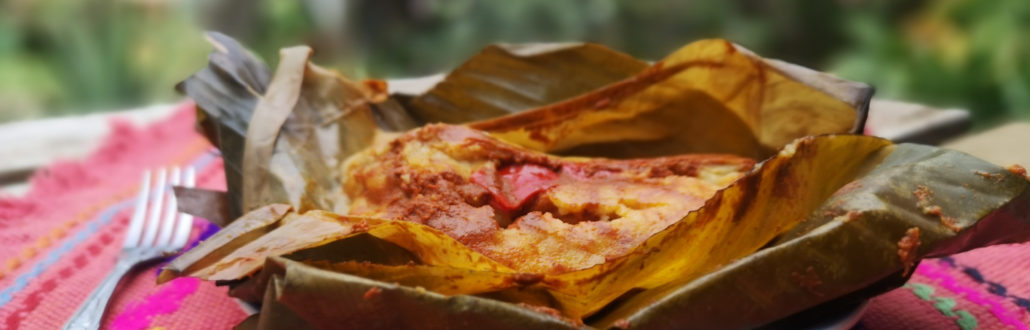
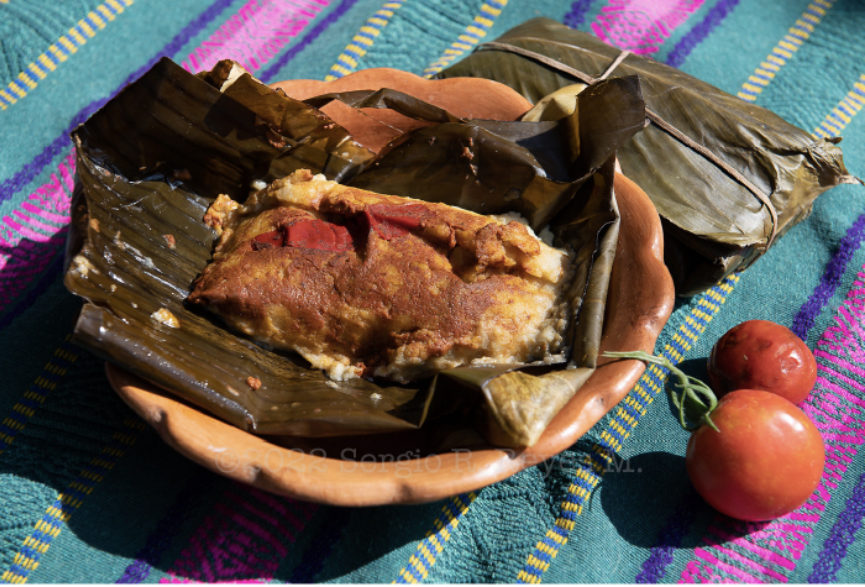
When my mother and I think about traditional celebrations and meals shared with dear ones, we inevitably think about the exquisite red and black Guatemalan tamales that my maternal grandmother prepared. She didn’t have culinary training or take any classes. She didn’t use recipe books or write down her recipes. Even so, she knew how to put together great dishes with the ingredients she had at hand. She knew intuitively how to bring out the best flavors, and seasoned her dishes with joy and love. To prepare her famous tamales, she would start several days ahead of the celebration, summoning her daughters, nieces, and granddaughters to join in the assembly.
The key flavors in tamales derive from the ingredients in the recado (sauce). Red tamales are savory and feature tomatoes, tomatillos, three different types of dried peppers, ground pumpkin, and sesame seeds. All these ingredients are roasted, helping to concentrate and intensify their flavors. Sugar and cocoa are added to black tamales, to give them their distinctive sweet flavor and dark, chocolatey hue.
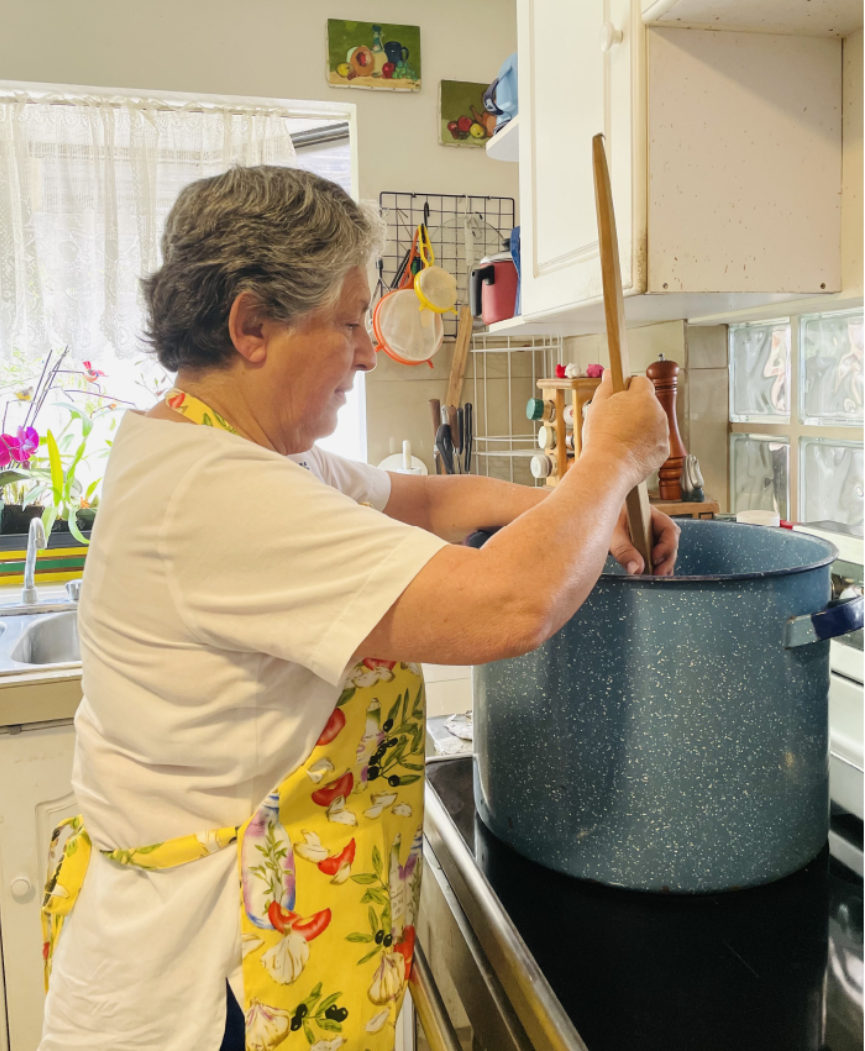
Preparing tamales is no small feat, even at a more modest scale than my grandmother used to make them. She would prepare at least 100. With support from my mother (her sous-chef), she obtained all the ingredients from farmers’ markets and supermarkets. Together they washed, boiled, and dried the two different kinds of leaves used to wrap tamales: banana and calathea leaves. Under my grandmother’s directions and constant supervision, they prepared the meat and masa (dough). The latter requires a lot of patience, ingenuity, and muscle, since masa is a tough substance that must be massaged into suppleness. Once everything was cooked and the leaves were dry, it was time to assemble the tamales. My mother and grandmother arranged the leaves, dough, meat, sauces, and garnishes in careful sequence around a big table, then beckoned us to my grandmother’s house.
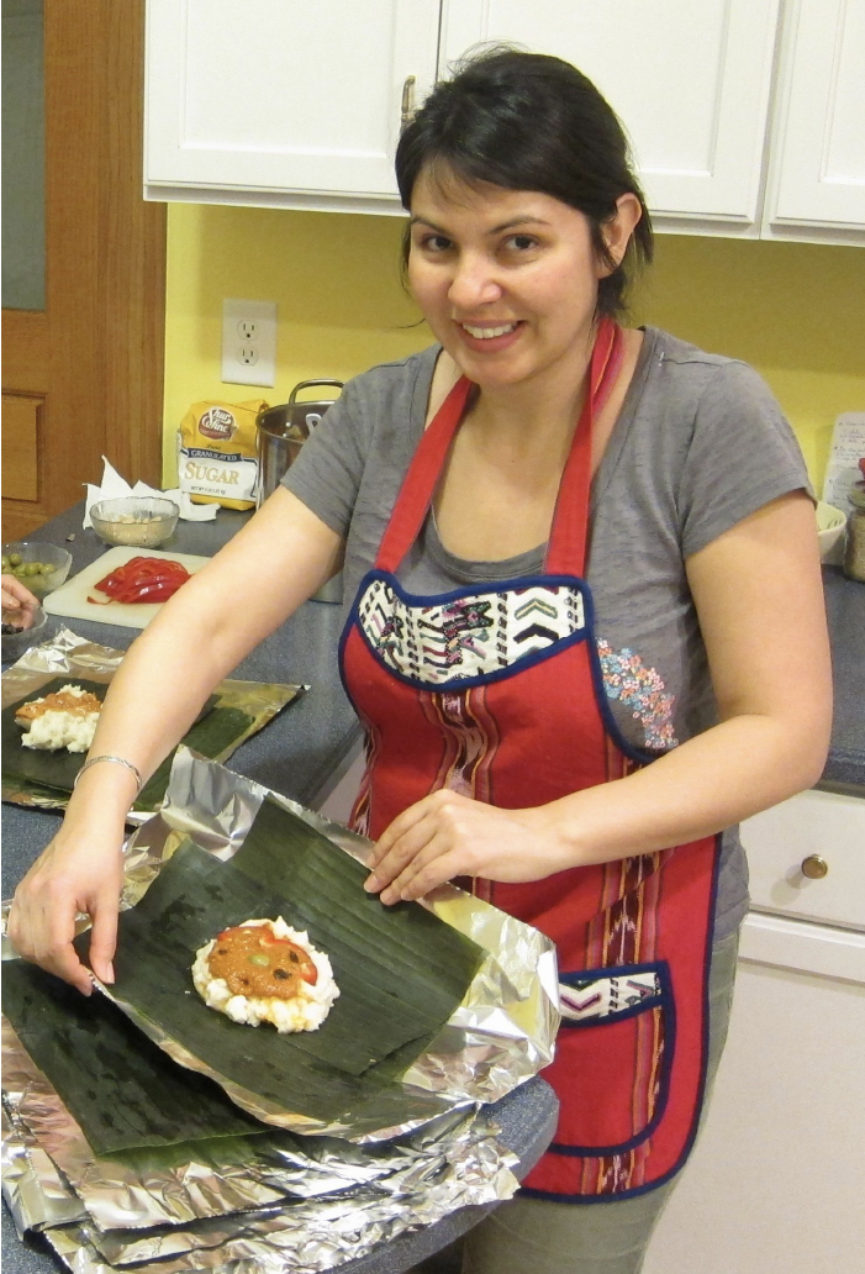
After ensuring we had clean hands, my grandmother would assign a specific task to each of us:
1) superimposing a square of banana leaf on top of the calathea leaf;
2) adding a dollop of the masa;
3) adding meat (vegetarian tamales became an option later on);
4) adding garnishes: almonds, red bell peppers, olives (for red tamales), or almonds, prunes and raisins (for black tamales);
5) adding the recado; and
6) wrapping the tamale. We would use a natural fiber called cibaque to tie the tamales in such a way that we could distinguish the different types (red, black, with or without meat).
The tamales could then be stored at this stage in the freezer, and the day of the celebration we steamed them in a big cauldron for three hours, layering banana leaves at the bottom to keep the tamales separated from the water—and filling the house with a wonderful aroma.
Tomatoes play a vital role in the making of many tamales, and figure prominently in other elements of Guatemalan cuisine. Sandra Otilia Sanchez Rojas, a colleague of mine and a Maya Kiché woman, says, “‘Pix’—the word for tomato in Kiché—plays a very important role in traditional Guatemalan gastronomy, forming an ingredient in savory sauces, salads, and even sweets. For birthday celebrations and local patron festivities, Guatemalan people will make chuchitos (corn tamales), and paches (potato tamales). The aroma of roasted tomatoes, accompanied by onion, garlic, and other vegetables, is a delight for the senses. When tamales were being cooked, it smelled like a party, it smelled like celebration. We could hear the marimba playing in the background as the house slowly filled with the combination of these aromas.”
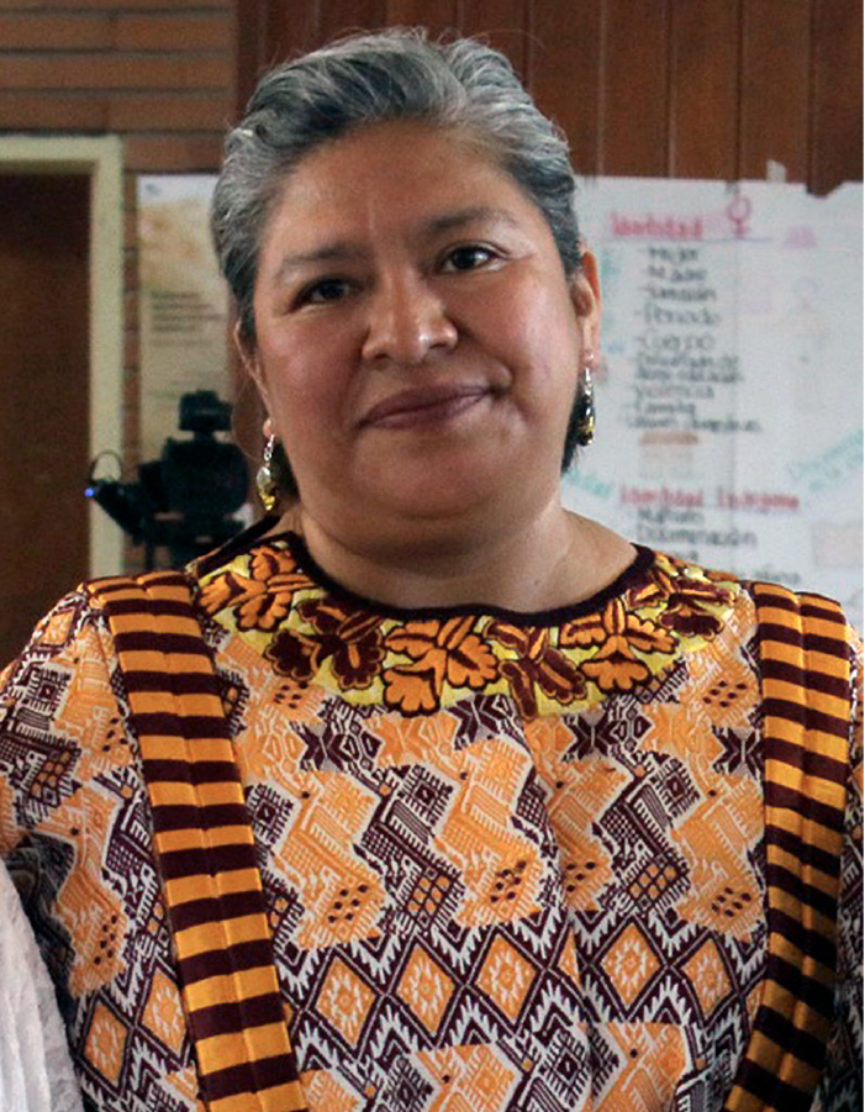
Sandra, who comes from a family of farmers, said that her ancestors didn’t need to buy seed. Tomatoes grew in her backyard. Those that ripened beyond the point of being edible would be thrown to the ground, where tomato seedlings would sprout and start a new cycle of life and interconnection between humans and plants. Thinking about the way tomato was used and shared in her community, Sandra brought up bartering, a practice that highlights the solidarity and mutual aid in rural Indigenous territories and communities in many parts of the world. Bartering occurred when one person exchanged excess heirloom tomatoes for other produce that was available from their neighbors. There was no need of money, balances to estimate weight, or counting of the produce. The exchange was based on solidarity and need, taking place outside of the realm of markets and profit.
These sensory memories are heavily charged with nostalgia for all three of us—a nostalgia for culinary traditions that fostered family and community. There is also another layer of nostalgia for the flavors that have been lost. How many times have we heard from our grandmothers, and from anyone who uses tomato in their kitchens, that tomatoes don’t taste the way they used to? Modern tomato varieties are visually appealing, but their flavor is generally bland. Unfortunately, over the course of the 20th century, modern agriculture prioritized yield and shelf life, which led inevitably to a decline in flavor. Thanks to seed-saving growers, who maintained flavorful tomato varieties, a new generation of tomato producers, breeders, and chefs are working to salvage tomato flavor. (See Ambar Carvallo’s article on UW-Madison’s Seed to Kitchen Initiative on p. 23!) Let’s remember that food is meant to be enjoyed for its flavor, its nutrition, and its capacity to gather people around the same table. We look forward to the next celebration, to sit together and enjoy another tamale. Black? Red? Which color will you choose?

Edible in your mailbox
