

A terrible thing has happened: Emma has lost her appetite. Worse things have happened, and quite recently, than a woman who once loved food and is currently eating dry bread for dinner. A roast chicken was once Emma’s primary tool to address catastrophe, but now she can’t recall why she’d ever thought that worked. Chewing, staring at the pale gray paint of her living room, she imagines a bronzed chicken on a neat white plate and realizes it has nothing to do with her.
Perhaps she has been mistaken for decades, showing up to bedsides and houses of mourning with her poky little comestibles. The recipients probably chucked her offerings in the trash—not from malice, just this same sense of bafflement.
She’s been in this state since her own catastrophe; it may be temporary. If it’s not, she will have to fill her time with some fussy, mincing hobby like embroidery or painting Ukrainian Easter eggs. Instead of elaborate sauces, she can offer the stricken her dogsbody help, cleaning messes and transporting objects. Now that people have offered this type of thing to Emma, she knows how useful it is. (There are many, many objects.)
But at some point it did strike her that no one has brought her, say, a casserole. It’s her own fault: they think she will be critical. Maybe, before, she would have been. Now she understands that people in her state approach food with a sense of bovine obedience. They know they must take it in and make use of it, even if they cannot quite remember why. That is the state in which she finishes her bread. She did her job and the bread did its.
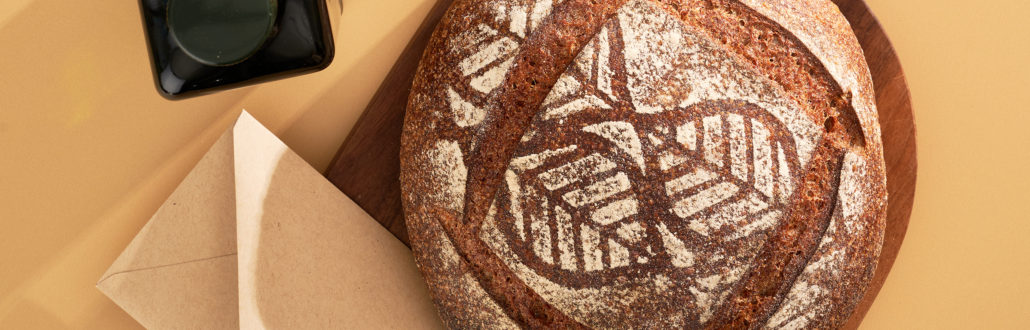
A few days later, however, something new occurs. An acquaintance, who must have heard of her catastrophe but doesn’t realize she once had strong opinions about recipes, leaves a loaf of sourdough on her porch. Lighter than it looks, round, as rustic and nubbly as earth. There is a card and a bottle of dark green olive oil.
Emma brings them into her house and looks at them, this selection of objects. Theoretically, she knows what to do. It’s a matter of unwrapping, slicing, plating, unscrewing, pouring, dabbing. It’s too much motion for right now, but the tangy fragrance of the bread makes her think that she might get started. Not yet, but possibly soon. In the meantime, she picks up the loaf of bread and places it in her lap. It emits a toasted fragrance and a fine dusting of flour and crumbs; its brown exterior gives no sign of its intricate, internal architecture. Emma holds it tenderly and lightly, like a lost object she is grateful to find.

Edible in your mailbox
