


Where 19th century Midwest farmers once profited from a “hops craze,” today they are undergoing a modest “hops renaissance.”
Hops-growing in Wisconsin has a rather curious history. It started (the first time) in the mid 19th century when westward-moving settlers and returning Civil War soldiers converged on the region in search of new opportunities. Coincidentally, the 19th century was also the heyday of the local brewing industry. From 1860 to 1880, the expansion of large breweries like Pabst and Schlitz helped to fuel the hops-growing boom.
Centered in Sauk County, Wisconsin hops cultivation grew so rapidly that some bankers were writing blank checks. A secondary industry of how-to manuals rose up to meet the demand of prospective farmers, many of whom were planting the crop for the first time. At the peak of hops cultivation in 1867, Wisconsin farmers produced 11 million pounds of hops per year. Four million pounds of those hops came from Sauk County alone.
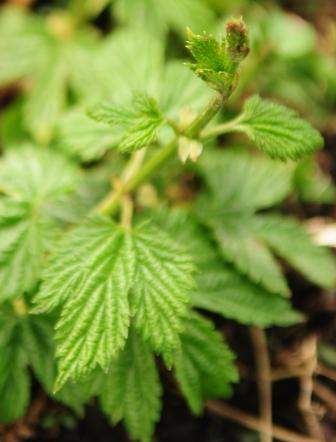
A small but essential ingredient in beer, hops are commonly thought of as aromatic flowers that serve mainly to bitter, but also to flavor and even preserve, the sweet malt beverage. Botanically speaking, hops are actually strobiles or “cones.” They are herbaceous perennials that grow on long stalks, called bines, reaching to 20 feet in just six weeks. They then die back to the ground each winter and go dormant.
It turns out that Wisconsin has an ideal climate for hops cultivation, but as with so many economic booms, the so-called “hops craze” gave way to a dramatic agricultural bust. Farmers in the 19th century had a dim understanding of sustainable agriculture or disease management. They cultivated only one or two types of hops and planted the bines very close together across a relatively small region. Ultimately, what killed the hops industry in Wisconsin was blight. It came first in the form of a mildew. Then aphids. Aphids left behind another fungus–sooty mold–which spread into the hops cones and further decimated the crop. By 1920, the commercial hops industry had completely abandoned the state for the Pacific Northwest.
Over time, most people seemed to forget that hops could even be grown in Wisconsin—an ironic outcome for a state that is virtually synonymous with the production and enjoyment of beer. But even more curious than the historical amnesia is that now, seemingly all of a sudden, hops are coming back. Today, the state of Washington is still the largest hops producer in the United States, but where 19th century Midwest farmers once profited from a “hops craze,” today they are undergoing a modest “hops renaissance.” Where just five years ago there were no commercial hops in Wisconsin, now there are 75 acres under cultivation. There are another 50 acres being cultivated in Michigan, and the overall regional numbers are trending upwards.
There are many reasons for the return of hops to Wisconsin, but two main forces stand out. One is the mercurial rise over the last two decades of the local craft beer industry. Local hops farmers once supplied the largest of the large commercial breweries. Today the large acreage growers in the west do that, while nascent Wisconsin growers supply mainly smaller craft breweries and regional microbreweries. In a state that has upwards of 70 different breweries—including the behemoth Miller Brewing Company— the craft brewery market may seem like small potatoes. But for the past decade, the craft brewing industry has grown consistently at a rate of roughly 10 percent a year—even through the recession. Across the Upper Midwest and Great Lakes region, there are now about 400 craft brewers. While craft beer still claims less than 10 percent of the entire beer market in Wisconsin, so far it’s been a solid partner in the effort to revive regional hops.
If the rise of craft beer made the hops revival possible, a handful of people have made it happen. One of the people leading the charge in Wisconsin is James Altwies, director of Gorst Valley Hops. Originally from Ohio, Altwies got his masters in horticulture at UW-Madison. Although he spent years managing field research for an agrochemical company, he was always interested in figuring out how to bring a new, high-value crop to Wisconsin that farmers could produce on smaller acreage, both as a cash crop and a means to diversify their farms. Then in 2007, there was a sudden global hops shortage. Hops prices shot up from three to 30 dollars per pound. Regional brewers had problems sourcing an affordable and reliable supply. This was the opportunity that James Altwies had been waiting for.
After doing intense research at the State Historical Society, Altwies brought on partners and founded Gorst Valley Hops. Gorst Valley isn’t a farming cooperative; it’s a collective production and processing company that recruits hops farmers, trains them in cultivation, processes the product they harvest, and then sells it to regional brewers. Altwies readily acknowledges that he’s “a capitalist at heart,” but he says he founded the company on a “concept so complex that they don’t even teach it in graduate economics. It’s called sharing.”
Central to the Gorst Valley mission is that farmers and distributors can work together to “share” in the inherent value of the product. Gorst Valley farmers–called “charter growers”–get a value share of their annual crop. Thus far, it’s typically been between 60 and 75 percent. Gorst Valley now has nearly forty growers who cultivate over half of the 75 acres of hops in Wisconsin. The vast majority of them only work a single acre. Still, in an economy where farmers often hand over big profits to middlemen, Gorst Valley’s share numbers are impressive. Most important for what Altwies calls their “trust circle,” the business doesn’t get paid until its growers do.
The task of reviving hops cultivation in Wisconsin has required Gorst Valley to start the industry over—from scratch. Recruiting all of its growers in the middle of a recession, Gorst Valley has had to convince many seasoned farmers that the crop could succeed. But more than half of those who applied to start farms were folks Altwies calls “urban flighters”—people with no farming experience who were looking for a lifestyle change.
In a conscious effort to avoid the unsustainable practices of the distant past, Gorst Valley constantly holds educational workshops for its growers. Emphasizing crop diversification, Gorst Valley also directs farmers to grow at least 13 different varieties. Since the company can’t predict how one variety will grow—or sell—from year to year, Gorst Valley guarantees that all of its farmers will earn the same amount of money per unit of land they plant.
To ensure quality for brewers, Gorst Valley also takes food science very seriously. In a kind of makeshift laboratory inside their rustic processing center in Middleton, Gorst Valley monitors the acid and oil content of their hops. At the same facility, the company mills the hops and compresses them into pellets of a very particular density so they won’t crumble in storage but will dissolve in brewing. Hop pellets—which look a bit like giant pellets of rabbit food—are standard in the brewing industry today.
As the director of all of these operations, Altwies refers to himself as the company’s “Janitor and CEO.” He wears his many hats happily. That is because he’s deeply engaged in the task of rebuilding an agricultural economy, one that will be both profitable and totally sustainable. “I love beer,” Altwies says. “But I’m passionate about demonstrating that there are other mechanisms to producing our food stuffs that are more equitable to everyone involved.”
For craft brewers, supporting the local hops revival has been a fundamental part of their ongoing artisanal quest to make better beer. Among the local breweries that have used Gorst Valley hops are Capital Brewery, Furthermore Beer, Lakefront Brewery, and the Vintage Brewing Company.
Vintage, located on the near west side of Madison, is in its third year of operation, and its brewmaster, Scott Manning, has created several of his beers with direct creative input from Gorst Valley. As a small restaurant and brewpub, they produce an annual output of only 950 barrels of beer, most of which they sell in-house. Since he produces an eclectic lineup, Manning values the broad base of knowledge that Gorst Valley quite literally brings to the table—when Altwies visits Vintage, they physically sit down together. They talk in detail about what hops Gorst Valley farmers are growing and how they might work in the beer. Manning says he and Altwies “get real geeky about it.”
For Manning, getting geeky means talking about the unique ways that Gorst Valley hops might affect his various recipes. While hops are typically used during the boiling process simply to bitter the malt, “aroma” varieties can also be added at the end of the process and steeped, like tea. Over time, Manning’s discussions with Altwies have led to the invention of at least two brews: a red ale called “Better Off Red” and a Belgian pale ale called “Hop, Skip, and a Jump.” Manning made his Belgian ale with Gorst Valley Sterling hops from start to finish. Sterling is a variety that Manning describes as elegant and peppery with floral notes. Not coincidentally, it also happens to be a personal favorite of Altwies.
While Gorst Valley currently has a long waiting list for growers, there are other people driving the regional hops revival as well. In 2007, Brewmaster Bo Belanger of Ashland’s South Shore Brewery founded the Midwest Hops and Barley Co-op. Unlike Altwies, Belanger approaches the hops shortage from the standpoint of a brewer who is interested in stabilizing price and supply, although helping farmers earn higher profits has been an integral part of the cooperative’s success. In 1995, South Shore was only the seventh microbrewer in Wisconsin. Now, there are more than 50. In this thriving beer economy, local farmers and brewers are increasingly relying on each other to move their products–profitably, and directly–from farm to glass.
If craft beer enthusiasts work together in an intimate professional world, it’s probably because they tend to share a passion for both drinking beer and buying local. It’s a partnership that growers and brewers alike believe will continue to grow in the future. Gorst Valley Hops is attracting new growers and brewers all the time. Recently, they were even contacted by the Miller Brewing Company about making an “all Wisconsin” beer. Altwies does worry that as the industry gets established again, novice farmers may try to rush into hops cultivation, bringing hops quality down and “turning brewers off.”
So far, however, craft brewers have been both selective and enthusiastic. For Madison Craft Beer Week in May, a handful of local brewers, including Vintage, Capital, and Great Dane, came together to create a collaborative local beer called Common Thread. It was made with Gorst Valley hops, which makes sense. In the curious history of regional hops, common threads seem to be the trend of the future.
Continue reading to learn about DIY homebrewing resources.
Home Brewing
Along with large breweries and microbreweries, Wisconsin also has a lot of home brewers. Home brewers can buy their hops–or even the hops rhizomes if they want to grow their own–at several retail locations throughout the region. Some of these companies now sell locally grown varieties as well. Here is just a sample of the DIY resources in our area:
Madison’s Wine and Hop Shop sells hops rhizomes in the spring. They typically sell between fi ve and 12 varieties of local hops, which they purchase both from Gorst Valley and from the hops cooperative Wisconsin Hop Exchange.
Brew and Grow, with retail locations in Madison and Waukesha, sells both rhizomes and hops. Although they aren’t currently selling any locally grown varieties, Gorst Valley hopes to sell through them in the near future.
Northern Brewer, with retail locations in Milwaukee and the twin cities, also sells a wide variety of hops and is another location through which Gorst Valley hopes to sell in the future.
Cannery Wine and Spirits in Sun Prairie has a home brewing section and typically carries several varieties of hops from the Wisconsin Hops Exchange.
A good home resource is The Homebrewer’s Garden (Storey Publishing, 1998), which teaches “how to easily grow, prepare and use your own hops, malts and brewing herbs.”
Lastly, if you’re interested in growing your own, possibly the best way to get hops is to ask for cuttings from friends. Seek out homebrewing clubs in your area for both brewing and hops-growing advice.
More Stories by This Author

Edible in your mailbox
