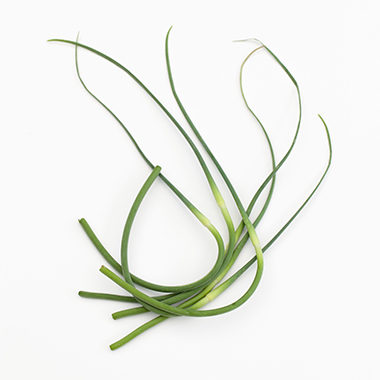
Garlic
Allium sativum
August - November
Cooking Tips
Details
Garlic has been grown for over 5000 years, making it one of the first crops cultivated by man. Ancient Egyptian pharaohs were even buried with bulbs of garlic tied around their necks. Since then, its influence has spread around the globe, becoming an essential ingredient in many different types of cuisine (not to mention, superstitions). Today, you can find several different varieties at your local farmers market, from small with up to 20 cloves to elephantine with maybe 5 or 8 giant cloves, and all with subtly different flavors. The farmer can most likely give you suggestions for dishes that highlight each variety. Look for bulbs that are a little heavy for their size, with no soft spots or broken skin, and have not begun to sprout.
Nutrition
Garlic is a vital source of many sulfur based nutrients. These compounds not only cause the distinct smell and flavor of garlic, but also act as antimicrobials, help to lower blood pressure, improve iron metabolism, prevent cancer growth, and regulate clotting activity.
NOTES: Garlic can be stored for a long time in a cool, dark place like a cabinet, cellar, or an unheated garage in cooler months. Whole heads of garlic can also be frozen, keeping for up to a year. If stored in the fridge, keep away from foods that absorb flavors like butter. If your garlic starts to sprout (which is normal even when stored properly), just slice in half, peel out the sprout and proceed as usual. Connoisseurs say the garlic’s flavor is affected once it sprouts, but average cooks say the flavor is no different when cooked so there’s no need to waste good garlic.
Storage Tips
Garlic can be stored for a long time in a cool, dark place like a cabinet, cellar, or an unheated garage in cooler months. Whole heads of garlic can also be frozen, keeping for up to a year. If stored in the fridge, keep away from foods that absorb flavors like butter. If your garlic starts to sprout (which is normal even when stored properly), just slice in half, peel out the sprout and proceed as usual. Connoisseurs say the garlic’s flavor is affected once it sprouts, but average cooks say the flavor is no different when cooked so there’s no need to waste good garlic.