

Cauliflower
Cooking Tips
- Don’t boil it to mush. Try steaming or lightly stir-frying to preserve its crunch. Or dip in a sticky batter and pan fry until golden.
- Many enjoy pureeing cooked cauliflower to dress fish, or simmering in rice or almond milk until it is creamy.
- Because of its light flavor, cauliflower pairs well with sharp flavors like aged cheeses, cumin, curry, garlic, lemon and meats like ham, bacon or lamb.
- Add the leaves to soup stocks.
Details
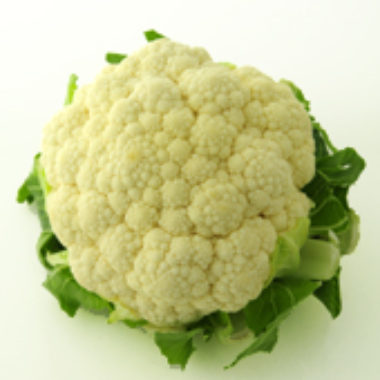
Cauliflower is often a vegetable that we don’t appreciate until we’re older when we realize it doesn’t have to be boiled to oblivion. If we had seen purple, orange or the green star-shaped cauliflowers as kids, maybe that would have changed our opinions too.
The parts we eat are called “curds.” Look for firm heads that still have their inner leaves covering the curds rather than packaged in cellophane. The leaves protect the vegetable from sunlight which can cause brown spots or yellow discoloration. Avoid cauliflowers that have leaves growing in the curd or are yellow rather than white. Size has no relation to quality.
If cooking an organic cauliflower, soak the head in a bowl of water with a handful of salt and 3 or 4 tablespoons of cider vinegar to chase out any little green cabbage worms that might be holed up in the interior.
Nutrition: Though white-colored foods are disparaged as not containing as many nutrients as dark-colored foods, a 1 cup of raw cauliflower still contains 86% percent of the daily value of vitamin C, 26 percent DV of vitamin K (an anti-inflammatory), many other vitamins, minerals, antioxidants, and only 26 calories. The colored varieties will also have other nutrients based on their coloring.

Edible in your mailbox
