

Lacto-Fermented (Pickled) Vegetable Medley
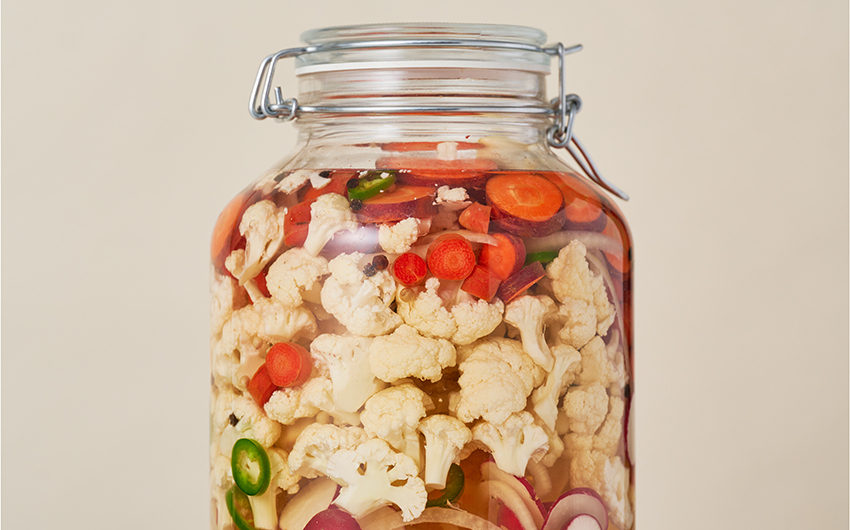
This is a great snack, side dish or condiment for any meal and is a great way to get fermented veggies in your diet! This recipe is an example of how to preserve a variety of vegetables through fermentation; once fermented, these pickled veggies are good for about six months in the fridge, extending the shelf-life of fresh vegetables considerably. You can make this as spicy or as mild as you'd like by changing the amount of peppers. This gives you the basic formula for brined vegetables so you can get creative and experiment with other vegetables you have on hand—simply use the same ratio of salt to water in the brine and go from there.
Ingredients
2 tablespoons whole black peppercorns
½ tablespoon whole mustard seeds
1 medium cauliflower head, cut into small florets
3 medium radishes, sliced (use any type you like)
4 medium carrots, cut into sticks or coins
½ cup yellow onion, thinly-sliced
6–8 garlic cloves, crushed
1 jalapeno or serrano pepper, sliced
½ cup fine-grain salt
1 gallon water
Directions
Pour the peppercorns and mustard seeds into the bottom of a glass jar, then add the chopped vegetables. You can use a 1-gallon jar or several smaller jars. I like to layer the veggies so they look pretty in the jar.
Prepare the brine by mixing the salt into the water to dissolve.
Pour the brine over the vegetables, leaving about ½ inch of space at the top of the jar.
Place a fermentation weight on top of the vegetables to keep them submerged in the brine. This prevents mold and promotes growth of lactobacilli, which are anaerobic bacteria. Fermentation weights are glass discs that are made to fit in regular- or wide-mouth glass jars (ceramic weights are available to use with fermenting crocks) to keep vegetables submerged in brine during fermentation; they are available at food co-ops and online retailers.
Screw a plastic lid onto the jar. Set the jar in a dry and cool spot at room temperature. Let the vegetables sit for one week, then taste. You may eat them at this point, or if you like your fermented veggies a little more tangy and "pickled", let them sit for a few days more, up to two weeks. A very well-fermented mixture will have a cloudy brine and may have some slight effervescence as well.
Once the vegetables are fermented to your liking, remove the fermentation weight and transfer the jar to the fridge for storage for up to 6 months.
Suggestions
RECIPE NOTES
• It is important that the water for the brine is filtered, as chlorinated water can have an ill effect on the fermentation process and the taste of the finished product.
• Be sure to use fine-grain, pure sea salt for this recipe. Avoid salt with any additives, including iodine, anti-caking or anti-yellowing agents.
• You will likely have some leftover brine with this recipe. Use extra brine to make a small batch of fermented vegetables or use in soup, pasta water or other recipe you might need a bit of salty water.
• Check your fermented vegetables regularly: every 2–3 days, "burp" the jar(s) by opening the lid and taking it off, then putting it right back on. This lets out any extra CO2 build up, so the jars don't crack. A byproduct of the microbial growth is CO2, so there can be lots of this in the jar if you don't burp them periodically. Also check for any surface mold or yeast. Be sure your vegetables are fully submerged in the brine and you should be good to go.
• Want to speed up fermentation and enjoy your veggies sooner? Add a starter culture: For a 1 gallon batch, add 2–4 tablespoons of sauerkraut or kimchi brine, or liquid whey strained from plain yogurt.
• When your veggies are gone, don’t toss that brine! It is flavorful and probiotic-rich. Use it in dressings, marinades or soups, save some for starting future batches of veggies, or swig a bit as a probiotic gut shot!
Some tasty variations on this recipe:
• Giardiniera-style: Add 1 tablespoon fresh, chopped oregano (or ½ tablespoon dried) and swap the radish for celery, increasing the spice level if desired.
• Kimchi-inspired: Add 1 tablespoon gochugaru, Korean chili flakes, and use daikon for your radish option.
More Recipes by This Author


Edible in your mailbox
