


Exploring true craft beer one Lambic-style brew at a time.
When I stepped into the Funk Factory Guezeria taproom for the first time, there was a mellow yeasty aroma filling in the room—like the smell of really good sourdough—hinting at the fact that Lambic-style beer, a traditional Belgian wild/sour beer, is what Funk Factory specializes in. Equally palpable was an easygoing sense of joy. It was clear the Funk Factory Guezeria taproom was about truly enjoying and experiencing beer with a depth of character found at few other breweries. Like me, many casual enthusiasts of the Madison beer scene might not be familiar with Funk Factory. Well, let me be the first to tell you: if you don’t know, it’s high time you pay a visit.
The operation was founded in 2014 by Levi Funk, starting as a passion project with one barrel in a basement. They had an incubation period at O’so Brewing Company, allowing their aged beers to get closer to maturity while keeping overhead costs low. Eventually, they moved into their own fermentation space and finally opened the taproom in 2017.
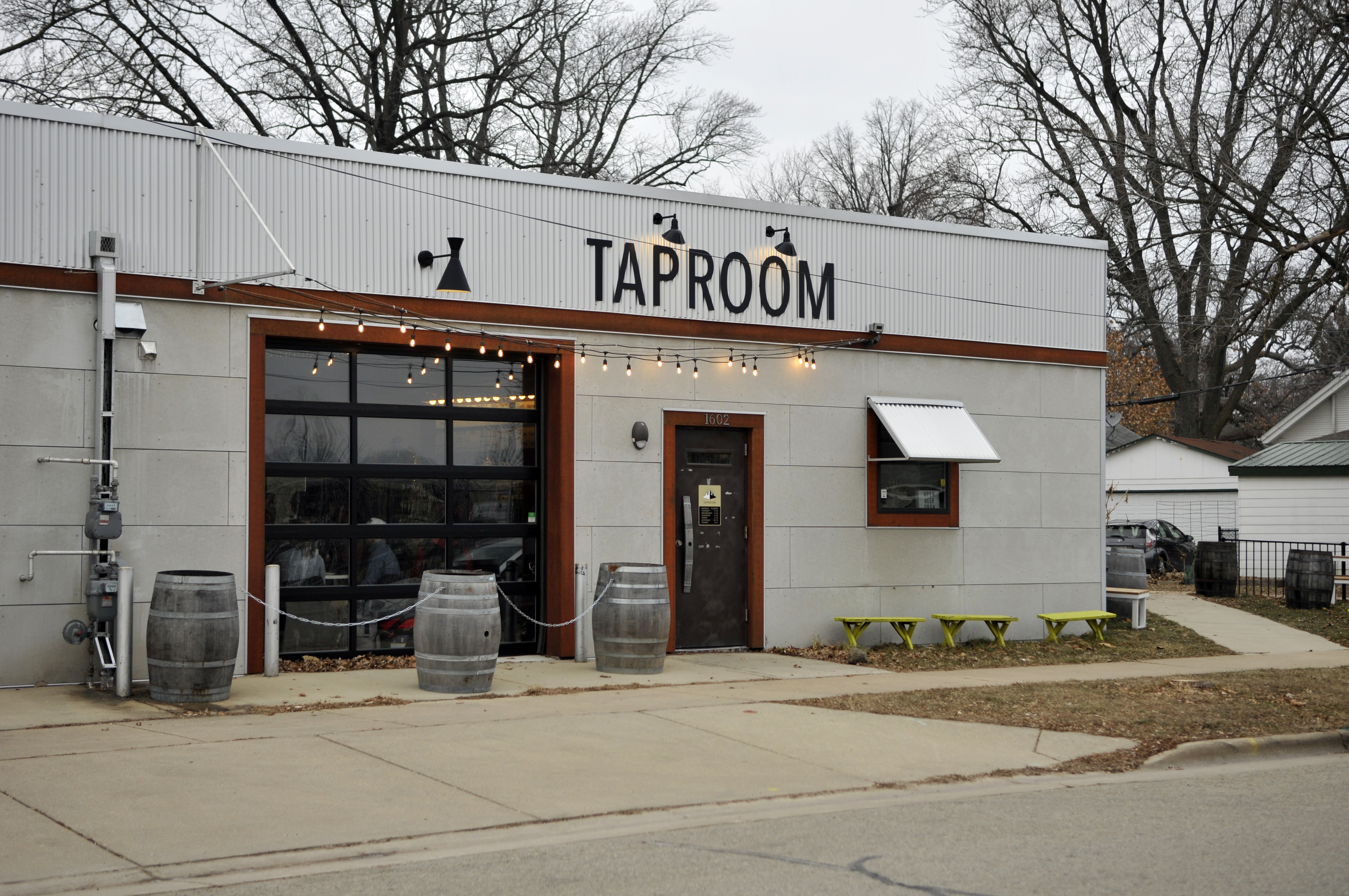
Funk Factory makes Lambic-style brews in the most traditional way they can, and they do it well. It’s a slow, deliberate process that doesn’t fit with the commodification of craft beer—a contrast made all the more stark when I visited, with the resale of Ballast Point Brewing Company in the news. Behind those Lambic-style beers are three aspects of Funk Factory that I’ve come to appreciate most: focus, patience and true craft.
The focus on Lambics means their team gets to do what they love. It means they can refine what they do, and it informs everything about the brewery. Andrew Holzhauer, their Head of Operations, walked me through the process.
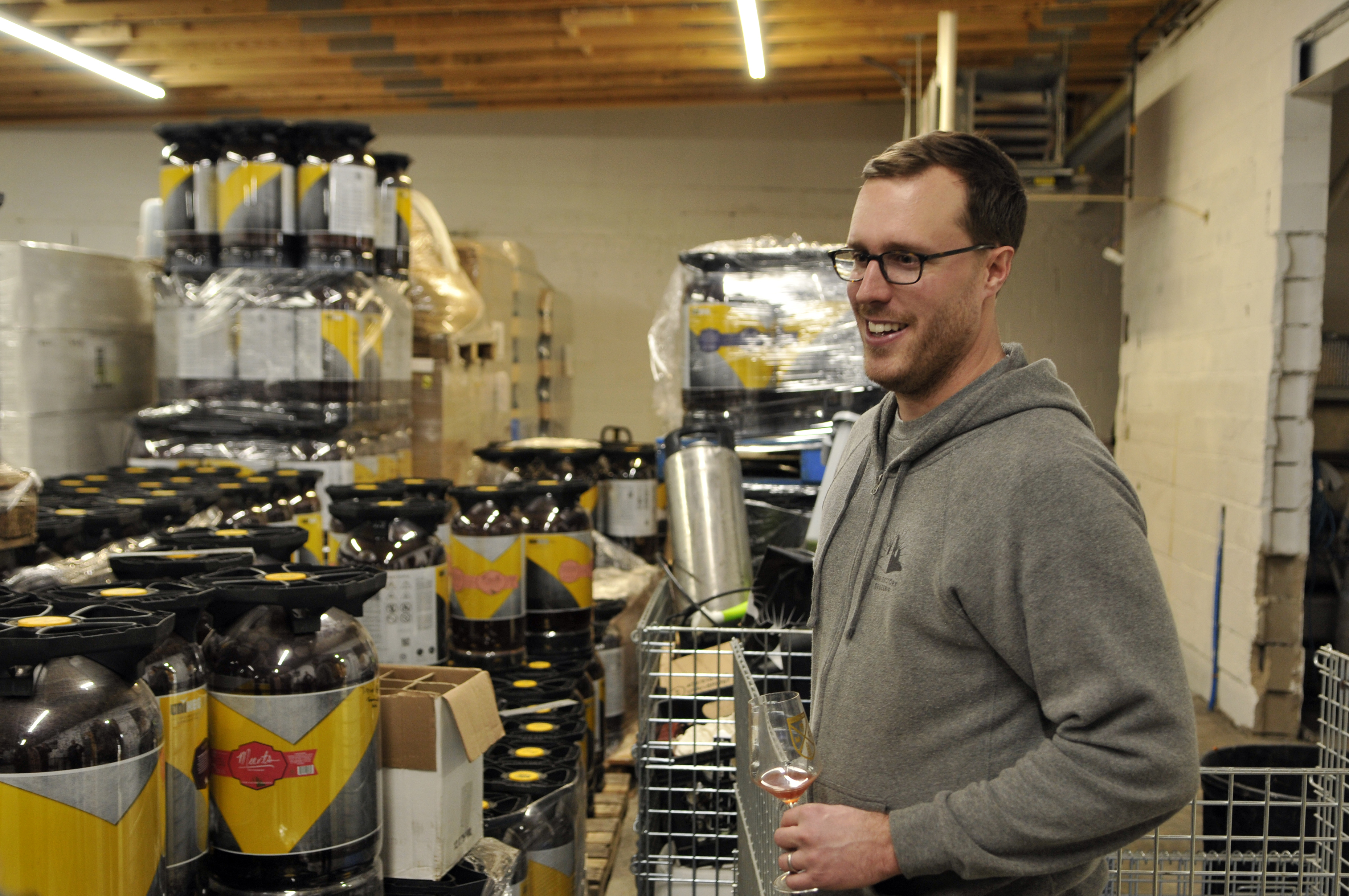
When we stepped into their fermentation space, I noticed they didn’t have their own brewing equipment. Instead, they contract with a variety of breweries to brew the wort for their base recipe, building friendships and exploring regional terroir along the way. Part of what makes Funk Factory unique is that they have a mobile coolship that they take from brewery to brewery. A coolship is a huge stainless steel tray that the hot wort is poured into and left to cool overnight, gathering the wild yeast and bacteria that will give each batch a unique character. This is a key step in the Lambic brewing process.
Very few breweries have a coolship at all, and as far as Holzhauer knew, this is the only mobile one in the country. Sharing their coolship with the breweries they partner with for the wort is one of the ways they spread the gospel of Lambic- style beers. It allows brewmasters who might not otherwise have the chance to experiment with the Lambic brewing process, known as Méthode Traditionelle outside Belgium.
Many of the pale ales and IPAs that are the most popular craft beers on the market can be cranked out in 10 to 14 days. Not so for Funk Factory. At minimum, it’s two to three months before they can even pull their first sample to check the progress.
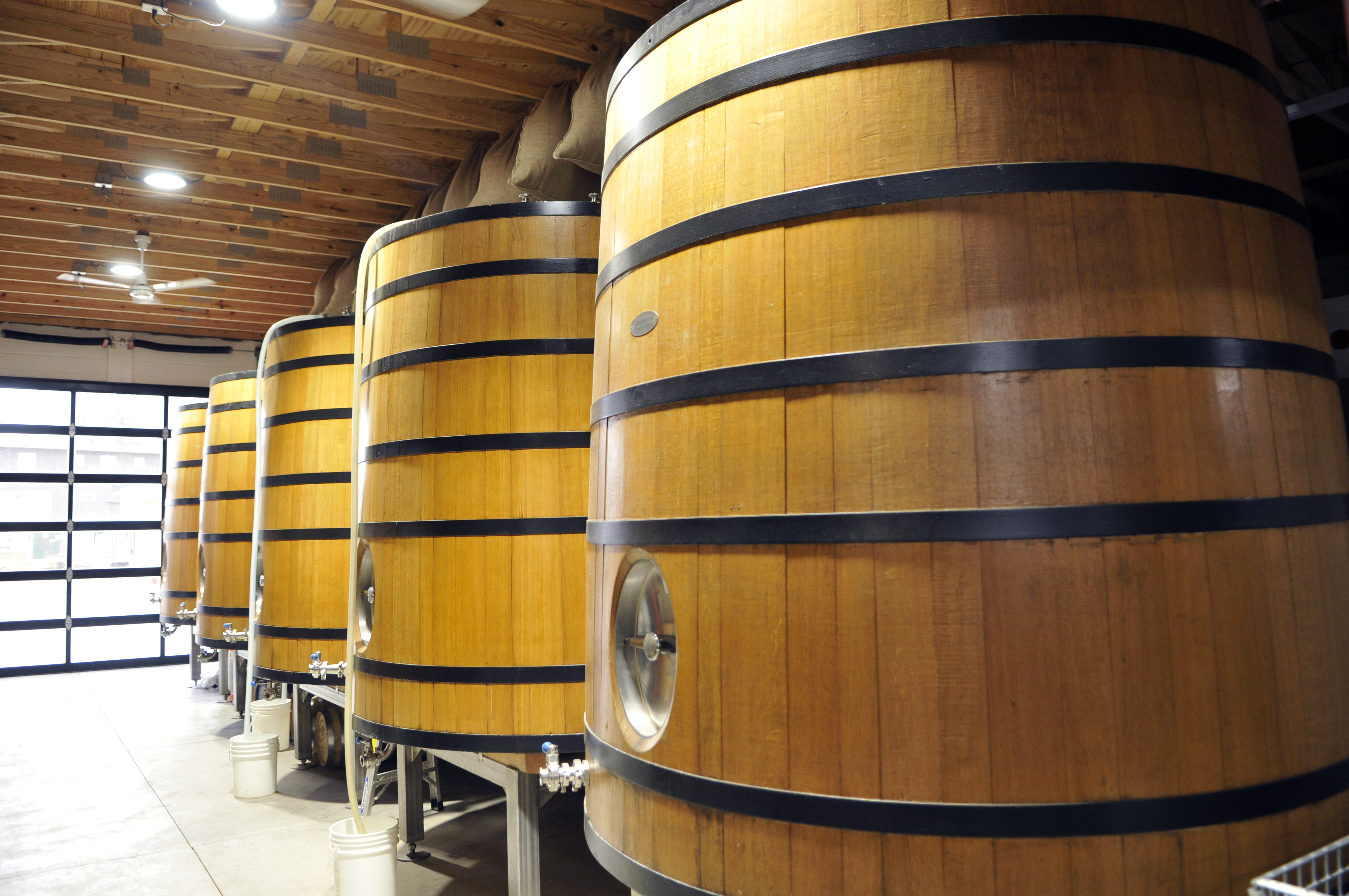
Some of the batches, especially those destined for kegs and Funk Factory’s taproom, spend three to nine months in their foeders (essentially a really large barrel, pronounced “food-ers”) in their fermentation warehouse. Other batches go into smaller barrels to age for one to three years, and there’s an exciting aspect of prospecting to that. Barrels that don’t turn out particularly interesting brews are steamed and sanitized—a reset, if you will. But ones that produce special beers with great character will be washed but not sanitized. It’s a slow process of getting to know their barrels and developing a specific house character that is the result of miraculous microbial terroir.
Even the hops are aged three to four years and then spend another six to 12 months hanging in burlap above the foeders in their fermentation building. Regardless of aging time, most of their batches spend two months on locally grown fruit, developing a variety of taste profiles. Between the different partnering breweries, fruits, aging processes, and wild yeasts and bacteria, there are thousands of possible profiles.
When you think about the variables at play, it’s amazing that Funk Factory is able to dial in their process and develop specific beers so well. It’s partly why blending is such a key step. Their flagship beer, Four Winters, is a geuze (pronounced “gooz”), a blend of one-, two- and three-year-old Lambics, which then spend another 12 months conditioning. So after literally four winters, Holzhauer says, “each release is like a retrospective.”
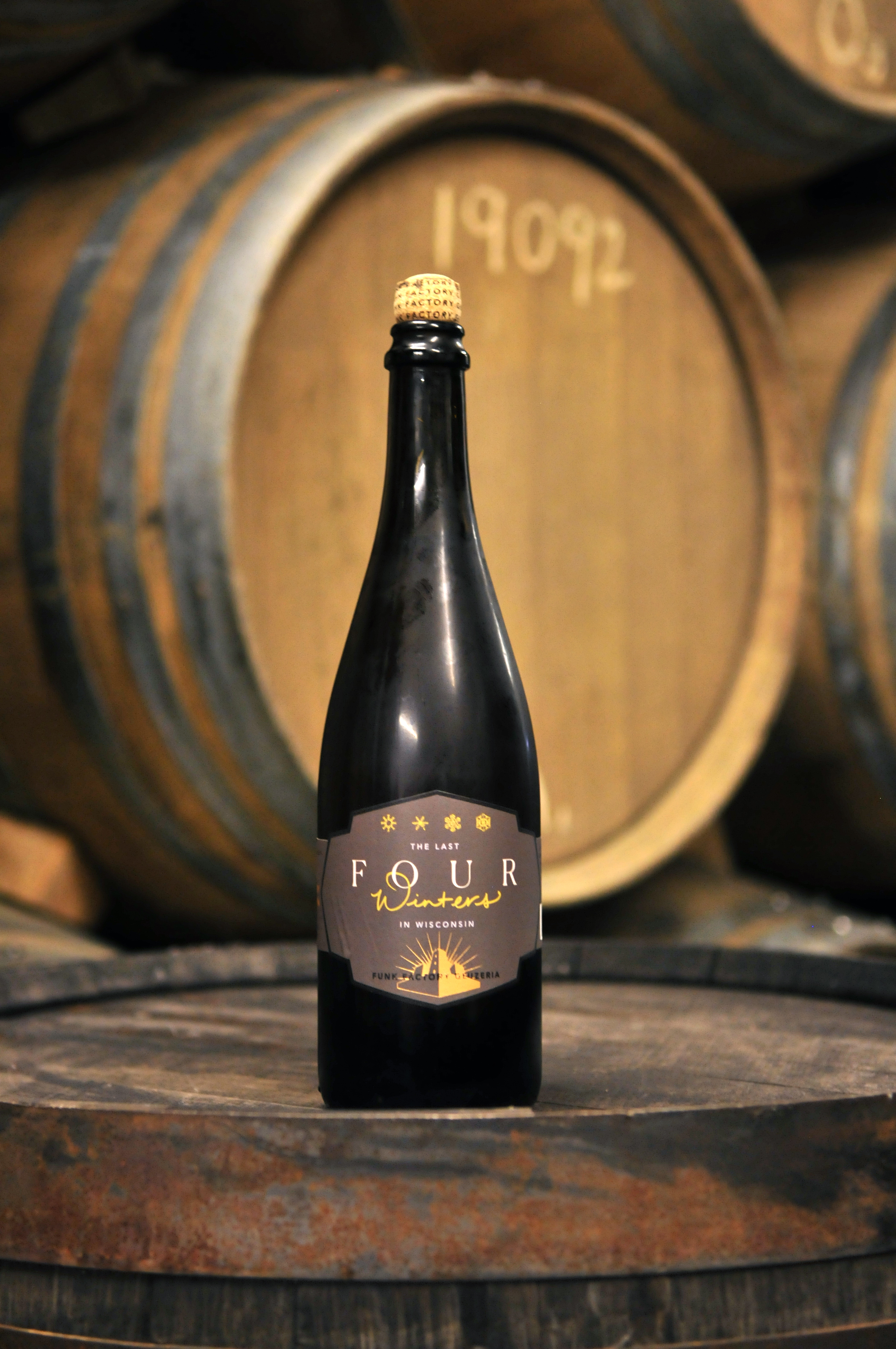
Everything Funk Factory does has a seasonality to it, not just within the year but across years. On my last visit to the taproom, I chatted with Brandon Brieske, their official “beer propagandist.” We were peering into the barrel room and, with a gleam of excitement in his eye, he says, “We’re getting ready for coolship season,” which runs January through March. There’s also a relatively short season when they locally source the fruit so key to their flavor profiles. Analogous to the CSA subscription model many farmers depend on, an important part of their customer base is their Magnum Club members, who receive a set number of bottles and exclusive access to special releases. Funk Factory knows bigger isn’t necessarily better.
With a 6,000 square foot fermentation space, 1,200 square feet for the taproom and barrel room, 253 barrels, and eight foeders, they don’t have a ton of capacity. But the Funk Factory team is comfortable with that. “We talked more about it and we’re done expanding,” Brieske says. They’re well known in the beer world internationally, even if it is taking the Madison community a while to discover them. Sure, Funk Factory doesn’t try to make every style of beer that might sell, and they don’t try to hit every shelf and taproom in the region. But what they do, they do really well.
On my first visit, I had sheepishly told Holzhauer that I wasn’t a big fan of sours. He barely blinked and poured me a glass of Four Winters anyway. I drank it to be polite, but I was immediately surprised by how much I enjoyed my first Lambic-style beer. Brieske says, “It’s not your average kettle sour brew” that’ll knock your teeth out it’s so sour. These are more measured and balanced.
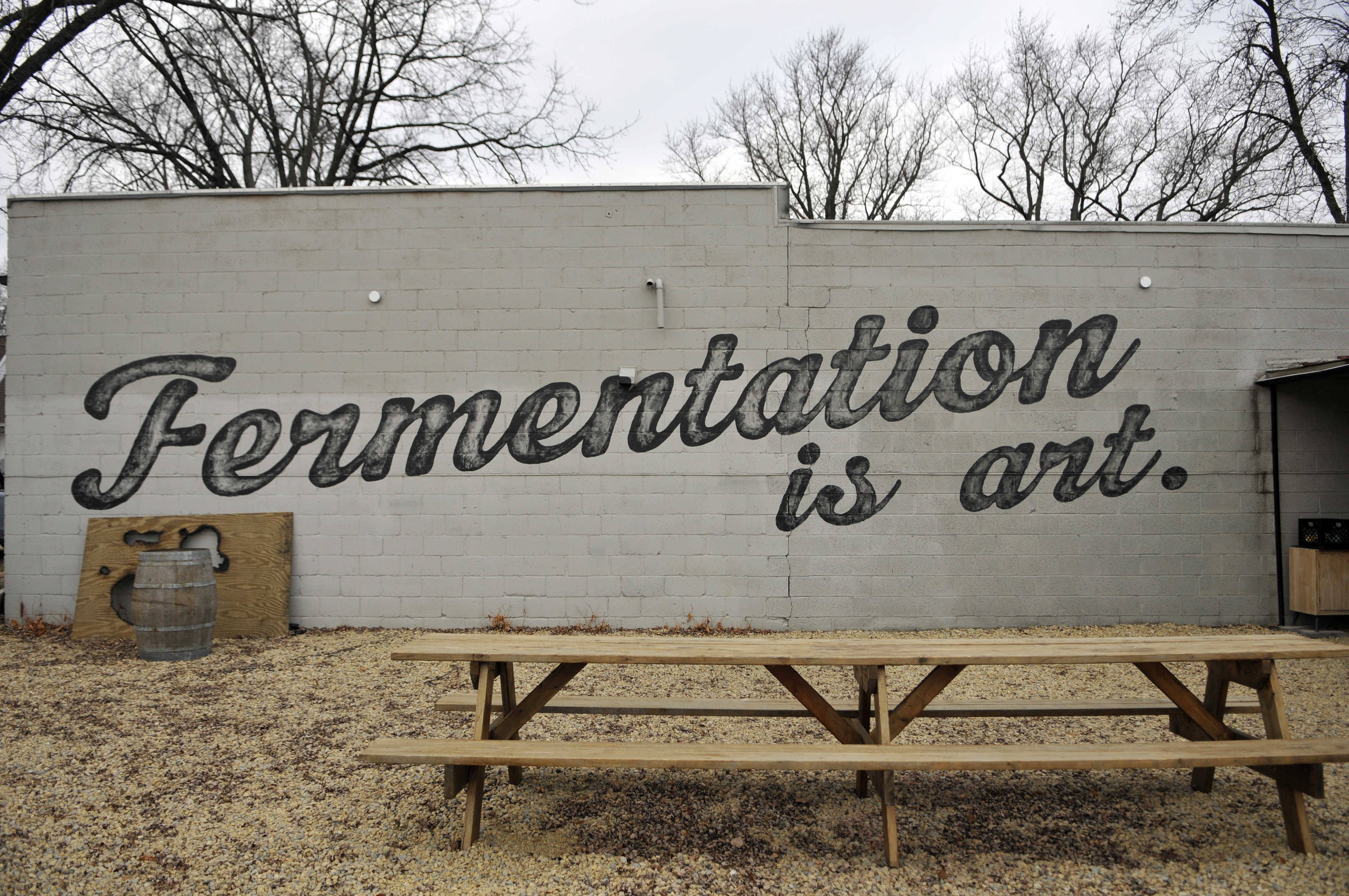
Most illustrative of their philosophy is the mural behind their impressive mobile coolship trailer, which says in bold script, “Fermentation is art.” The Funk Factory team has the craft and creativity to back it up. If you’re looking for a beer to truly savor, give Funk Factory a try. I’m glad to have this brewery on the Madison scene. Since my visit, I’ve been back three times, and I think it’s safe to say I’m a convert. Job very, very well done, mister Beer Propagandist.
More Stories by This Author

Edible in your mailbox
