

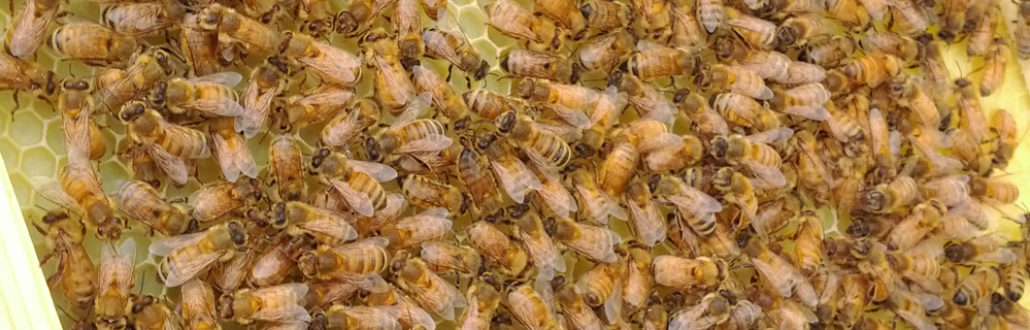
Matt LaForge began Golden Hills Honey at the tender age of 12. Now at 24 years old, his honey business continues to grow—and so does his passion.
“You don’t get to know individual bees because they only live three to four weeks. But I do feel a connection to each hive. They really do have their own personality.” – Matt LaForge
Matt LaForge has been a beekeeper for half of his life. No, Matt is not in his sixties, retired or tending to his hives in his spare time. It’s hard to know what’s more inspiring: that at the age of twelve he first fell in love with these honey producing insects, or now at the age of twenty four he has established a successful agricultural enterprise in Golden Hills Honey. Either way, this very experienced beekeeper is a role model for beginning farmers and honey lovers alike.
Matt fell in love with bees upon first discovering the buzzing beauties in the backyard of his grandfather’s neighbor, Tom. “It was a surprise to me, and my family too,” he recounts about the onset of his deep fascination with these delightful insects. This young aspiring beekeeper implored his parents to add a backyard hive to their Brookfield, Wis., home. His persistence paid off. After countless hours of bee research, Matt eventually gained his parents’ approval for the purchase of his first hive from Tom.
In the fall of that first season tending a hive, he was overwhelmed by the harvest of golden sweetness, all of which needed a home. Those first sticky streams of honey were bottled and sold through word of mouth with a Golden Hills Honey label. Yes, all at the age of twelve.
Twelve years later, a good number of Matt’s initial customers still purchase honey today, just lots more of it. Thanks to Matt’s apiarist passions and business acumen, Golden Hills Honey has grown from a one hive hobby in a Brookfield backyard to a 40 hive enterprise producing 3,100 pounds of honey in 2012.
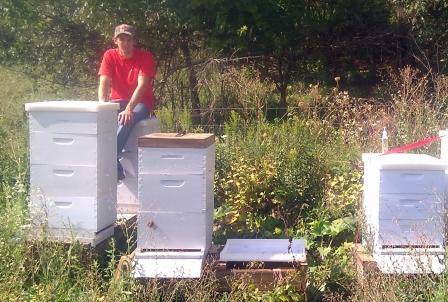
What inspired such a transition? “A lot of people think I went to the Agricultural Economics program because of the bees, but it’s the other way around,” Matt explained about the meshing of his academic and agricultural pursuits. Two pivotal experiences in the winter of 2010 piqued Matt’s interest in transforming his existing bee passion into something more. The first was regularly encountering stories and profiles of successful small, sustainable agricultural producers in his coursework as an undergraduate studying economics at UW-Madison. The second was quality time spent with one of his professors, who was starting his own small farm. As Matt and his professor walked the fields and talked about fencing and the challenges of starting a small business, Matt’s light bulb lit up. Could he build on his years of beekeeping experience and dedicated customer base to create a true farming venture?
“I’d be really busy, but my schedule would be flexible. I decided that I had the time to go around the state and take care of all these bees.” Which was precisely the opportunity Matt faced as he prepared to transition into a graduate program in Agricultural Economics at UW-Madison. He undertook some business planning, and the numbers provided him the confidence to devote time and invest funds to expand the bees as a business. And yes, all while in graduate school.
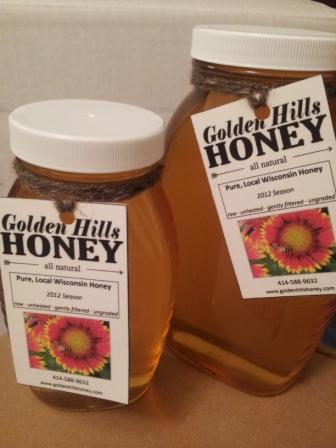
In the last two years, Golden Hills Honey has swarmed with success and growth. Matt tends to hives spread throughout five locations in Wisconsin, each possessing it’s own, unique flavor. The bee boxes at Dreamfarm in Cross Plains produce a rich alfalfa honey. Hives on recreational land in Coloma yield an extra special, early season honey from the nearby Black Locust trees. Wildflower honey comes from the hives on a small beef farm in New Berlin and his home hives in Brookfield. People buzz at the chance to host Matt’s hives on their property. Late each summer, a season’s worth of honey is collected, extracted and bottled over the course of three very full weekends. Eager, loyal customers directly purchase all 3,100 pounds of those rays of the summer’s sun preserved in glowing glass jars.
In May 2012, Matt’s graduation from UW-Madison with a master’s degree launched him back into the real world, a very bee-oriented world. “Especially coming right out of school, it’s a lot more comfortable to do the beekeeping and run my business in a more sustained way,” Matt explains, bolstered by a full-time job immersed in the world of beekeeping at Dedant and Sons in Watertown. Weekends are spent driving the state and caring for his hives. This structure allows Matt to slowly grow his business, tripling his hives each year and making smart investments, like a pole barn for extraction that he calls his “Honey House.” In the coming season, he will begin to consolidate hives to a smaller geographic area and pursue small-scale pollination services, dropping off a small number of hives to local farms.
Clearly, it’s the bees themselves that continue to draw Matt to grow Golden Hills Honey. “There is a joy to the bees; I could watch them for hours. They amaze,” he says. He now innately knows their needs and patterns. If honey is starting to come in strong at one location, he can predict when it will start to flow in the other locations too. “You don’t get to know individual bees, because they only live three to four weeks. But I do feel a connection to each hive. They really do have their own personality.”
Learn more about Golden Hills Honey and Matt LaForge at the website, including wonderful photos and creative honey recipes.
Q&A with Matt LaForge of Golden Hills Honey
Biggest Challenge
“Meeting demand. I run out of honey every year, and that’s a difficult thing to tell customers.”
Most Rewarding
“The first inspection after the snow melts every year. Cracking the cover on the hives and knowing the bees made it through the winter.”
Biggest Lesson Learned
“People are very willing to help. It’s amazing. People who I barely know who have sold so much honey for me just through word of mouth. They like knowing their farmer, and they’ve just gone above and beyond to support what I do.”
Best Resource
“Tom, my grandpa’s neighbor, who got me started with the bees. And experienced beekeepers in general; they are extremely helpful.”
Advice for New Farmers
“You can definitely do it. Start slow and be willing to adjust as you go along.”
Featured Recipes



More Stories by This Author

Edible in your mailbox
