

A national-scale produce delivery service brings new competition to Madison-area community supported agriculture (CSA) farms.
A national-scale produce delivery service called Imperfect Produce, based in California, opened in Madison this summer, providing new competition to Dane County community supported agriculture (CSA) farms. The service specializes in “uglyproduce,” fruitsandvegetables whose size, shape or other imperfections mean they won’t be accepted by retailers and risk going to waste. Although an undoubtedly noble endeavor, the food is shipped in from western states, thus presenting some philosophical challenges for local CSAs—and local eaters.
“It’s an interesting landscape,” Carrie Sedlak, executive director of FairShare CSA Coalition, told the Wisconsin State Journal (WSJ). Imperfect Produce may have a membership model, but it is not CSA. Sedlak says this kind of green-washing can confuse people. They may assume they’re supporting local, sustainable farms and the local economy when, in fact, they’re not.
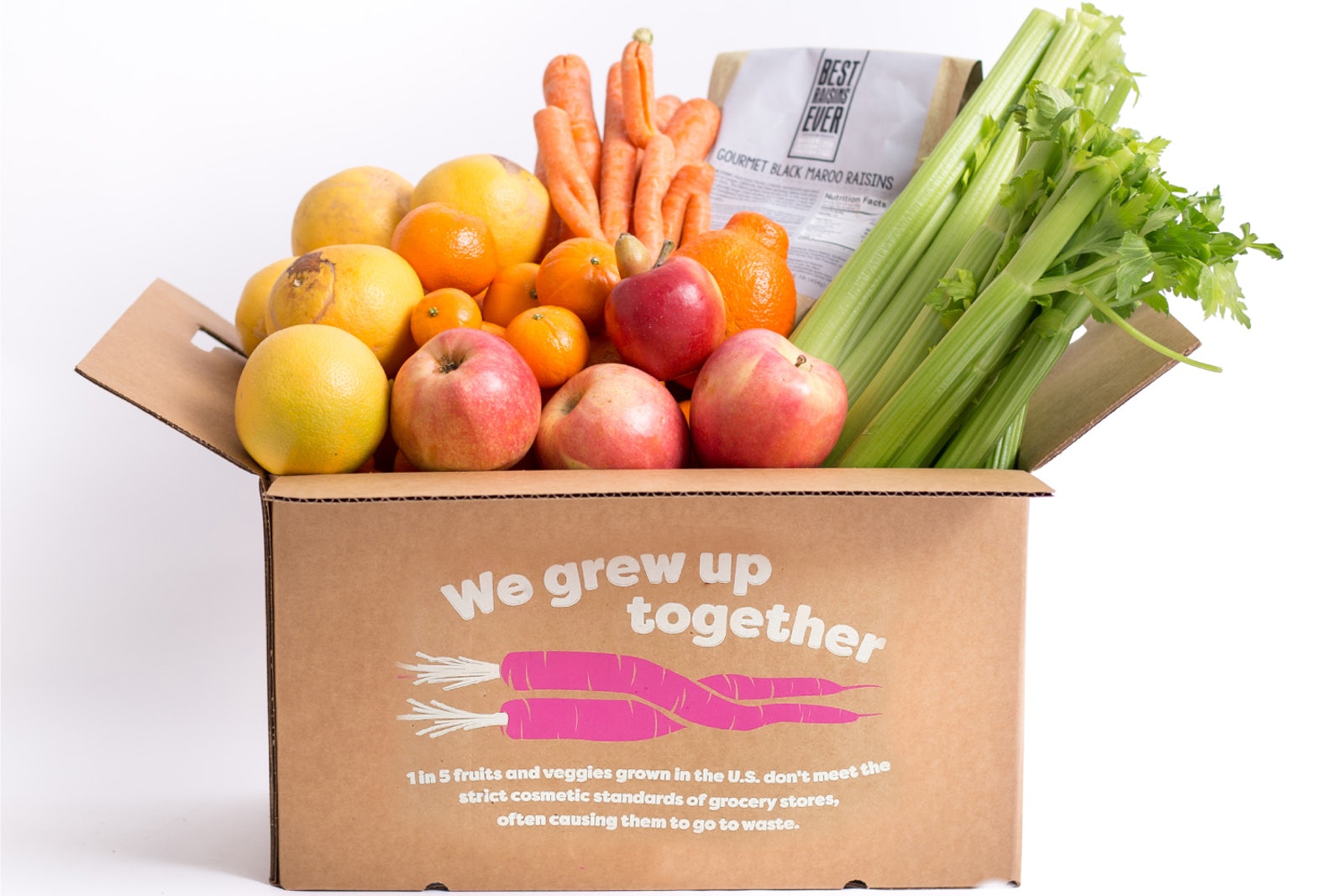
Photo courtesy Imperfect Produce
Although Imperfect Produce is indeed doing a good thing, Sedlak points out that many Dane County organizations and businesses are already working to reduce the existing waste here in the area. We have organizations gleaning produce from farms to donate to food banks, restaurants and packaged food producers that primarily use locally sourced less-than- perfect produce, and some CSAs offer large “preserving shares” toward the end of the season.
Another thing to keep in mind is that some on-farm food waste is not a bad thing. Produce left in farmers’ fields will often be plowed back under, which, to someone who’s never farmed or gardened before, can appear wasteful. But in fact, it serves an important purpose by adding nutrients back to the soil so it’s ready for a new crop next year.
On the other hand, food waste at the retail level and from our own refrigerators goes into the landfill and doesn’t serve a productive purpose. But there are great organizations creating solutions. UW-Madison works to reduce its campus-wide food waste by collecting food scraps and sending them to a biodigester operated by Gundersen Envision. The methane produced from anaerobic decomposition is captured for energy, and the solids turn into compost. The City of Madison is also testing the viability of a citywide “food scraps recycling” (aka composting) program through an eight-week trial along a specific route during August and September. The results were not available as of this publication, but you can learn more here. This site also lists three local compost services that may pick up food scraps in your neighborhood for a fee—a great option to make your own positive mark.
Everything is connected in a food system. The competition that Imperfect Produce presents has caused some to renew their resolve to prioritize supporting our local food economy. “If people really want to do good and minimize food waste,” said Laurel Burelson of Ugly Apple Café to WSJ, “buy from your local farmers.”
Read the full Wisconsin State Journal article here.
More Stories by This Author

Edible in your mailbox
