


The Meat of the Matter: The Challenges of Local Slaughtering and Butchering
For our tenth anniversary, we've created a special issue that is both a retrospective and future-focused view of our regional food system. We've selected ten of our favorite and most pertinent past issues. For each, we revisit the issue's theme or feature article, examine how it has evolved since then, and share insights for the future. We hope you enjoy taking a walk down memory lane with us...
Original article: The Meat of the Matter by Jessica Luhning, Winter 2014
Then
An environmentally sound meat supply chain relies on an important link: local slaughtering and butchering. But regulations favoring large processors are expensive and burdensome for small businesses; and no one wants a local slaughterhouse and processing plant in their “backyard,” no matter how small or responsibly run.
“Attempts to clean up the industry have resulted in increased regulations that, instead of providing transparency for consumers, reward big over small, often hurting those who raise, slaughter and process animals on family farms and in small community butcher shops,” wrote author Jessica Luhning in 2014.
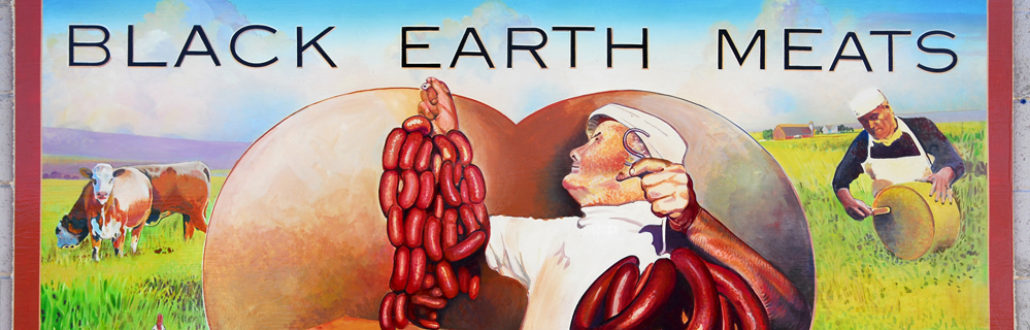
This well researched article provided an in-depth look at the highly contentious closing of Black Earth Meats and Bolzano Artisan Meats—and at what happened to bring these successful and respected businesses to their knees in 2014, leaving more than 200 farmers, 50 employees and 50-plus retailers and restaurants high and dry. We were thrilled when the hard work on this story was recognized with the Edible Communities’ 2015 EDDY Award: Critics' Choice in the Feature Article-Food Artisan category.
Now
Although the Dane County Circuit Court initially ruled in favor of Black Earth Meats, a state appeals court overturned the ruling in 2016. Black Earth Meats appears to be closed for good, and founder Bartlett Durand is focusing his time on the whole-animal butcher shop Conscious Carnivore in Madison. The shop continues to hold strong to its values of “Respect for every animal on four feet or two” and local, sustainable sourcing.
Today as well as in 2014, it’s clear that being a small processor/butcher continues to be a difficult niche, even in Madison, a city more interested in where its food comes from than most. Notably, Underground Butcher on Willy Street closed its doors in December 2019, though not due to regulatory issues. Farther west in our region, near Viroqua, neither Premier Meats nor Driftless Meats found success. But there are still those working hard to connect the dots between local farms and you, like Conscious Carnivore, Bucky’s Butchery on the UW-Madison campus, and Prem Meats and Natural Harvest, both in Spring Green.
Future
COVID-19 disrupted the meat processing industry this year when hundreds of plant employees tested positive for the virus, prompting shutdowns across the Midwest, including at the JBS Packerland plant in Green Bay. The resulting shortages revealed the vulnerabilities of large-scale industrial meat production and processing and have spurred interest in locally sourced options Not only are small-scale, locally focused food systems more flexible and nimble, making them less likely to break down in the wake of unexpected and widespread upheaval, smaller processors are better able to follow pandemic guidelines and may offer safer conditions for workers. As demand for local meat skyrockets, small farms, processors and butchers are expanding production as much as they can.
Yet despite the clamor for local meat during and following the crisis, it’s difficult to predict whether the demand will remain vocal enough and long-term enough to compel regulators to update meat processing regulations to account for small processors’ fundamentally different scales, values and supply chains.
It’s a partnership between farm and consumer, with small processors—a vital link in our local food system—in the middle. Yet the health of the system is primarily driven by consumers: how loud our voices are and where we put our dollars. That said, consumer research shows that even when meat eaters claim to support small business and value humanely raised and slaughtered meat, their spending patterns don’t often reflect those values. Are we ready to finally walk the talk? Will the COVID-19 crisis solidify the need to address this vulnerability in our consolidated industrial food infrastructure? We hope so. The future of small, sustainable, responsible meat production depends on it.

More Stories by This Author

Edible in your mailbox
