


Prime eggplant season in Wisconsin can begin as early as July and stretch through early fall. There are countless varieties of eggplant, from the bulbous globe to the slender Japanese varieties, and their ability to easily take on flavors makes them incredibly versatile. And yet, eggplant tends to be an enigma in most home kitchens, ending up as eggplant Parmesan or forgotten at the bottom of a CSA box.
No slight against a great eggplant Parmesan, but we think the silky smooth flesh and vibrant skin of eggplant are destined for even greater things. Globe eggplant, the most common variety in the United States, is mild in taste and texture, making it well suited for sautéing, grilling and pureeing. Italian eggplant looks like a miniature version of the globe variety with more tender flesh but lots of seeds. Other varieties that are becoming increasingly easy to find in the area are the Japanese and Chinese eggplants. Long and slender, Japanese eggplant is a deep purple while the Chinese variety is lighter in lavender hues. Both have thin skins and few seeds, making them perfect for grilling or stir-frying.
No matter what variety you find at your local market, the key to cooking eggplant is knowing how to draw out its excess water to avoid mushy textures and bland flavors. Generally this involves salting prior to cooking, but every recipe can vary. When shopping for eggplant, search for ones that are firm, glossy and feel heavy for their size. And bigger doesn’t always mean better—larger eggplants can be more bitter and carry excess seeds.
This season, consider featuring this high-in-fiber yet low-in-calorie crop on your table. Add a meatless meal option to the menu or toss it on the grill for a perfect taste-of-summer side dish.
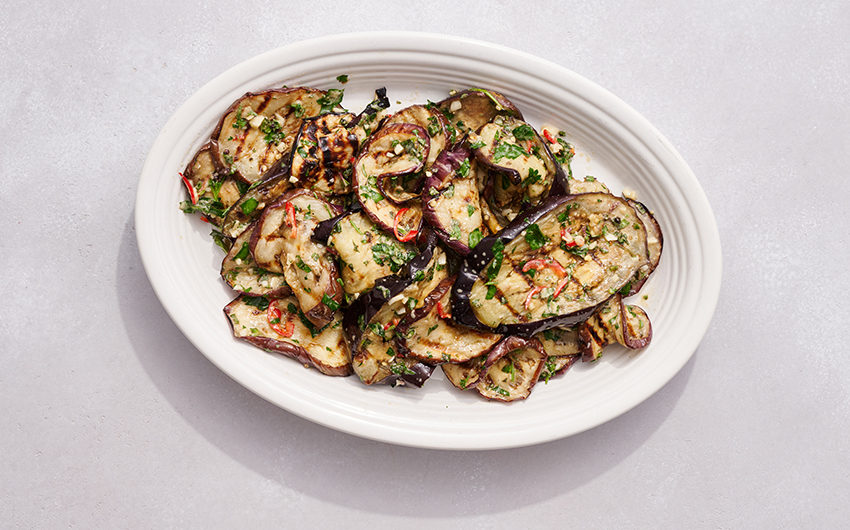
Grilled Eggplant with Garlic and Summer Herbs
This season, consider featuring this high-in-fiber yet low-in-calorie crop on your table. Add a meatless meal option to the menu or toss it on the grill for a perfect taste-of-summer side dish.
More Stories by This Author

Edible in your mailbox
