

Sowing Food Sovereignty
Ho-Chunk's resiliency gardens break ground
Through their Resiliency Garden project, the Ho-Chunk Nation Department of Agriculture is building tribal food sovereignty by expanding capacity not just for their department, but within their communities across the state.
Milkweed thrives along roadsides, in corners of parks and yards, and, sometimes stubbornly, in the aisles of farm fields. It is a resilient perennial. It reseeds itself abundantly. Many of us know how its blossoms bring monarch butterflies and other pollinators. In Ho-Chunk communities, those milkweed buds, in their early, green, tender phase, are also known for being delicious in soup.
This past spring, the Ho-Chunk Nation Department of Agriculture launched a Resiliency Garden project. Just like the milkweed bud, or mahic (maw-HEE-nch) in Hoocąk, the project aims to proliferate nourishment and adaptability. Resiliency Gardens in five different Ho-Chunk communities broke ground in June with the goal of empowering their tribal communities to grow more of their own food. “It’s about building capacity, not just in my department, but in our communities,” said Hinu Smith, director of the Ho-Chunk Nation Department of Agriculture.
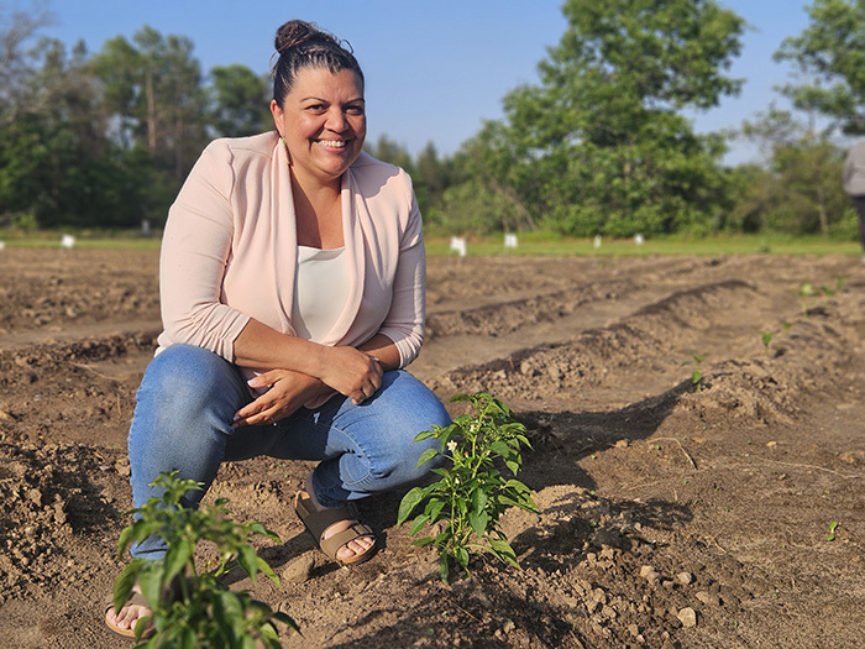
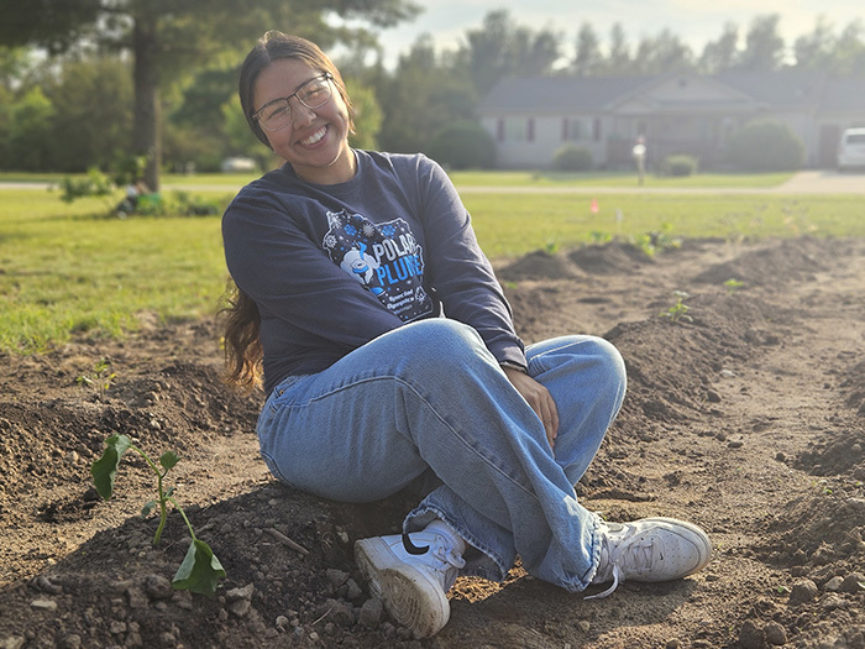
The gardens, in Black River Falls, Madison, Sauk County, Wisconsin Dells and Wittenberg, each contain several plots for families or individuals. While communities can count on the Department of Agriculture for educational and equipment support, each community is stewarding their garden in their own way. What’s more, each family or individual stewarding a plot gets to decide exactly what they want to grow and how. “We get the chance to be creative and we get the chance to be experimental,” says Rita Peters, manager of the Madison Resiliency Garden. “That’s what I love about it.”
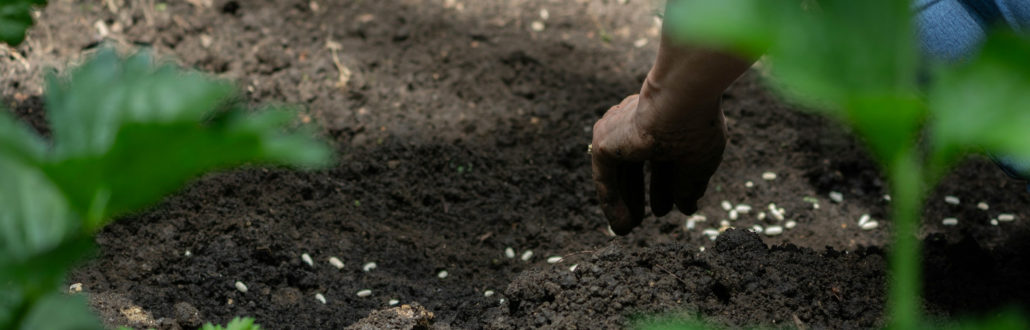
In early June, I visited the Resiliency Gardens in Black River Falls and Madison. At both sites, tomatoes, peppers and cucumbers had been transplanted in recently tilled fields. Just below the new soil surface were seeds for corn, carrots, beans and flowers, preparing to sprout up and unfurl into the sunlight.
“We got Dakota corn from Prairie Island [Indian Community], and we got butternut squash with it, then ‘Cherokee Trails of Tears’ beans,” says Gia, as we walked alongside her and her sister Gabby’s plot in Black River Falls. In addition to strawberries, sweet potatoes and some of their favorite ingredients for salsa, Gia and Gabby were companion planting what is known as the Three Sisters. Three Sisters is the Haudenosaunee name for the Native American practice of companion planting of corn, beans and squash. “I’m excited. And I am nervous, because I don’t really know how to grow it—but I’m excited for the chance to try it out,” says Gia.
Like Gia, many of the growers who have taken on plots this year are relatively new to gardening on their own. Growing alongside other Ho-Chunk, especially corn, beans, tobacco or milkweed, means reconnecting with knowledge and practices of their ancestors. In Madison, Peters and her family pointed out the multiple plots seeded with ‘Ho-Chunk Speckled Corn’ (also called ‘Winnebago Speckled’). “These are our relatives and that is why it is super important for all of us to be learning how to take care of them,” said Peters.
As part of learning how to care for these varieties, the Madison gardeners are planning a community corn harvest for the fall. “We have songs for the corn harvest,” Peters’ brother Josh tells me, as the group discusses ceremonies and practices for a traditional Ho-Chunk corn harvest. Peters is also scheming about a bug
hunt in the pollinator plot for the young kids who come. Beyond the pollinator garden, kids can hunt for bugs in the mahic, as milkweed is seeded all along the perimeter of their Resiliency Garden.
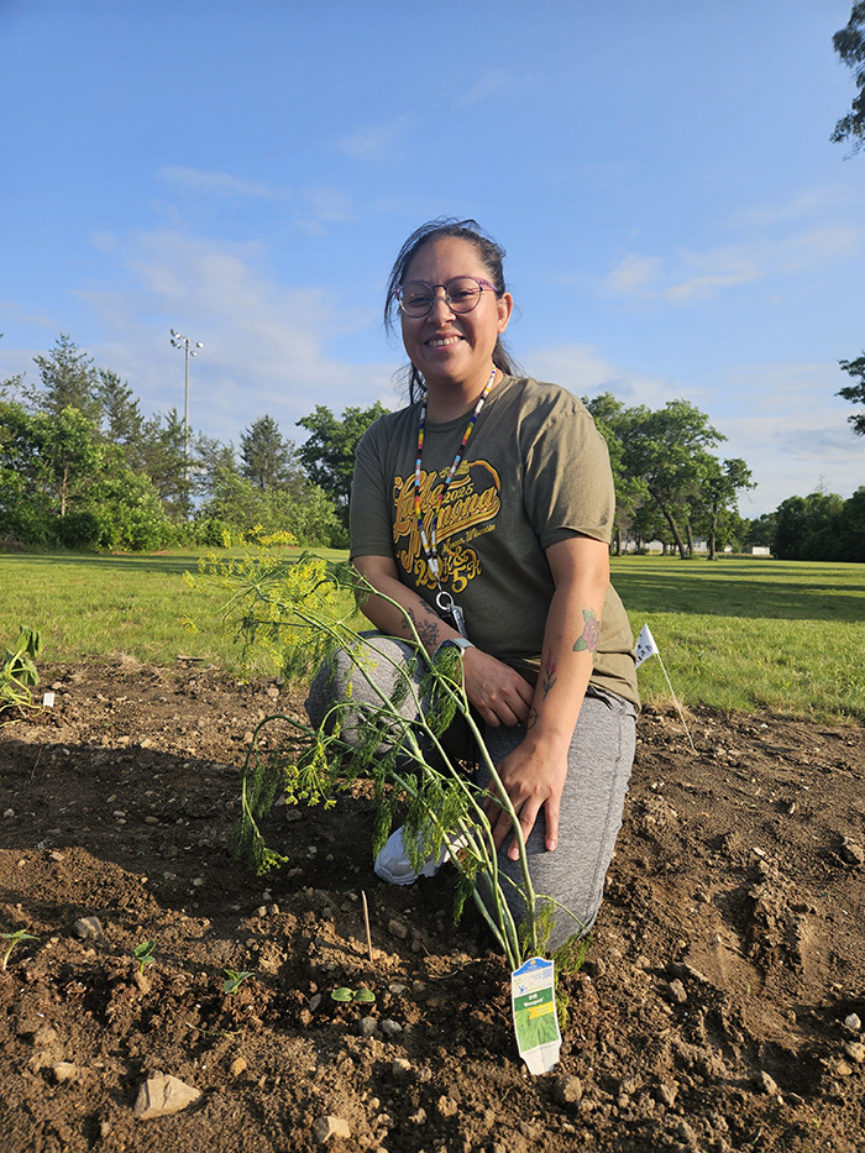
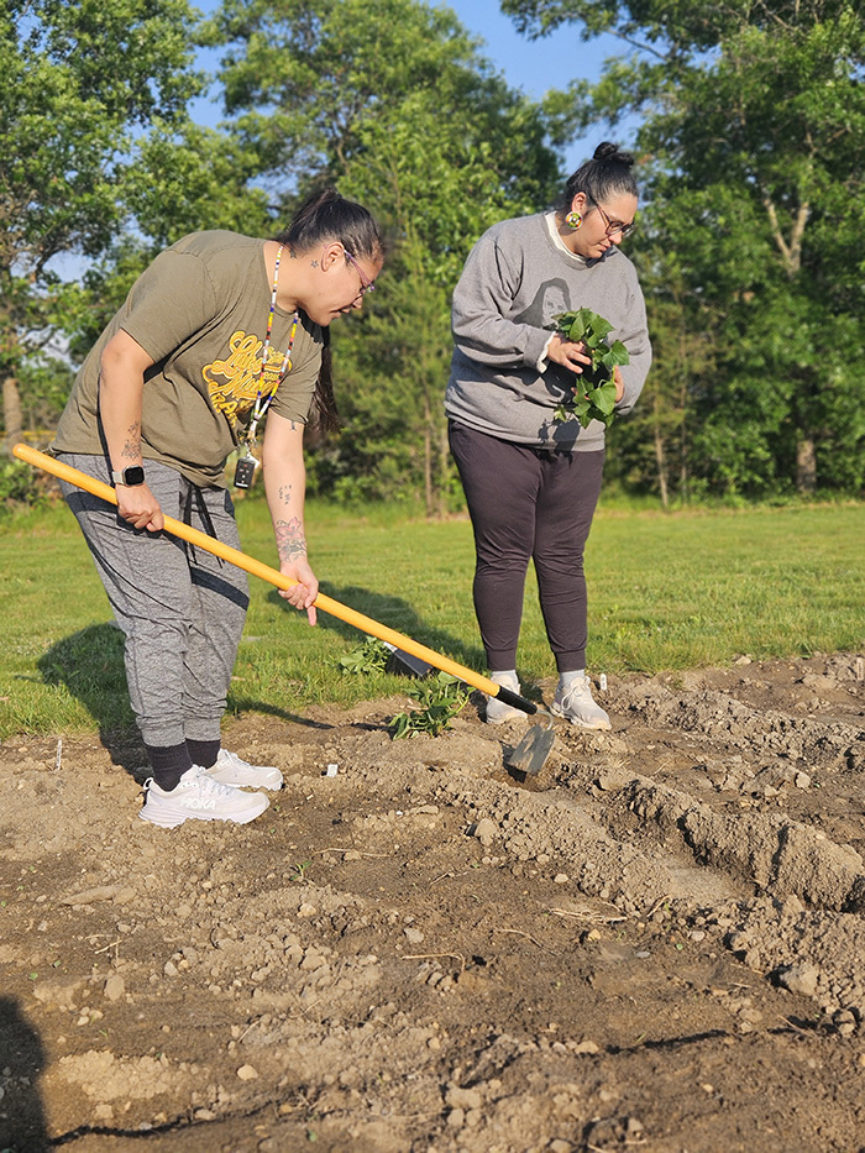
For Hinu Smith, empowering community members to grow food is not only rebuilding practices of and connection to their Ho-Chunk ancestors, but building resilience in the face of economic uncertainty. Since the beginning of 2025, federal programs supporting food access and tribal producers have been cut back or rendered unreliable. Tribal departments and individual tribal members are wary of inflation that may result from tariffs. The Resiliency Gardens are a way of decentralizing the Department of Agriculture’s capacity and support during times of uncertainty. The department is in charge of 1,500 acres of tribal lands. “But they’re scattered all over the state,” explains Smith. “We’re not going to be able to go out there, load our tractors and equipment and drive 2 to 3 hours one way to run a cultivator through for an hour then turn around and come back.” Instead, Smith and her team dialed in on giving communities the tools and support they need to grow on their own.
While the Resiliency Gardens offer resilience in the face of uncertainty at the federal level, many of those working on this project see this moment as an opportunity to transition away from reliance on federal food aid long term. Instead, they are moving towards food sovereignty.
Movements for Indigenous Food Sovereignty have called for policies and programming that increase access to traditional fishing, hunting and agricultural lands rather than reliance on food aid programs like Food Distribution on Indian Reservations (FDIPR)—whose commodity-based offerings have historically contributed to poor nutrition for Native Americans. Bridgette Schulz is the Community Education Specialist at the Department of Agriculture, and for her, the gardens address this intertwined issue of healthy food access and tribal self-sufficiency. “My great-grandparents and even further back, they were healthy because they ate and grew their own food,” she says. Celina Hall, a Ho-Chunk agronomist, also emphasized the role these gardens can play in building Ho-Chunk sovereignty and well-being. “It’s a way of showing, we’re still putting up a fight to maintain our own health—mentally, spiritually and physically.”
Other Ho-Chunk Nation departments are pitching in to support the gardens and the vision they represent for tribal health and food sovereignty. The Department of Education provided additional tools and supplies to gardeners, and Hall and Smith hope the Department of Health will run their nutrition classes at the Resiliency Gardens. Individual Ho-Chunk Nation members have jumped on board, too. People have offered their land as garden sites in places where the Department of Agriculture’s land is farther away, and in Black River Falls, a local nursery donated dozens of plant starts for the gardens.
This coming together of Ho-Chunk individuals and tribal entities has lit a fire under many of the organizers of this project. For Peters and Hall, community is what brought them to agriculture to begin with. As these gardens create space for their respective Ho-Chunk communities to come even closer together, they are eager to see the number of participants grow year to year. These gardens are their connection to generations to come, as well as the generations before them who tended to the soils in these very places. “I feel the energy from planting and growing,” says Peters’ mom, Audrey, “I feel life."
More Stories by This Author

Edible in your mailbox
