

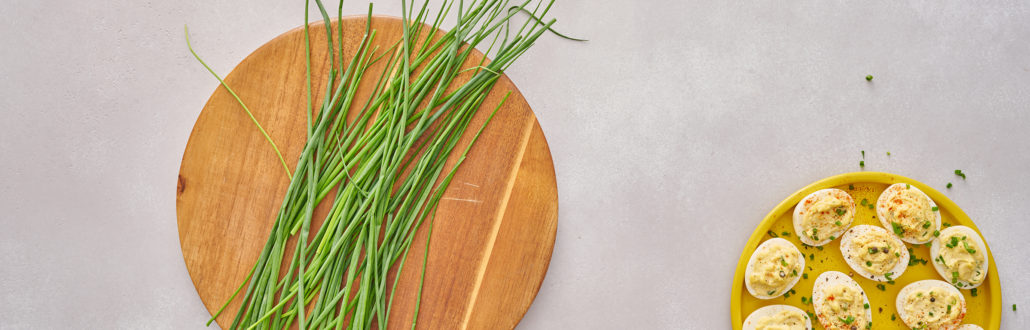
Chives are rarely the hero. More often they play sidekick in creamy potatoes or rich sour cream spreads. But we believe this herbaceous perennial deserves the title role.
Straddling the line between an allium and an herb, chive shares many traits and uses with its green onion cousin. However, the plant’s thin green leaves—the part people know as “chives”—are more delicate in texture and subtle in taste compared to green onions, making them better suited for raw uses.
Chives bloom in mid-spring to early summer with leaves resembling soft, tall grass, and the plant will eventually produce pale purple flowers that are both beautiful and edible. Most grocery stores will only carry the green chive leaves, but the blossoms may be available at your local farmers’ markets.
Chive blossoms are globes made up of tightly packed florets. To use, carefully separate the florets using your fingers. They are great as a garnish or anywhere you want a pop of flavor and color.
Green thumb or not, chives are one of the easiest herbs to grow. They like full sun and rich, well-drained soil but are tolerant of most soil types and shaded areas. They make a great addition to any windowsill herb box, making it simple to snip a few stems to garnish soup, salad or maybe a deviled egg or two.

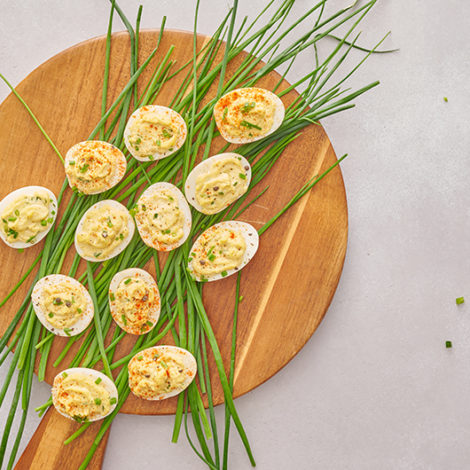
Chive Whipped Deviled Eggs
Chives are rarely the hero. More often they play sidekick in creamy potatoes or rich sour cream spreads. But we believe this herbaceous perennial deserves the title role.
Featured Recipes


More Stories by This Author

Edible in your mailbox
