


Bagel. A simple word that evokes wonderful, warming and filling thoughts for many. But what makes a bagel a real bagel? It depends on whom you ask.
Bagel. A simple word that evokes wonderful, warming and filling thoughts for many. But what makes a bagel a real bagel? It depends on whom you ask. At the heart of the conversation is tradition. What culture brought bagels to the United States, and how did they make them?
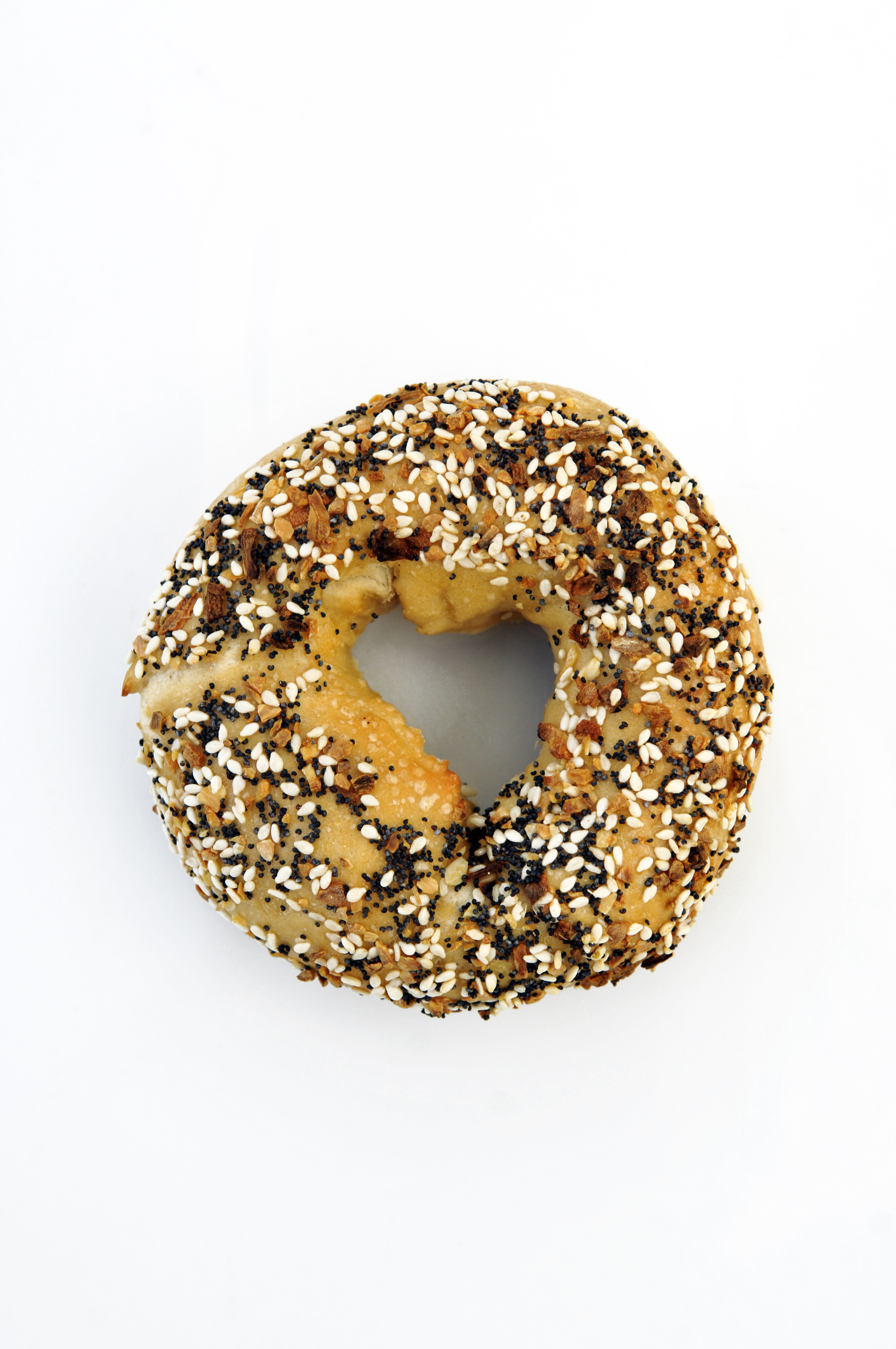
Let’s start with the simple part of the conversation: What is a bagel? Bagels, as a culinary product, are simple but labor intensive. They start with what one would expect in a bread product—flour, water, salt and yeast—but there are tweaks here and there that set them apart from normal bread.
Most bagel makers use high-gluten wheat flour, which gives bagels their chewy texture. The flour, salt and yeast are mixed with the smallest amount of water possible, yielding a stiff and hard-to-work-with dough. There are tales of bakers kneading bagel dough by foot to get it to the correct consistency! Today, stand mixers are put to work mixing cement-like bagel dough, kneading it until smooth and elastic.
From there, the dough is rolled out and formed into ropes that are fused into the quintessential bagel ring. The bagel rings are then allowed to rise in a cool space (usually a refrigerator) for 12 to 20 hours. This slow rise is key to slowing down the yeast and allowing lactic-acid-producing bacteria to develop, which give bagels their tangy taste.
Following their slow rise, the bagels are boiled in water for 30 seconds a side. Boiling bagels does three important things: It sets the bagel shape. It gives the exterior its classic shine by turning the surface starch into gelatin. And it activates yeast inside the bagel following the slow, cool rise.
Next, bagels are baked at a high heat until golden brown and shiny. The resulting bread is crispy on the outside and dense and chewy on the inside.
Due to their low moisture content, traditional bagels become stale at a surprising rate. Most bakers recommend eating them within five hours of being made or they can become very hard. I know what you are thinking: “If bagels have such a short shelf life, why go to the trouble?” One taste of a hot and fresh well-made bagel and you’ll understand.
Obscure Origins
The provenance of the bagel is rather complicated. Lucky for us, writer Maria Balinska dug deep into the question and published her findings in 2008 in The Bagel: The Surprising History of a Modest Bread. Balinska is quick to point out that many cultures around the world have donut shaped breads that are similar to bagels, so attempting to pinpoint their exact origin is quite confusing.

She believes that the closest probable relative to the bagel is the German obwarzanek. It is thought that Germans brought this bread with them when they immigrated to Kraków, Poland, sometime in the late 1300s. At the same time, many Jewish craftspeople and traders were immigrating to Kraków, so it is unclear if the Jewish people brought a bagel-like bread with them or adopted obwarzanek and made it their own.
What is clear is that the word bagel comes from the Yiddish word beigen, which means “to bend,” and that Jewish bakers took ownership of bagels and made them frequently in Kraków. The first mention of the bagel in writing was in a 1610 Jewish sumptuary law describing that bagels should be consumed during special times, like births. This indicates that bagels were an item of value and respect within the community.
Coming to America
How did the humble bagel made by the Jewish community in Poland find its way to the United States? How any other cultural food finds its way to different parts of the world: in the minds and hearts of immigrants. It is unclear when exactly the first bagel was made on U.S. soil, but it was most likely around 1882. Around that time, there was an influx of Eastern European Jews to the United States, with most landing in Manhattan. With them, they brought their love of bagels, and Jewish-owned bagel bakeries quickly popped up to fill demand.
The working conditions in these bakeries were horrid. Eighteen- hour days working in hot basement rooms with no ventilation. These conditions triggered the rise of many bakers’ unions in New York, including Local Union No. 338. They formed in 1937 to improve working conditions and guarantee good wages to workers. It was among this culture of bakeries and unions that the New York bagel was born.
At this time in the United States, the bagel was viewed by most as an “ethnic” food. The transition of the bagel from being Jewish to being in every kitchen in the United States is mainly attributed to three people: Harry Lender and his two sons, Murray and Marvin. Harry, a Jewish baker in Poland, moved to the United States in 1927. Upon arrival, he worked as a bagel-maker on the East Coast. Within a few years, he opened a wholesale bakery outside of New Haven, Connecticut, which he aptly named Lender’s Bagels. With the help of the entire Lender family, the business grew quickly and began supplying grocery stores around the New York City region with fresh bagels.
Bagel Boom
After years of growth, Lender made a decision that brought bagels to the masses: He bought a freezer. Originally, the freezer solved a problem of production. Because bagels were only eaten on the weekends, Lender and his family would have feverish weekends of work where 3,000 to 6,000 dozen bagels would be made fresh. The addition of a freezer helped balance production. They could bake and freeze bagels daily during the week, then deliver them to retail outlets for the weekend.
Over time, Lender also discovered that customers liked the convenience of frozen bagels, so he began selling them. With the development of frozen bagels, the introduction of bagel-shaping machines in 1963 (yep, they were still making them by hand prior to this point), and steaming bagels rather than boiling, Lender’s bagel business boomed. With many low budget and creative marketing techniques, they sought to turn the humble bagel into not just a Jewish food, but a food for all Americans. As Murray Lender put it, he wanted to “Bagelize” America.
By 1977, Lender’s Bagels were available in most supermarket freezers across the country, but they lacked the capacity to meet demand in the central United States. To make their dreams of taking the bagel nationwide, the Lender family sold their business to Kraft (makers of Philadelphia Cream Cheese) in 1984. Two years later, Lender’s (Kraft kept the name) built the largest bagel factory in the world in Mattoon, Illinois. The plant could churn out an amazing three million bagels a day. Upon landing this bagel factory in the heart of the Midwest, the “bagelizing” of America was complete. Frozen bagels could be found in grocery stores far and wide. No longer was the bagel considered a Jewish product; it was now an American product.
Today bagels are available everywhere, but, sorry to say, the majority are machine-formed, steamed, and more like soft, pillowy bread than the traditional give-your-jaw-a-workout New-York-style bagel. When you can find a hot, fresh, chewy and dense New-York-style bagel, buy as many as you can and eat them quickly!
More Stories by This Author

Edible in your mailbox

I live in Manchester, TN. and I moved from S Ca. , where Beagles are everywhere but not here. I would love to get a truly good Beagle, " FRESH " somewhere in TN.. Are they out there?