

The Quest for Flavor: Trials for Taste in Organic Tomatoes at UW-Madison
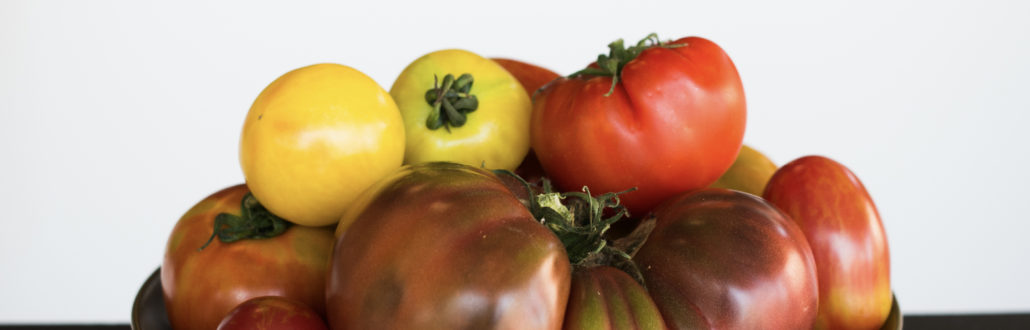
Why are most store-bought tomatoes so lacking in intense flavor? The answer is more complicated than one would expect, and genetics play a fundamental role. At the University of Wisconsin, Dr. Julie Dawson and her research team, which I am a part of, are hard at work on a variety of projects known as the Seed to Kitchen Initiative. Our aim is to develop improved vegetable varieties adapted to organic-farming systems in the upper Midwest. Our work focuses on quality and flavor, and enlists local chefs, farmers, and food-business owners in that undertaking. Through millennia, crops have been domesticated in an effort to cultivate traits like uniformity, increased yield, fruit size, and resistance to physical damage. Every time farmers and breeders selectone plant over the other, they risk losing valuable genes embedded in the plants they don’t select. Our goal is to get back some of the flavor that’s been lost along the way.
The Story of the Tomato
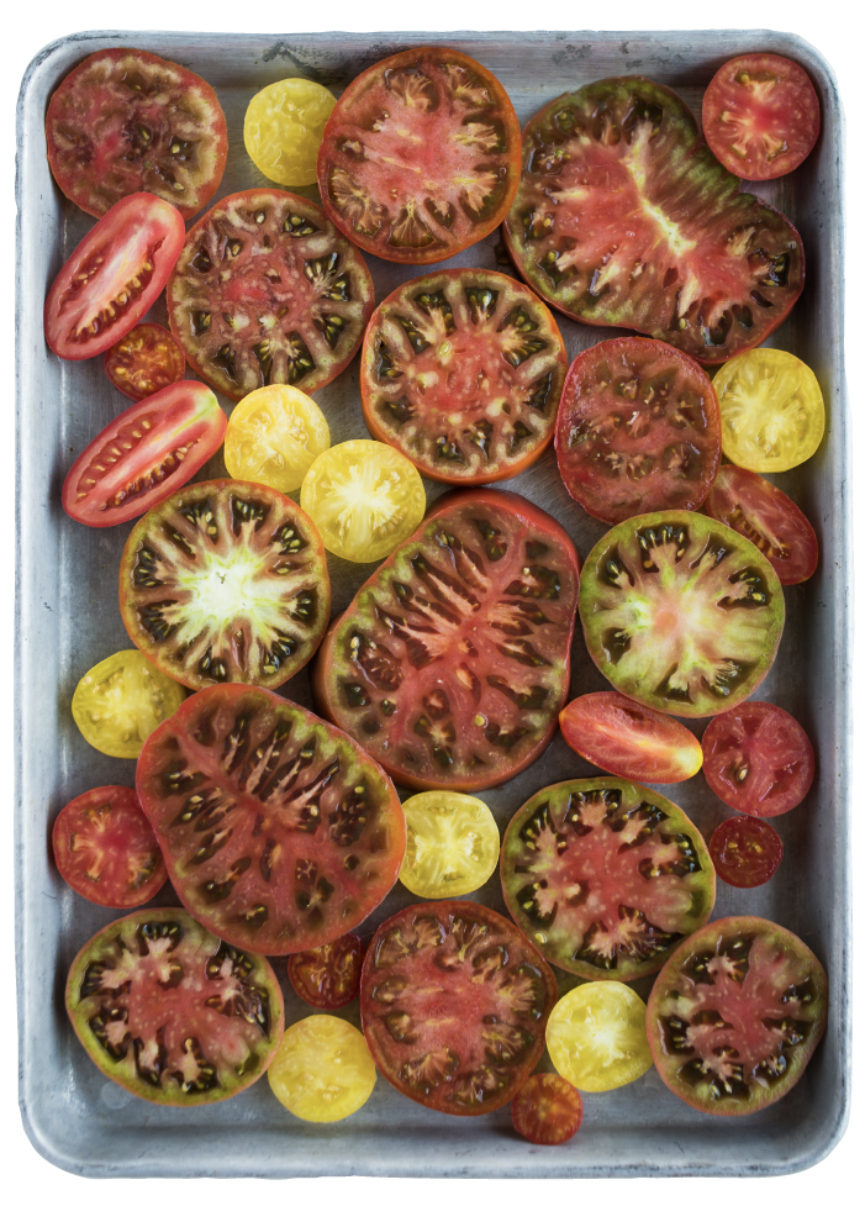
When the European conquerors arrived in Central America, they found a diverse range of tomato types, from yellow to dark red, cherries to mid-sized fruit. They took fruit back to Europe and continued the selection process for improved yield, fruit size, uniform fruit set, and color. Hundreds of years have passed, and tomatoes have reached pretty much every country in the world, with every country and culture valuing different characteristics.
For industrial fresh-market production, tomatoes that are grown in Florida, for example, are shipped to the other side of the US, to other countries, and even to other continents. Long shipping means that the fruit must be firm enough to withstand the rough shipping conditions. Farmers look for a thicker-skin tomato that prevents the fruit from cracking. In addition, the greener the fruit is harvested, the firmer it is, so tomatoes shipped overseas, or even to different states in the US, are usually harvested unripe and with only a splash of color. The fruit is then shipped in cold containers that prevent some aromas and volatile compounds from fully developing, negatively affecting the flavor of the fruit. Research suggests there is also a negative correlation between fruit weight and sugar content, likely because genes that account for sugar are lost during domestication. Reinforcing this theory, the Dawson Lab has found throughout multiple field trials that varieties with higher sugar content are the lowest-yielding varieties.
Growing the Perfect Tomato
The Seed to Kitchen project is a multi-phase collaboration between Dr. Dawson’s team at UW, local farmers, and local chefs and food business owners.
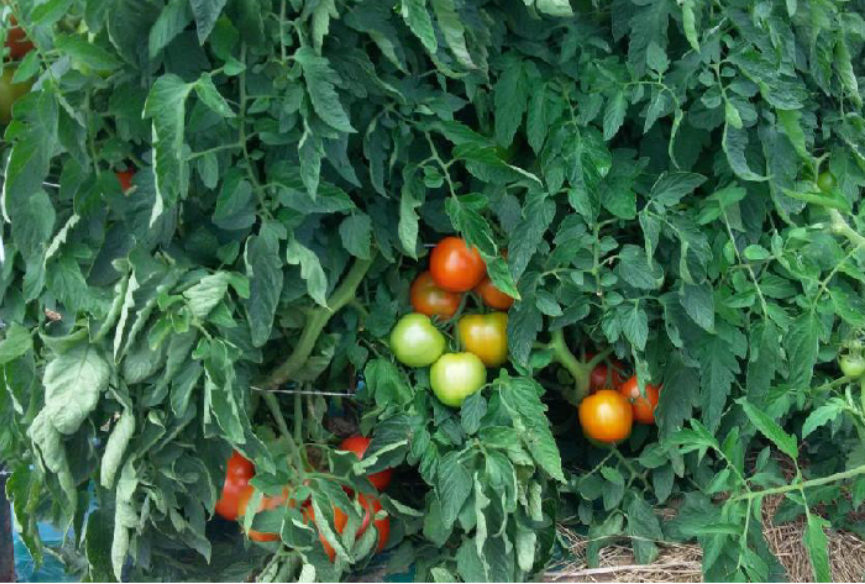
First, we test more than a hundred varieties—richly flavored heirlooms, commercial lines, and advanced breeding lines—with on-station and on-farm trials.
Then we gather valuable information about the traits that small organic farmers in the upper midwest are most interested in cultivating. flavor, fruit quality, yields, and disease resistance scored high in a survey (hoagland et al., 2015).
The survey and trial results help us select the most promising varieties to be used as parent lines of a new tomato-breeding population. Thus far we have chosen a few popular heirlooms, along with high-yielding varieties and lines resistant to common midwestern diseases like early blight and septoria leaf spot.
Next, we develop new breeding lines by crossing all the parental lines with each other, select the best lines, and advance them four to five generations on-station.
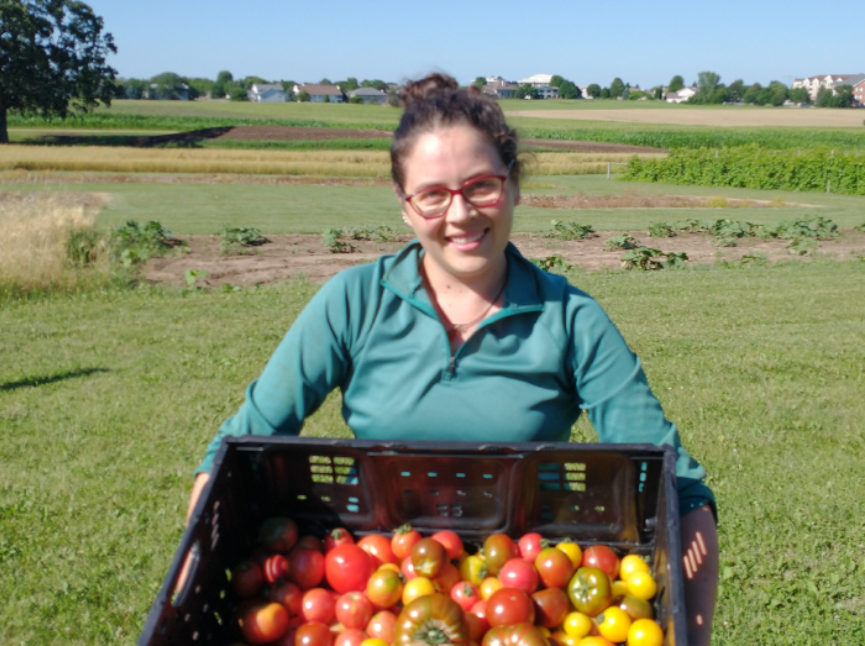
Then the advanced lines are ready for on-farm trials, which are as important as the on-station trials. Since each organic farmer’s system is different, it is crucial to evaluate how the lines adapt to those changing environments.Then the advanced lines are ready for on-farm trials, which are as important as the on-station trials. Since each organic farmer’s system is different, it is crucial to evaluate how the lines adapt to those changing environments.
Finally, we invite chefs and food business owners to evaluate the kitchen quality of the breeding lines. Their highly developed palates help our team identify the best culinary uses for the tomatoes they are selecting. They also help to distinguish specific aromatics that enhance tomato flavor. May the tastiest tomatoes win!
Is the Breeding Program the Same as Genetic Modification?
Short answer, no. Organic certification always also means non-GMO. But non-GMO does not always equal organic. In other words, farms can grow non-GMO seed with non-organic practices, and label the product non-GMO. On the other hand, farms could grow GMO seeds with organic practices, but the finished product would not be considered organic and would not be eligible for organic certification.The UW Seed to Kitchen project breeds tomatoes using certified organic management practices, and selects the best varieties without using genetic engineering.
Tasting Lost Flavors
Dawson’s team schedules tastings when the harvest is ready, in local restaurants during off hours, when chefs can take time to taste. After a one-season hiatus due to Covid, we resumed this research in the summer of 2021. To evaluate the lines, the tasters participate in a blind tasting, filling in their responses on a survey app while tasting samples identified by random codes.
Blind tasting is the best way to carry out these exercises, and chefs also seem to enjoy it; if there is something they like, it sparks curiosity and everyone starts talking about what varieties they think could be related. We talk too about the breeding process, making note of the lines that chefs like most. Farmers seem to be happy with it too: three grew them in their farms last season, and the line demonstrated decent disease resistance and good fruit set.
The Future of the Seed to Kitchen Tomatoes
So, what’s coming for the most promising lines? More trials! The overall goal of the project is to develop tomato breeding lines that are adapted to organic systems in the upper Midwest. Dawson’s team can release varieties from the UW when we are sure that the lines are uniform and that they perform in an objective set of environments. We evaluate this by carrying out on-station and on-farm trials. We will gather valuable information this summer for the seven lines we have selected. Then we’ll decide whether to release a variety of them, or whether these lines should be used to develop a new breeding program, considering that these lines have already been selected for the top traits of interest of the farmers in the region. The possibilities are endless. The team is excited about how far the project has come along, and looks forward to having more farmers, chefs, and eventually home cooks across the Midwest try out our lines!
Cited articles:
Hoagland, L., Navazio, J., Zystro, J., Kaplan, I., Vargas, J. G., & Gibson, K. (2015). Key traits and promising germplasm for an organic participatory tomato breeding program in the U.S. midwest. HortScience, 50(9), 1301–1308. https://doi. org/10.21273/hortsci.50.9.1301
Tieman, D., Zhu, G., Resende, M. F. R., Lin, T., Nguyen, C., Bies, D., Rambla, J. L., Beltran, K. S. O., Taylor, M., Zhang, B., Ikeda, H., Liu, Z., Fisher, J., Zemach, I., Monforte, A., Zamir, D., Granell, A., Kirst, M., Huang, S., & Klee, H. (2017). A chemical genetic roadmap to improved tomato flavor. Science (New York, N.Y.), 355(6323), 391–394.
Featured Recipes



Edible in your mailbox
