

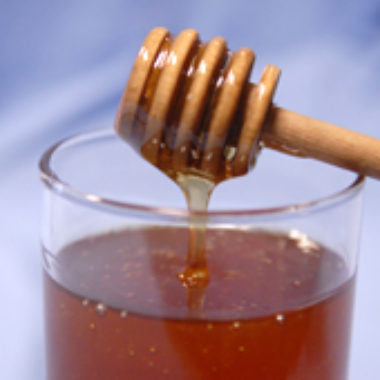
Honey
Cooking Tips
- Honey does not need to be pasteurized. Look for raw honey or honey that has only been heated to very low temperatures.
- Honey may replace granulated sugar in many recipes at the ratio of 3/4 cup of honey for each 1 cup of sugar.
- If using in baking, reduce other liquids by 1/3 cup.
- Reduce the oven temperature by 25 degrees to prevent overbrowning.
Details
Honey may well be one of the most historic and versatile foods in the world. It’s a natural digestive aide, sugar alternative, allergy remedy, energy booster, skin soother and topical antiseptic (it was even mixed with cod liver oil to dress wounds during World War I). It’s also the only food that will never spoil when stored properly. Famously, a jar found in King Tut’s tomb was still edible after more than 3,000 years. The honeybees we know today in the U.S. were actually brought over by colonial Europeans to be used as a free source of sugar instead of expensive imported sugar cane.
The quantity and quality of our country’s honey is also directly reflective of honeybee health. Colony Collapse Disorder (CCD), a phenomenon that has wiped out as much as 50 percent or more of the world’s bee populations in only five years, has become a worldwide crisis blamed on everything from cell phones to parasites to pesticides. Read more about our region’s response to CCD in our article “Bees + Humans: A New Era of Interdependence” by Wendy Allen.
Honey is available year-round, but it is only harvested in late-spring and early-summer.
Nutrition: Honey is composed primarily of carbohydrates (natural sugars) and water. It also contains trace enzymes, minerals, vitamins, amino acids, and a variety of antioxidants (darker honey containing more than lighter). Vitamin C and zinc in honey, when taken daily, may help support the immune system. Honey contains the simple sugars fructose and glucose, which are more slowly absorbed into the body than table sugar, resulting in a healthy glycemic index rating. Eating local, raw honey daily may reduce environmental allergy symptoms due to containing low levels of pollen which can help the body adapt to allergens.
Related Recipes
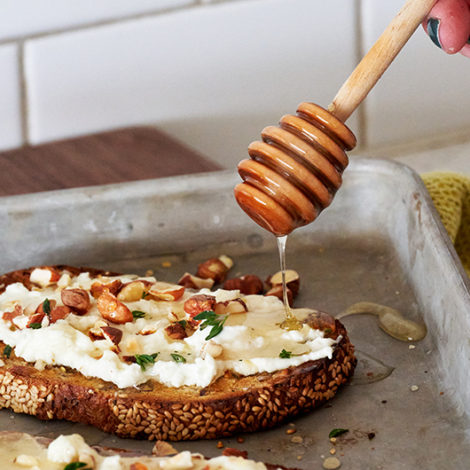
Honey Drizzled Crostini
Spring 2025
Nettle and Elderflower Oxymel
Spring 2023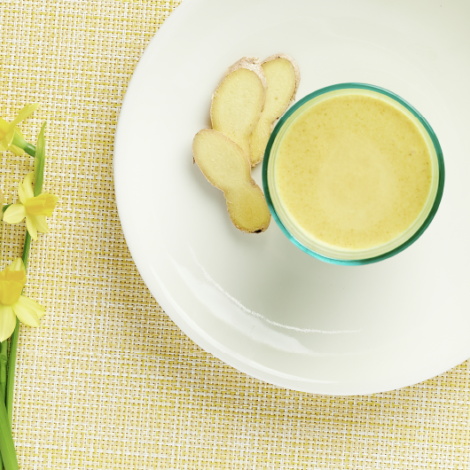
Golden Milk Kefir Smoothie
Spring 2021More Recipes With Honey
Related Stories
Land of (milk and) Honey
Summer Porch Party
Toasty-Warm Potations
Golden Hills Honey
More Stories With Honey

Edible in your mailbox
