

Watercress
Cooking Tips
- Best raw, but if you’re doing to cook it, just barely do so by adding it at the end of cooking the dish.
- Makes a nice wilted bed for serving meats.
Details
Watercress is one of the oldest green foods known to humans. Native to Europe and Western Asia, it is a semi-aquatic, hardy perennial that naturalizes easily in just about any clean, flowing water. Known as a fortifying herb that builds strength and good health, it was a staple part of a soldier’s diet in ancient Persia, Greece, and Rome. Supposedly the Egyptian slaves who built the great pyramids were fed juiced watercress daily to keep up the good work. Even Zeus ate it from a spring at a famous cave in Crete while getting ready for some epic battle or another. Ancient lore also says watercress can make you witty, cure insanity, migraines and eczema, and even make your hair grow if you rub it on your head—any one of which may also explain its reputation as an aphrodisiac.
Finding it locally is your best bet since it is difficult to farm commercially. Growing Power in Milwaukee is the only place that we know produces watercress commercially in the Midwest (email us at info@ediblemadison.com if you know of other sources).
Read more about watercress, its benefits and growing it at home in Dani Lind’s Cooking Fresh article, “Watercress: Legendary Harbinger of Spring.”
Nutrition: Watercress is high in vitamins A, C, E and K, calcium, iron and potassium, as well as numerous trace minerals and phytochemicals. It is increasingly lauded as an “anti-cancer superfood.” Herbalists say that watercress is effective as a liver, kidney and blood detoxifier, a mucus decongestant and a diuretic.
Related Recipes
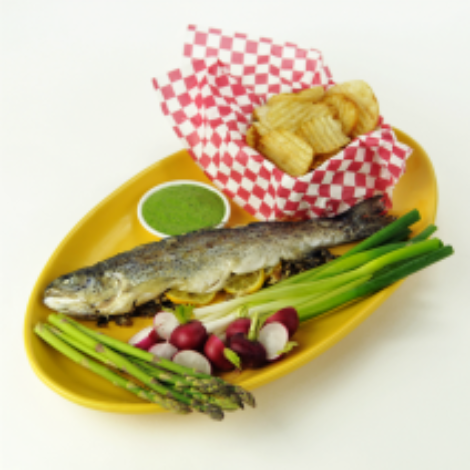
Beth Dooley’s Green Yogurt Sauce
Spring 2020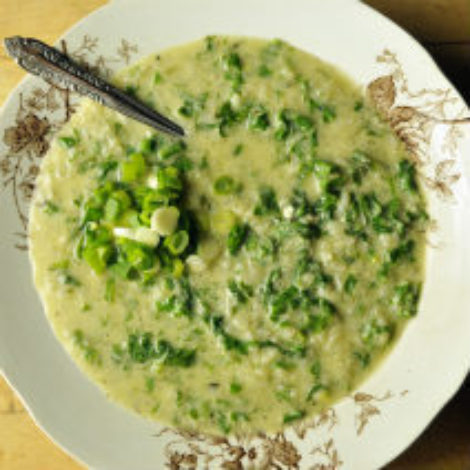
Power Greens and Rice Soup
Spring 2019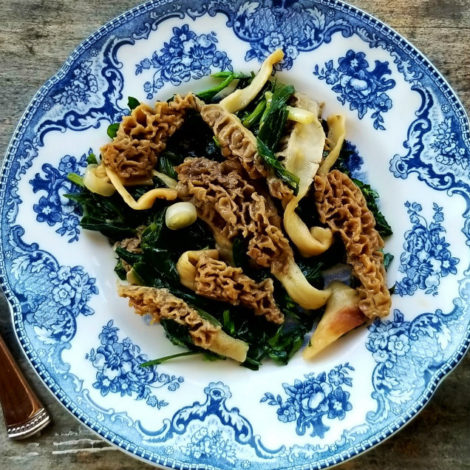
Morel, Ramp and Watercress Salad
More Recipes With Watercress
Related Stories
Watercress: A Perennial Favorite
The Trinity of Spring Foraging: Morels, Ramps & Watercress
Springtime in Paris, Wisconsin
Culinary Adventures in Vietnam
More Stories With Watercress

Edible in your mailbox
