


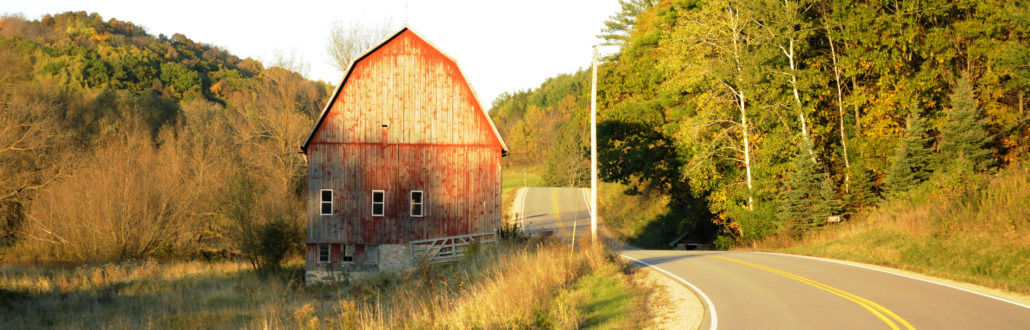
“Sometimes I wonder what I will be like as a fossil…” begins this lyrical look back at a fixture of Wisconsin’s rural landscape.
Sometimes I wonder what I will be like as a fossil.
When I am discovered, in, say, the year 4063 via a chance ground scan in the ancient, hilltop sites of the birthplace of modern agriculture, will my petrified bones tell them anything useful? Will anything in my remains suggest that I was a misfit in my day?
As you know, innovation is the Holy Grail of the business world. CEOs implore their managers to tease it kicking and screaming out of the cubes and conference rooms. IBM, Apple, Facebook, Twitter, Amazon; we’ve all witnessed the steroid that innovation injects into the bloodstream of our shopping world.
But technological innovations come with limited shelf life. Cuttingedge companies soon fizzle out when their rivers of razzle-dazzle dry up. Remember the sunken ocean of dotcoms? Atari, Circuit City, Blockbuster Video…today’s innovation is tomorrow’s dustbin. What have you done for me lately? is the number one thing we ask our gizmo-spawning corporations. Even the revolutionary, sexy iPhone— what is it now? 5? 6? 7?—must continually push out the upgrades if it wants to avoid the moss of our unmet expectations.
It makes me tired.
Is there an opposite of this modern superstition? Must all things change in order to retain a hold on our imagination? Is there anything entirely un-innovative that still holds the power to challenge the restless beast of techno-consumerism?
For me there is, and it is a barn.
Barn as Innovation
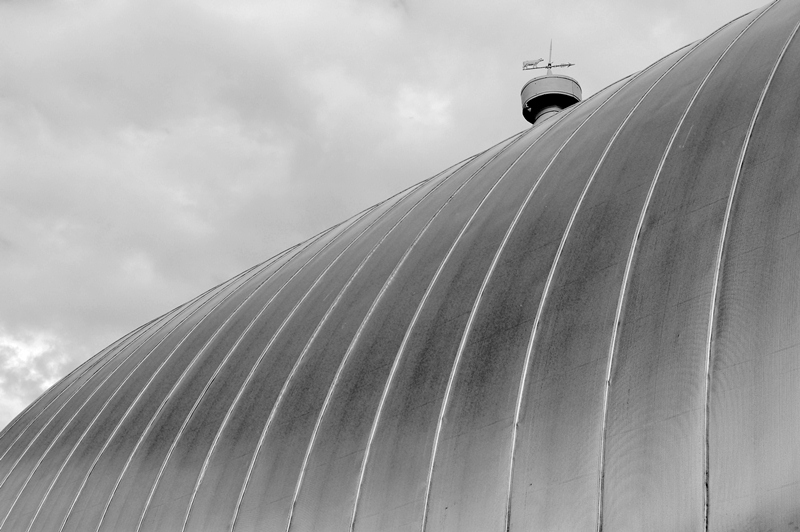
My photographer friend, Jim Klousia, descends from a blueblood of rural innovation. His great grandpa, Kenneth Hendrickson, was a clever Wisconsin farmer who, in the early 1950s, designed and built a new kind of barn in Vernon County—no small feat in this land of set-in-their-ways farming communities. Known as the Hendrickson A-frame tobacco shed, its claim to fame was its triangulated skeleton that outmuscled the most ferocious Midwest winds, while opening wide its dry belly to ever more hanging tobacco and more machinery in the off season. It is the only barn I know of that fits comfortably into a sentence alongside the word “innovative.”
So different and so useful was this barn that hundreds were built in the Midwest through the 1950s and 1960s. Before long, agronomists at the University of Wisconsin noticed and sang the praises of its design to all tobacco-growers in the country. Eventually the local tobacco market dried up and shut down that era of barn building, but the Hendrickson A-frames remain, holding their ground like all the other never-so-special barns in Wisconsin. Like mine.
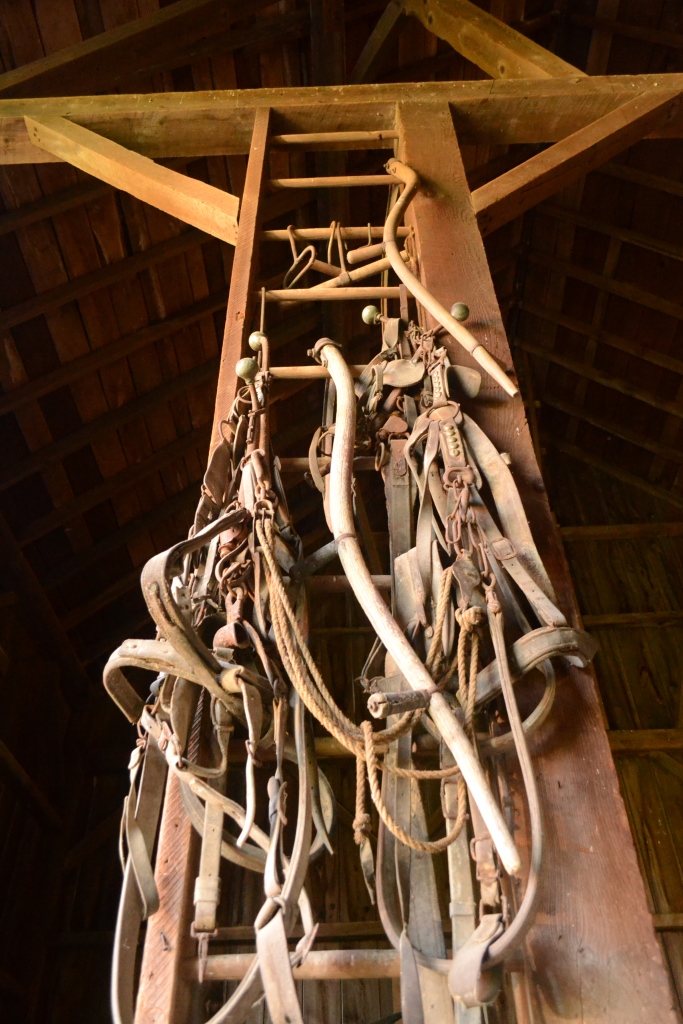
My senior barn is the opposite of innovation. A standard-issue, gable-roofed bank barn built by Carl and Marie Radtke in 1917, it just stands there, idle neighbor to idle granary, as it has since 1974 when Herman and Lily sold their Guernseys. But its oak bones are still strong. I store these things inside: a waterlogged fishing boat, lawn mowers, sausage-fillers, hand tools, a feed scale, horseshoes, harnesses, old milk cans, and other such detritus from my family’s lost century of dairy farming.
In 1997, Robert, my retired engineer dad, hired a few brave men who, with Bobcats, hydraulic lifts and a collective death wish, picked the whole monstrous thing up and dug around under its tons of teetering bulk to replace the crumbling fieldstone foundation with newly minted cinderblock. Soon after, another crew wrapped the whole thing in a new suit of red metal. Is this a lot of time and money spent just to slow its inevitable progression toward fossilization? I don’t know, but as a boy I’d seen the thing in action as a dairy barn. It left lasting marks on my imagination.
It’s got another hundred years in it now. But this is a barn without a farmer—without a fitting economy. It is, like so many in the surrounding countryside, unemployed with little prospect.

Where Barns Came From
I love to imagine the day a hundred years back when this barn was raised. Scores of neighbors arrived before dawn with tools and smart stories to share. They got cracking and, in one sweaty day of neighborly industry, cut all the mortise and tenon joints, fit together all the enormous oak timber framing, pegged it and hoisted it up with ropes and horses. The siding and roof planks were sawed and quickly nailed on by these suddenly monkey-like farmers. They feasted at noon on an enormous fat-soaked, sugar-laced outdoor meal at long tables, prepared lovingly by the barn-raisers’ wives and daughters.
The truth is, it didn’t happen like that.
The reality of Wisconsin barn-building in 1917 was similar to our reality of house-building in 2014. It was not a quick process and, in most cases, required a farmer’s willingness to enter serious debt and hire expert builders. Once the bank provided a loan, the project took at least two months, often three or four.
Every rural community in those days supported a barn-builder or two, who acted in cooperation with a community’s masters of stonemasonry. The most common variety of barn constructed in these hilly parts is known as a bank barn, named for the way its foundation was built into the bank of a hill. It has one basement wall exposed with windows for daylight, like the modern walk-out basement, and the opposite wall flush at top with the ground to allow access for horses (and later, tractors) into the hay mow above.
The barn basement construction took at least four weeks (not including the time spent gathering fieldstone and digging a site in the hillside) and required the artisan skill of a stonemason, who cut and set with mortar each stone in the three-foot-thick, eight-foot-tall basement walls.
Once the rock wall was completed, the barn raising came next, but not in one day. A mow floor was placed upon feral logs to support tons of hay. The great erector set of torso-thick timbers—cured pine, hemlock or oak—had been hauled by the farmer one wagonload at a time from the nearest train depot. Now the barn builder and crew of five or six (and the farmer) set about preparing the timbers. A month was required to cut the dozens of mortise and tenon joints and fit the sections together laid flat on the mow floor. The raising of this skeleton did happen in one day with all hands (and horses) on deck, followed by more weeks siding and roofing the structure. Painting, if it was painted, was up to the farmer later.
There was nothing innovative about the design of the barn on my old farmstead—it had been developed in Europe over centuries and carried to the New World in the heads and hearts of farmers looking for a new life, holding fast to the best from the old.
Barn Again
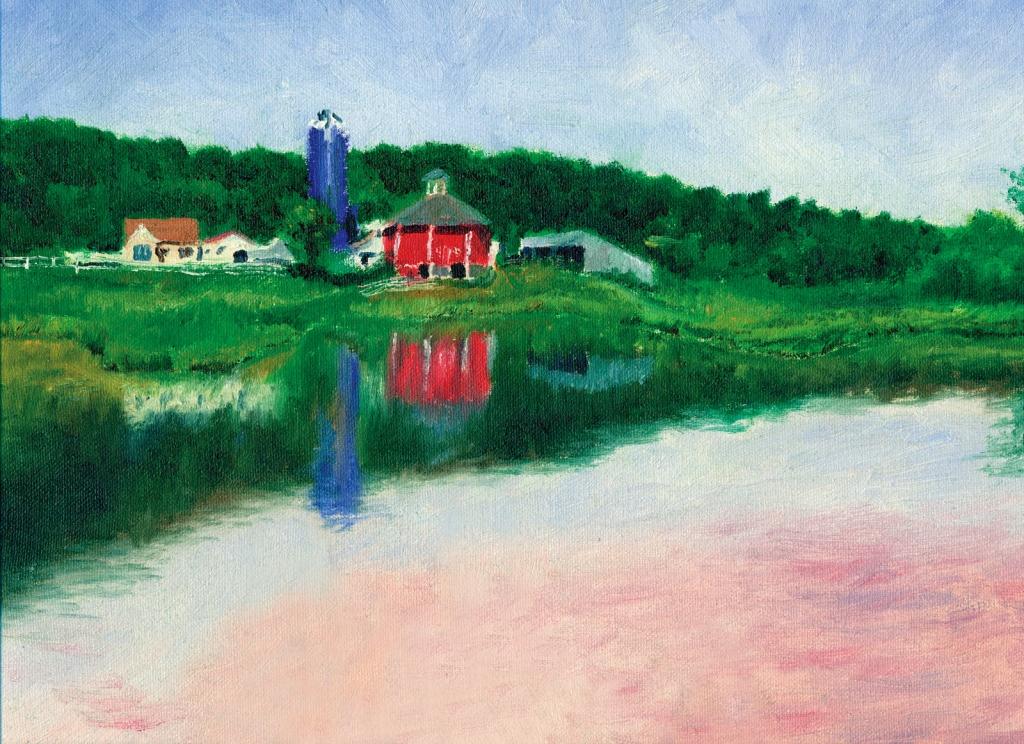
My imagination goes crazy on outer-space-cold January nights when I climb the ladder and bang open the plank door to the wooden cathedral. The buzzing mow light barely glows, it is so shocked by the unexpected spark in the cold. I see my lacy breath. I hear wind and echoing creaks. I see trapdoors pockmarked from thousands of pitchfork stabs. I see the day these timbers were raised, the crew and Carl’s burden of hope. I see his day of surrender to the bank in 1935 when he and Marie passed their debt to Herman and Lily, and moved off to town.
Uneasy, frozen barns like this stand everywhere in the Wisconsin countryside, whispering the same familial soliloquy. I guarantee, for every barn there is someone like me watching offstage, straining to hear what it may want for itself.
I am its unlikely CEO. I know I should find the innovation that will bring it back into the workforce. Maybe I will. What’s more likely, though, is inertia. I am hypnotized by the museum of it because it’s the museum that seduces me with a mythical past, a time when life was simple, unchanging and reliable, even though I know it was never so. Farming has always been a life lived on a powder keg of risk. Malevolent markets, Jekyll and Hyde weather and lethal debt conspire always against handeddown agrarian wisdom.
I look in my barn and I see old people. Old ways. When my mind’s eye strains to carry a young farmer inside, sweating in the July mow, milking in its January basement, I see only a fool’s venture.
Here’s the innovation evading me: A wiz-bang contraption to dispossess our food system of its perverse power to so easily destroy its food producers. Where is the device that makes farming a non-livlihood-threatening prospect for the young who want to care for the land that would fill up this barn again?
When that future archaeologist is dusting my bones, will she ever really know what she has in her hands? That there was once something dead in the hands of this fossil, too? That it came back to life in my hands?
More Stories by This Author

Edible in your mailbox
