


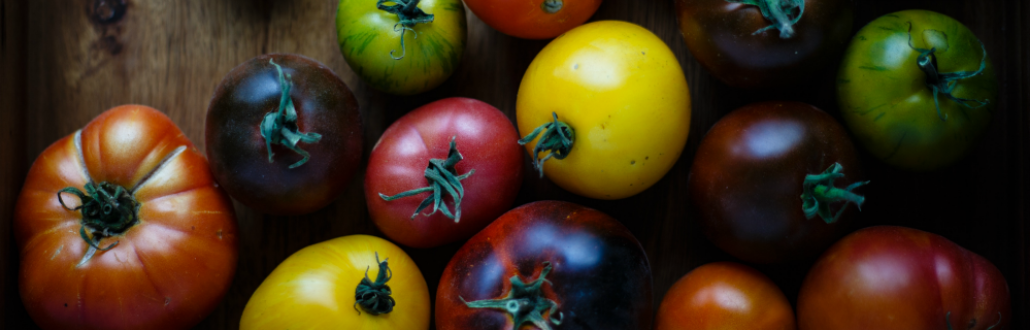
CSA farmers respond to low enrollment and crop losses due to severe weather events with renewed commitment to local food.
What’s special about community supported agriculture (CSA)? The answer is both obvious and difficult to define. We live in an era when “sustainable” food can be found at any big-box store, Walmart and Costco are the largest organic food retailers, and more meals are eaten out than cooked at home. Still, CSAs provide the personal connection to community (social and ecological) that these outlets lack, and many local food consumers believe it is now more important than ever to support farmers engaged in this risky but rewarding work.
The foundation of the CSA model is that members pay the farm up front for a share of the harvest throughout the farm season. The CSA model is attractive to farmers because it can offer more stable income and cash flow, plus the ability to do more predictive planning based on known, pre-season sales. Consumers then benefit from a guaranteed supply of local food and an accountable, friendly face providing their produce. CSA members also enjoy the altruistic satisfaction of knowing their purchases truly align with their values. CSAs connect farmers and consumers, strengthening local food systems, reducing the collective carbon footprint, and putting more money in the pockets of farmers instead of distributors and retailers. A key outcome and innovation of this model is that the consumers share in the risks of farming. If the basil crop fails for the farmer, members also might miss that crop in their share, though it will likely be replaced by something else.
CSA arrived in the United States via a few east coast farms in the mid-1980s (for more CSA history, check out FairShare CSA Coalition). This coincided with the infamous “get big or get out” agricultural era instigated by federal policies that supported large-scale corporate farming to the detriment of local food systems and small farms. CSA offers an alternative to that trend, appealing to conscientious consumers who want to reconnect with local farmers and preserve historic farmland. In the 1990s and 2000s, it seemed that CSA held the promise of saving the small family vegetable farm, as eager consumers looked for CSA programs to provide them steady access to local and organic food. To a certain extent that’s still true, but times have changed.
CSA farms come into and go out of business as readily as any small business, but 2018 was a particularly difficult year for CSAs in Wisconsin because of the weather. (If you haven’t yet, check out our Winter 2018 feature article on how flooding affected producers, “Forgetting the Floods, Keeping the Faith.”) If erratic weather wasn’t enough challenge, market pressures—largely the broader availability of local and organic food—have really been putting the squeeze on CSA farms.
For one, the potential benefits of this model and the seeming abundance of eager customers led to a proliferation of CSA farms. Additionally, local and organic produce, often from the same growers that offer CSAs, can be readily found at smaller groceries and the numerous farmers markets that have also burgeoned in the last decade. CSAs are no longer the sole or most accessible route to local and organic food. As eaters turned elsewhere for their produce while the number of CSA farms grew, the effective consumer to farmer ratio shrank. A more pervasive pressure is the consolidation of industrial-scale organic foods available via huge retailers. These range from greenwashed products claiming “natural” and “sustainably farmed” ingredients to meal kit services that paint a picture of a local food chain, direct from the farm to you. Yet powerful differences still distinguish CSA from other outlets, and CSA customers value the difference.
CSA programs offer dynamic communication through newsletters, social media and on-farm events, as well as an ability to personally connect with the farmers who grow our food. David and Barb Perkins of Vermont Valley Community Farm largely pin their success on giving their members access to the farm as a place to gather as a community. From corn boils to you-pick events, their members had plentiful opportunities to explore their land and learn about their operation. That relationship was critical. They said, “Members signed up for the produce, but stayed for the experience.”
An individual farmer’s crop failure might go unnoticed at the farmers market or grocery store, but the knowledge is unavoidable for a CSA member receiving regular communication from the farm. It is easier to turn away from realities on the farm when there are alternative and anonymous options at the market or store. But times of ecological or financial challenge are when farmers need their customers’ support the most. That support is knit into the fabric of CSA. David and Barb said that after the 2018 flooding, their members called up, not because they were concerned with the rest of the season’s produce they had bought, but because they wanted to make sure David and Barb were safe.
A grocer always needs to have their shelves filled and predictable. The contents of a CSA box will fluctuate based on the conditions the farmer encounters. The store likely has a picture of a smiling farmer posted above the tomatoes, with a brief profile that includes their crops. It’s meant to give that feeling of putting a face to the farmer behind your food—a driving force for the CSA market.
“When someone goes to the grocery store and sees that tomatoes are from Mexico this week, they may or may not connect that with the hailstorm or flood that just happened locally,” said Claire Strader of FairShare CSA Coalition and UW Extension-Dane County. “But the CSA customer is definitely going to make that connection. They’ll have a fuller understanding.”

A customer may not even notice that the tomatoes aren’t from the posted producer, but that photo of a smiling farmer will still be there above the tomatoes, leaving the customer with that warm, fuzzy feeling. CSA customers have to evaluate the tradeoff between a stable supply of reliable options and committing to riding out the highs and lows alongside a local farmer.
As the CSA model matures, that contrast is rapidly becoming less binary. CSA farmers have responded to growing competition in the market mainly by offering more flexibility. Some models let consumers choose their share of the harvest from everything the farmer has available—loading up on what they love, avoiding what they don’t. While the farmer might lose some of the benefit of predictability this way, skilled farmers can still develop a fairly accurate projection of demand. Regardless of format, the community and support pillars of CSA stay intact; the relationships and commitment between farmer and eater remain.
Despite increased competition, many farmers and consumers prefer the traditional model of CSA. Long-time CSA customers love the excitement of discovering the veggies in the box each week and the adventure of learning how to use a new vegetable they might never have picked off the shelf at the store. David and Barb Perkins are some of those farmers. They never offered increased customization, pinning their success on the power of the fundamental CSA model. “CSA is all it’s cracked up to be,” they agreed.
The Perkinses officially announced their retirement last November. David says their ability to retire is a milestone for the CSA movement in Wisconsin, and he’s not exaggerating. Few CSA farmers in the U.S. have reached this point, partly since CSA is a relatively new enterprise here, and partly because farming is an inherently demanding and risky endeavor. David and Barb’s announcement came amid an ongoing downturn in the agricultural economy, when organic and conventional farmers alike have been struggling (southwest Wisconsin led the nation in agricultural bankruptcies in 2018). All too often we hear of farmers quitting, but it’s increasingly rare to hear about timely and successful retirement.
The Perkinses weren’t exempt from challenges. They had to pivot and compromise to make the economics work for their farm. They ran a good business, and still saw membership decline in the last few years. But they built a strong community, which stuck by them through the ups and downs, through the difficulties and the joys of life on the farm. Many tears were shed by loyal members when they announced their retirement. As we talked, their tone remained cautiously optimistic. David offered his hunch that demand would increase for CSA again, and in perfect unison they affirmed, “CSA is here to stay.”
To readers considering joining a CSA, find one that fits your needs. If you desire plenty of choice and a one-stop-shop experience, there are flexible shares and myriad add-ons (bread, eggs, etc.) available at many farms. If you like the adventure of discovering what’s in your box, there are plenty of traditional-model CSAs to be found as well. The “Find a Farm” section of the FairShare CSA Coalition’s website, csacoalition.org, is a great place to start your search.
As eaters, we create the market pressures with which CSAs are struggling. As convenient as it is to have a globalized food system to depend on when weather gets rough in our region, we need a robust and decentralized local food system to keep our bodies, communities and planet healthy and resilient. Hand-in-hand with farmers, we have a responsibility to face the coming challenges together.
More Stories by This Author

Edible in your mailbox
