

Once upon a time, there was no such thing as a Red Delicious apple. Blasphemy? Read on to discover Wisconsin’s tasty - and nearly lost - “antique” apples.
Blasphemy? Not at all. The blasphemy lies in the steady dilution of America’s rich apple heritage over the last 100 years. I was surprised to learn that before the turn of the 20th century, apple diversity was as great as 7,500 known varieties (some sources say up to 15,000!), but now—after the invention of the steel refrigerated boxcar in the 1940s—that number has dropped to a comparatively paltry 2,500 in as little as 60 years.
Even more blasphemous, a mere 11 varieties make up 90 percent of the commercial apple crop today. These top 11 have been specially bred to be travel hardy for a bruiseless crosscountry trip from orchard—most likely in Washington—to store shelf. Red Delicious alone makes up 41 percent of the U.S. apple harvest. Ironically, the tradeoff for that “delicious” red skin and perfectly consistent conical shape is a quite non-delicious mealy texture and flavor that can only be described as bland.
Fortunately, unique and flavorful “antique,” or heirloom, apple cultivars are making a comeback in Wisconsin, thanks in part to the resurgence of farmers markets, home cooking and interest in locally-produced food.

This state has always had a rich apple culture. A century ago, nearly every small farm had its own little family orchard, each with many varieties of apples, some found only in that orchard. Then a first-place winning Gays Mills apple exhibit at the 1905 Wisconsin State Fair prompted the Wisconsin Horticultural Society to plant trial orchards around the state. Many failed, but the orchards that thrived proved there was something special about Wisconsin’s earth.
Milwaukee and Waukesha county apples developed a unique tartness from the area’s alkaline soil, a result of limestone erosion. Cold nights during harvest season bring out a special sweetness in Door and Bayfield county apples. Crawford county orchards benefit doubly from alkaline soil and unique topography—high ridgetops provide excellent sun and protect from frosts that collect in the valleys. Today there are over 7,000 acres of apple orchards in the state, many growing antique apples alongside the commercial varieties to fulfill their specialty markets and help keep the old breeds from going extinct.
Jim Fleming of Fleming Orchard in Crawford County near Gays Mills grows some of these antique apples on his 50-acre, third-generation orchard.
“For commercial we have McIntosh, Cortland, Honeycrisp, Gala, Golden Delicious, Red Delicious,” says Jim, “but we have around 30 antique varieties. Some russets, Wolf River, Paula Red, Jonathan, Jonamac, Jonagold, Braeburn, Winesap.”
Jim sells at the Dane County Farmers Market and says people have begun to recognize the difference in a Gays Mills apple. Commercial varieties were bred more for sweetness and eating out of hand, but the antique apples tend to be tarter and better for cooking. Tart apples have been losing their popularity with mainstream retailers, but interest is increasing at farmers markets.
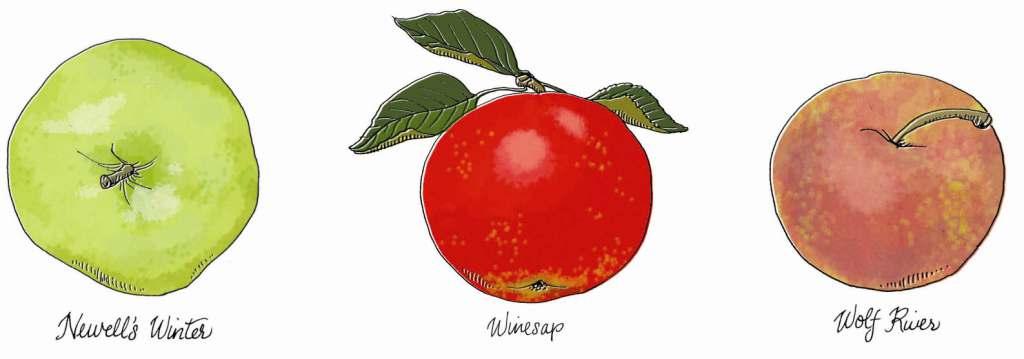
“The Wolf River was bred specifically for making apple butter,” says Jim. “The Mutsu [Crispin] is great for applesauce, and Winesap is good for making hard cider. The Stark Giant was a horrible tart apple and we basically took out all the trees because it was just such a sour apple. But now at the Madison farmers market people want a sour apple!”
[[break]]
Fortunately for market-goers, antique Wisconsin-developed apples tend to be naturally tarter, making them good for cooking and storage, like the large Wolf River mentioned previously, which was developed in Fremont in 1881. The Newell’s Winter (or Orange Newell) originated in Sauk County in 1849 and has a coarse texture and a nicely acidic flavor. The McMahon apple was first planted by a woman in Richland County in 1860 and is another very large apple good for desserts. Northwestern Greening was developed in Waupaca County and is the most popular non-red apple grown in the Midwest. It is very juicy with firm flesh, excellent cooked into sauce or pies, and is a good storage apple.
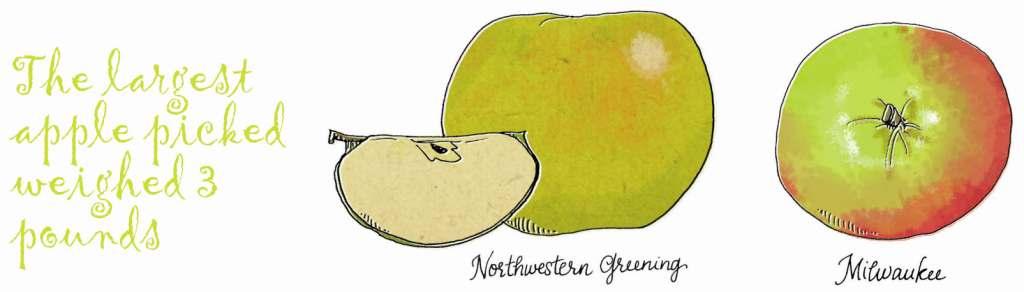
Ever heard of the Milwaukee Apple? Few have. Slow Food Wisconsin Southeast embarked upon a campaign in 2010 to bring back this nearly extinct cultivar. The apple dates back to 1899 and disappeared in the 1930s. Just one Milwaukee Apple tree is known to exist in the city limits, and there are only two sources for seedlings or rootstock. Slow Food WiSE carefully grafted and planted new Milwaukee Apple seedlings and now watch over them, awaiting their first fruits in another two to three years. It is supposed to be a very good all-purpose cooking apple for everything but desserts.
An especially interesting—but nearly extinct—Wisconsin native is the Hanko (Sauk County, 1862). This beauty has crimson stripes over a yellow background, and greenish-white, red-tinged flesh. You’ll have to look hard for this crisp apple in historic orchards.
Weston’s Antique Apple Orchard in New Berlin grows over 100 varieties with the sole purpose of preserving these fading heirlooms. Many don’t even taste like apples, such as Weston’s own Winter Delight, which is yellow and tastes like vanilla.
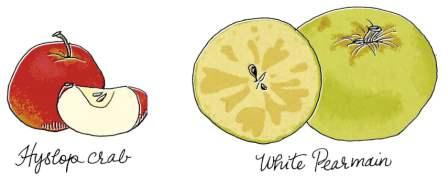
Some of the most unique flavors are hundreds of years old and hail from across the pond. The oldest known apple is the very tart White Pearmain dating all the way back to 13th century England.
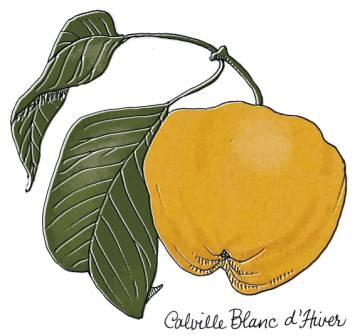
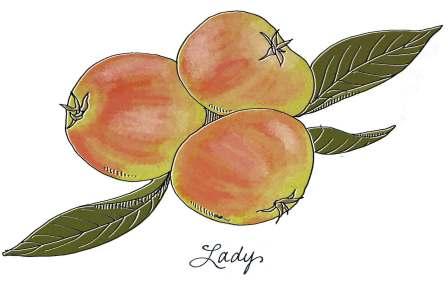
Calville Blanc d’Hiver is another elder originating in 1598 France. This apple has a very strong flavor and is still served at high-end Parisian restaurants. The small and sweet Lady, or Api, also hails from France in 1628. This little lady was often used in Christmas decorations and stocking-stuffers, giving it the nickname of the “Christmas Apple.”
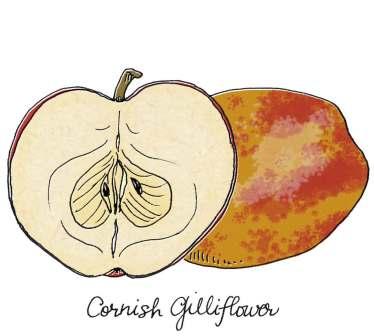
The Ashmeads Kernel (Britain, 1790) has a cashew and honey flavor that beats out its looks (it’s rather ugly) to regularly win the top prize at Britain’s tri-annual Royal Horticultural Society apple tasting contest. The Cornish Gilliflower (Britain, early 1800s) tastes like—of all things—cloves.
[[break]]
Most people think of crabapple trees as solely decorative, but the fruit of many varieties is edible, though probably sour enough to make your face permanently pucker. You’ll rarely (if ever) find them sold at markets; however, crabapples are often wonderful in pork dishes and spiced jellies. (Try this incredible Crabapple Butter with Vanilla Bean recipe!) The Hyslop Crab (Milwaukee, 1869) and the Brier Sweet Crab (Baraboo, 1870) are two endangered Wisconsin-origin crabapples, and the Florence Crab is an antique available at Weston’s. Red Jewel and Sugar Thyme are more common edible crabs.
Oddly enough, the Red (not-so) Delicious is, in fact, considered an antique, as it was originally developed in 1915, even though its flavor has much to be desired compared to its relatives. But to this market-dominator’s credit, Jim Fleming says one grown locally and picked at the peak of ripeness will taste and feel dramatically different from one that was picked two weeks ago on the west coast—especially if the local version is allowed to remain on the tree through a cold (but not freezing) night or two to bring out its natural sugars. So maybe the Red Delicious isn’t a complete villain after all.
This fall, look up a u-pick apple orchard and explore the unique flavors they have to offer. Pass up the perfectly-colored and -shaped in favor of gaining some flavor wisdom from a bi- or tri-colored, squatty, tiny or giant (possibly lumpy) apple grandparent.
Other apple varieties originating in Wisconsin and surrounding states:
- Old Church (Waukesha County, date unknown): Flavorful but very tart.
- Prairie Spy (University of Minnesota, 1940): To be eaten fresh or in pies; good storage apple.
- Wealthy June (Minnesota, 1860): Yellow-red; mild flavor.
Be sure to try out the delicious apple recipes found on EdibleMadison.com this fall season!
Featured Recipes


More Stories by This Author

Edible in your mailbox
