

Smaller is Better for Westridge Organic Farm
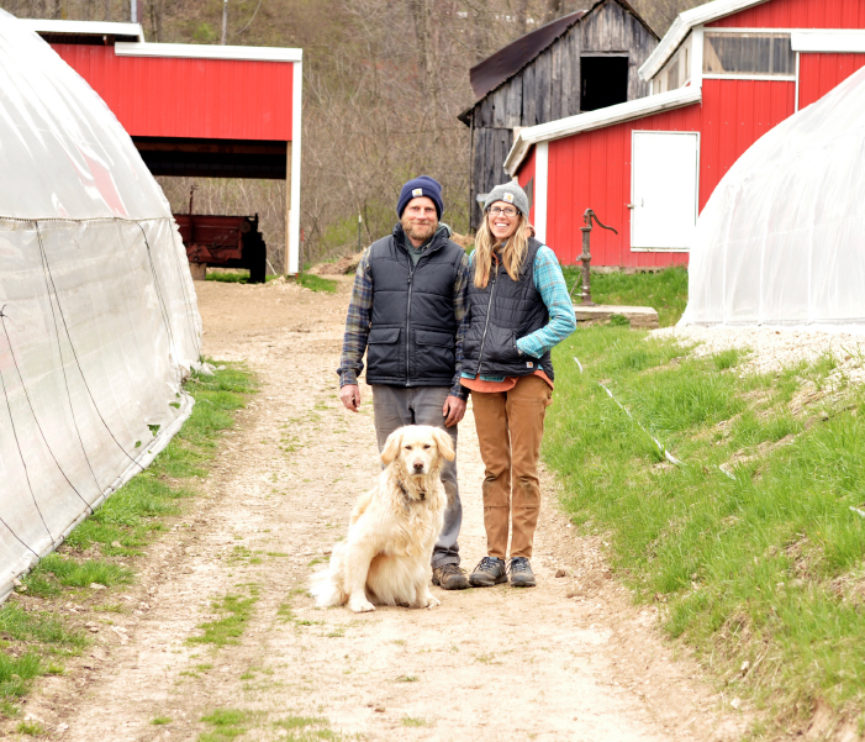
Kim and Jake Jakubowski are rooting for human-scale in an agricultural paradigm that tells farmers bigger is better.
Like many young farmers, Kim and Jake Jakubowski started out small. Kim puts it simply: “We just started growing stuff.” In 2002, they bought 11 acres of wooded land tucked into the rolling hills of Wisconsin’s Driftless region and formed Westridge Organic Farm. Initially, they sold at farmers markets in Viroqua and Richland Center, establishing a pathway over the next few years to organic certification and additional marketing opportunities in CSA and wholesale. As they accumulated equipment and rented more acreage for production space, the Jakubowskis eventually found themselves managing nearly 35 acres of vegetables, hay, and livestock. To grow so big was never necessarily their intention. However, the standard to expand and mechanize set by other farmers in their area naturally swept Jake and Kim in the same direction.
Between managing a scattered collection of rented plots and battling uncontrollable weed pressure, the Jakubowskis’ efforts were spread thin on so much acreage. “Most people think that bigger is better with farming,” Kim says. “But we’ve learned that is not the case.” In 2019, Westridge Organic Farm began cycling back to human-scale, adopting a range of new techniques in the process. They started experimenting on two acres, piloting a small no-till spot while continuing to primarily work with the tractors. Last year, they trimmed cultivation even further to just three-quarter acres of no-till and were finally able to move the entire operation back to their own land. Now, they closely crop in 30-inch permanent raised beds twice, and sometimes even three times, throughout the year.
Kim points out that this isn’t a new way of farming. The Back to the Land movement of the 1960’s and 70’s catalyzed a strong following of the small-scale organic growing framework. Most notably, Eliot Coleman’s wildly popular guide The New Organic Grower motivated many conscious farmers to make the most out of downsized acreage and equipment. Coleman’s teachings guided farmers and home gardeners to aim their growing practices towards ecological benefits like soil integrity, pest and disease resiliency, and weed suppression. More recently, farmer J.M. Fortier has brought renewed attention to market gardening by demonstrating that small-scale growing methods can reap unheard of profitability in organic farming. While taking home a solid living as a farmer is an ongoing struggle across agricultural approaches, market gardening techniques make high productivity and profitability not only possible, but manageable. Westridge Organic Farm has experienced this same effect. “Last year, we made like $100,000 in vegetables off of the three quarters of an acre,” Jake says. “One time we were making less than that off of five.”
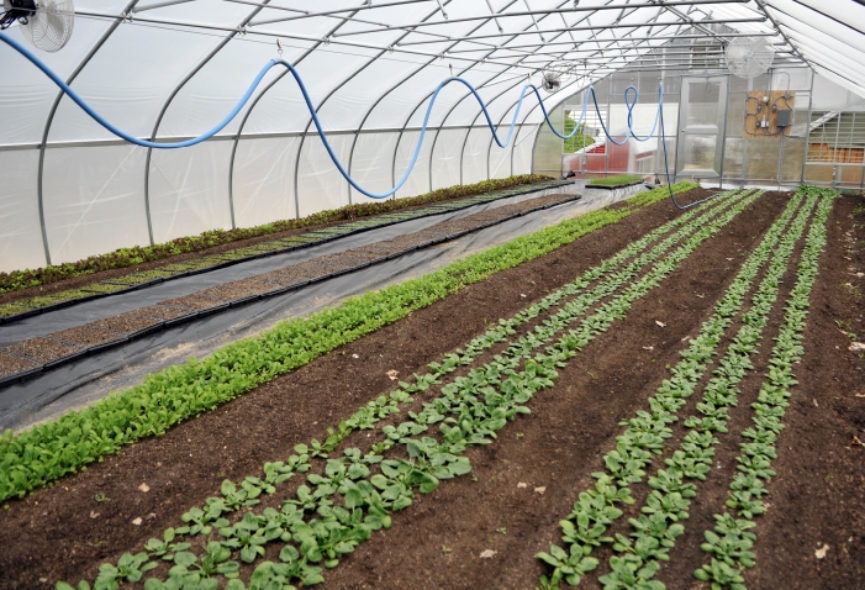
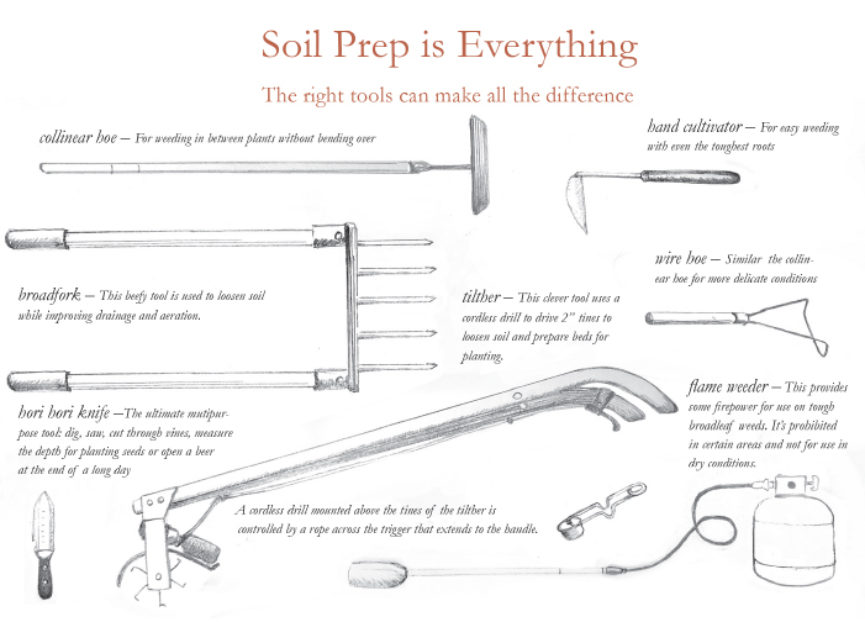
Aside from intensive cropping and permanent raised beds, the Jakubowskis have adapted a number of market gardening techniques to their farming practice. In place of tillage, they turn and aerate the soil through a process called broadforking. The broadfork, a 30-inch-wide fork-like implement with eight- to ten-inch tines, is inserted into the soil every foot of bed length and then pulled back to loosen up the soil. The Jakubowskis then top the soil with a layer of compost an inch or two thick. They also use a tilther, a drill-like tool developed by Eliot Coleman that mixes up the top inch of soil without excessively disturbing its biological activity. In fact, these techniques are synchronous with a variety of ecological advantages.
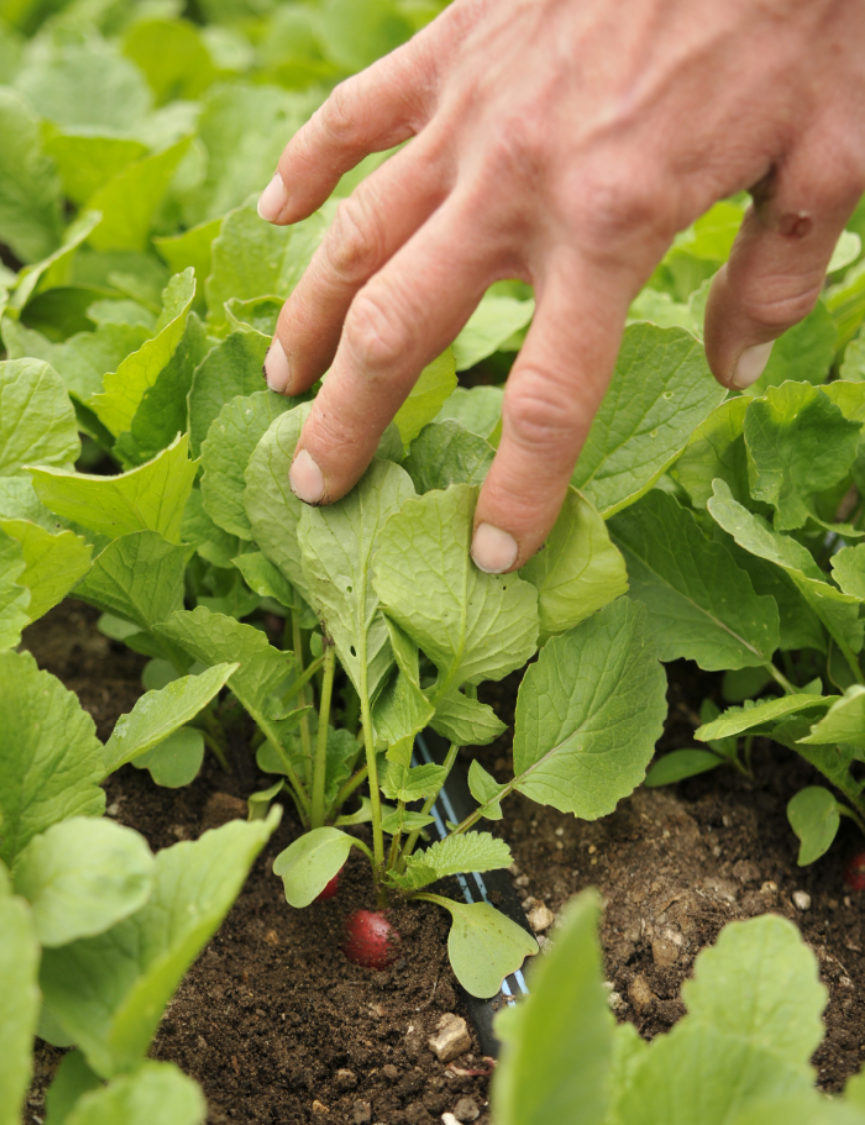
Specifically, ditching tillage and tractors creates better outcomes for soil health, weed suppression, and cuts way down on carbon footprint. Even further, scaling down machinery and acreage demonstrates Kim and Jake’s commitment to reducing their environmental impact and mitigating climate change. With foot traffic limited to the narrow paths between crop beds, soil compaction is reduced to near nonexistence. This means that the soil maintains a healthy level of aeration for essential biological activity to unfold below the surface. When worms and other beneficial insects and bacterias thrive, they can create better conditions for hearty soil structure, water filtration, and crop nitrogen-fixation. More carbon stays in the soil with minimal disturbance, and less reaches the atmosphere when tractors and fuel-intensive machinery are deferred. Reducing tillage can also bring considerable relief to farmers struggling to keep up with weed pressure. Methods like broadforking and tilthing are less disruptive to the soil than traditional tillage, leaving more weed seeds below the surface deeply buried. Piling on compost can further suppress the weeds, given that the compost hasn’t already been compromised by weed seeds.
With much less land to cover, Kim and Jake don’t have to sacrifice their yields to the weeds either. Jake tackles them with just a flame-weeder, collinear hoe, and a wire weeder—all tools intended for human-scale weed management. The Jakubowskis note that their ability to manage weed pressure has already significantly improved.
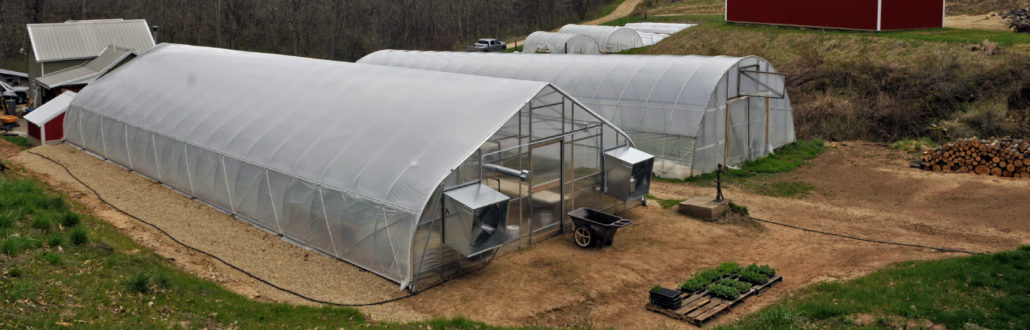
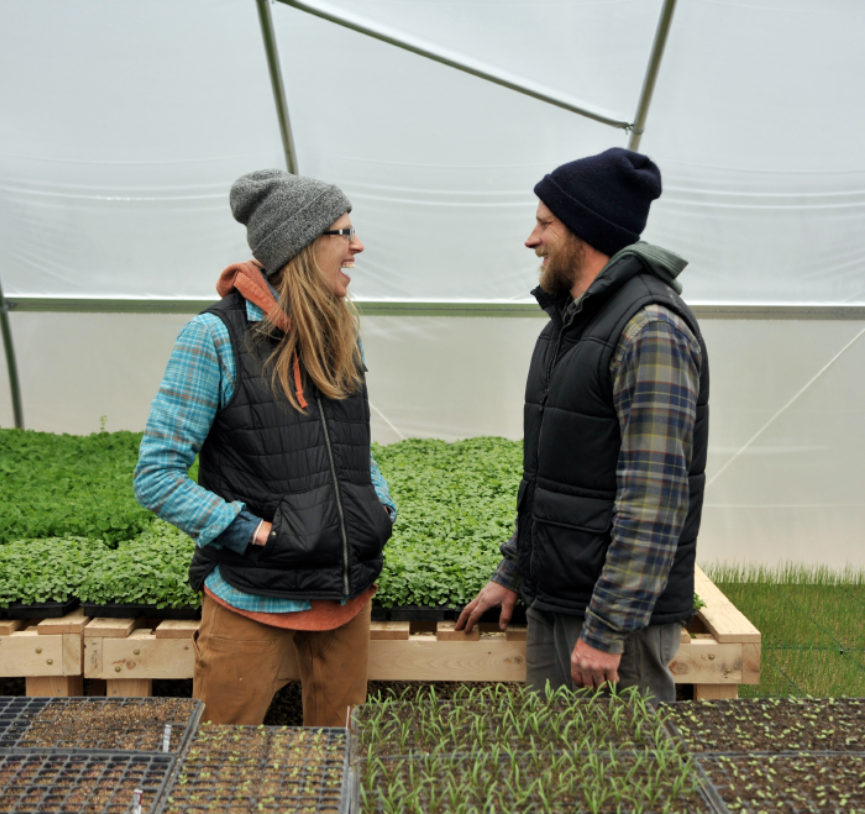
The resiliency of the soil’s stewards is just as important; Kim and Jake are already starting to feel the relief of juggling less land and losing fewer crops to competition. The Covid-19 pandemic allowed them to shift their marketing to strictly CSA, giving them much-needed Saturdays off from the farmers market. In tandem with extending their season through high tunnels and a new minimally-heated greenhouse, these changes have all contributed to a greater sense of balance for the farmers.
And, their most noteworthy challenge to date? “Growing carrots because they like that really soft, deep soil,” Kim says. “Some of the carrots were really short.” Jake adds. “I think as it gets looser over time, it’s going to get really nice.” As Kim and Jake nurture the biological activity of their soil with compost and minimal disturbance, over time it will begin to match those ideal carrot-growing conditions once achieved forcibly by tractor tillage. With many advantages yet to come, the Jakubowskis are looking forward to growing even higher-quality, nutrient-dense vegetables. If one thing is better bigger, it’s the carrots—but when it comes to acreage, Westridge Organic Farm is staying small.
More Stories by This Author

Edible in your mailbox

What a wonderful success story! But I will surely miss Kim, and daughter, Autumn, at the Saturday farmer's market on the square!!!!! Best wishes to the Jakubowski Family!!!!!