

Ginseng is no ordinary plant. The story of ginseng goes way beyond the health benefits and nutritional properties of a prized herb. In fact, it reads more like a drama filled with history, poaching, exploration and international trade—and it’s all happening here in our neck of the woods.
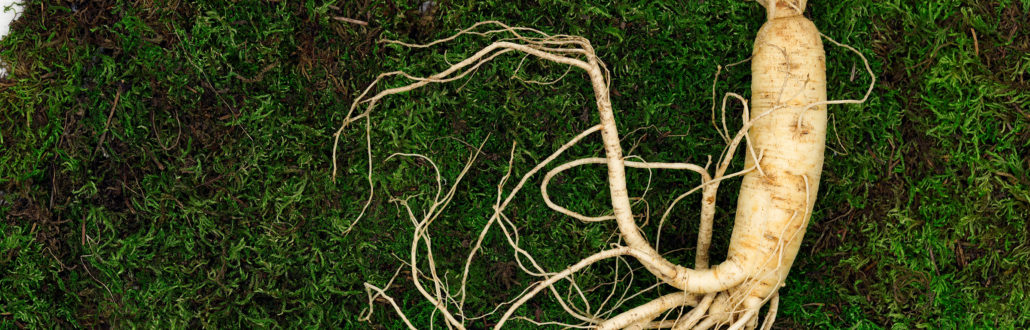
Ginseng is one of the oldest known herbs used for medicinal purposes, and its popularity continues today in Asia; this plant tends to carry some mysticism and folklore around it, as with many special herbs. The shape of the ginseng root has historically denoted special importance: those that most resemble the human form are considered most valuable, medicinally and monetarily. A quality root that has grown for many seasons looks somewhat like a human, with smaller roots shooting out like legs from the main root. Also used on this continent for centuries, the Mohawk word for ginseng, garantoquen means man’s image—whether this is parallel thinking or remnants of when the Bering Strait was closed and Asia and North America were one landmass (or something more mysterious) is hard to say, but one thing is for sure: ginseng of all types has long been prized the world over and deserves our attention, both for its medicinal value and to steward the plant for future generations.
Ginseng is a root renowned for its health-giving properties. Part of the ivy family Araliaceae, varieties of this plant can be found all over the world. Panax ginseng, also known as Asian ginseng, and Panax quinquefolius, or American ginseng, are the primary types used for herbal medicine. Their cousin, Siberian ginseng, also known as eleuthero, is also commonly used in some herbal traditions. Panax quinquefolius is the variety that grows in the eastern and midwestern United States, including much of Wisconsin. Though primarily used today in Asian countries, what is now known as American ginseng has been part of Indigenous American herbal practices for centuries, used by members of the Cherokee, Iroquois, Delaware, Menominee, Potawatomi, Fox, Penobscot, Creek, Chippewa, Pawnee, Seneca and Sioux tribes (and there are likely more not as well known). There are reports of some of these groups using the leaf as well as the root in medicine, though not much is known of this practice today.
Though it is native to this area, American ginseng has been cultivated since the 1800s in the US and Canada, but wild ginseng has an even longer history of commerce. The export of ginseng from North America to Asia began in the early 1700s after Joseph Francois Lafiteau, a French priest living in Canada, found–after much searching–wild ginseng near his mission and began wild-harvesting alongside native residents, then began export to China within a few years. Today millions of pounds of ginseng are cultivated and harvested in Wisconsin and the rest of the US each year, the vast majority of which is still exported to China and other Asian countries. This powerful herb continues to be a mainstay in their herbal medicine practices, over 5,000 years since it became a staple in what is now known as Traditional Chinese Medicine (TCM).
Once you dive into the research on the health benefits of ginseng, it is easy to see why this herb is so highly sought after. The main benefits of ginseng include energy, stamina, healing, libido and mental alertness. Other, lesser-known benefits are myriad and include improved eyesight, fever reduction, headache relief, better sleep, blood sugar regulation, digestive support, detoxification, improved blood pressure and cholesterol, fertility and endurance.
Ginseng is what is known as an adaptogen, a class of herbs that supports overall well-being and the body’s ability to adapt to stressors. Adaptogens set themselves apart from other herbs as they are nonspecific, meaning they are intended to affect the entire body, supporting organs and systems that need balance and healing. This category of herbs, coined by Russian herbalists in the 1940s, are all nontoxic and non-habit forming and generally recognized as safe for long-term use. Other adaptogens include ashwagandha, schisandra, astragalus, rhodiola and licorice root. Similar categories of herbs are seen in other herbal medicine traditions, including Ayurveda (the ancient Indian healing practice), Native American herbal practices and Traditional Chinese Medicine. In TCM, Asian ginseng is considered “yang,” with warming, stimulating, energizing properties, while American ginseng is considered “yin,” with cooling, calming, and restorative properties. Medicinal uses of ginseng—typically using dried roots—include teas, capsules, tinctures and foods, where the roots are cooked into dishes like broths and congee, a long-cooked rice porridge. Ginseng is typically meant to be used as a tonic, where it is taken on a regular basis to help support balance, rather than acutely or “as needed.”
Wild ginseng is typically harvested in early to midfall, when the green leaves turn to gold, making them easy to spot in brushy areas that are still green. Plants can be found in forested areas of mixed hardwoods, especially those with steep hills and ravines. Mature plants typically have three or four leaves coming from a tall, thin stem with small, bright red seeds. Each leaf has five leaflets (quinquefolius means “five leaves'') that form a fan-like shape. The top three leaves are larger, with the bottom two leaves smaller; this leaf pattern is one of the main identifiers. Also important to look for are small, bright red seeds. The root must be carefully dug up to avoid damaging it, and it is the law in Wisconsin that after the root is harvested, foragers must plant the seeds in the vicinity of the harvested root to help keep these plants growing for years to come.
Only plants that are many years old should be harvested, to protect the plant population and for a higher-quality root. Ginseng is a slow-growing plant that requires very specific growing conditions; it can take 1–2 years to begin to grow from seed and several more years to grow a root large enough to harvest, so extreme care must be taken when harvesting in the wild. The medicinal value of ginseng is said to improve as it grows older. Stem scars that grow each year tell the age of the plant, much like the rings on a tree. Some ginseng plants live for decades, 50–80 or more years, though these are rarer due to overharvesting.
A note on wild harvesting: As with all foraging, always start with proper plant identification by researching the plant thoroughly before harvesting or consuming. Find good foraging resources, such as books or talk to an expert in this field. You could also take a wildcrafting course or tag along with a friend who knows their plant ID well for more hands-on learning. And of course, always practice responsible, ethical foraging by only taking what you need and not overharvesting. If you are unsure of any of these things, do not attempt to harvest this plant.
Overharvesting of wild ginseng in Asia, nearly to the point of extinction for the plant, is how the export of American ginseng to China began all those years ago. American ginseng has met that same fate in many areas, including Canada where it was first harvested for export. Much has been done to ensure that American ginseng is no longer overharvested, including tight regulations on when and how much you can harvest. The Wisconsin DNR has a wild ginseng harvesting program to support sustainable harvesting practices and regulate the sale of wild ginseng into and out of Wisconsin. On private or public property, you need a license through the DNR to harvest wild ginseng, even for personal use. Separate licenses are needed for sales and for cultivated ginseng as well.
Wild American ginseng can be worth hundreds to thousands of dollars per pound, depending on the quality of the root. This price tag can get people seeing dollar signs, but not always thinking about the consequences of overharvesting or showing concern for where they harvest. Because of the demand in China for ginseng, the price of wild ginseng is extremely high. Wild ginseng is considered to have a higher medicinal value than farmed or woods-grown, where plants are cultivated in the woods to mimic ginseng’s natural habitat. As you might imagine, a wild plant this valuable can lead folks to do crazy things to try and cash in on this harvest, such as poaching (harvesting on someone else’s property) and theft. Poaching or otherwise illegally harvesting ginseng from someone else’s land can be a serious issue in this area, not only because of trespassing, but this practice often leads to overharvesting and disruption of natural habitats, as the only objective is to harvest ginseng for money; care for the land and the future of the plants are not taken into consideration.
Because of its popularity and value, ginseng has continued to be extremely over-harvested in Asia, and many are now turning to the US for American ginseng—though the same fate could be in store for this plant if we do not take good care of it in our area. Ginseng can be cultivated rather than foraged, which reduces the need for wild harvesting and may help support this plant for future generations, especially when done in the woods using organic growing practices. You can purchase seeds or roots to cultivate your own either in the woods or in a farm or garden field, with special care taken to replicate forest conditions, such as shade, temperature and soil pH. Ginseng farming is a growing industry in the US and Wisconsin in particular, with Wisconsin being the primary grower and exporter of cultivated ginseng in the country. There are several large ginseng farms in the state, most of which are in the Wausau area. Notably, Hsu’s Ginseng in Wausau was started by the first Chinese ginseng grower in the US and has been operating for over 40 years. Wisconsin- grown ginseng is especially sought after in the American ginseng market, which is good news for Wisconsin growers.
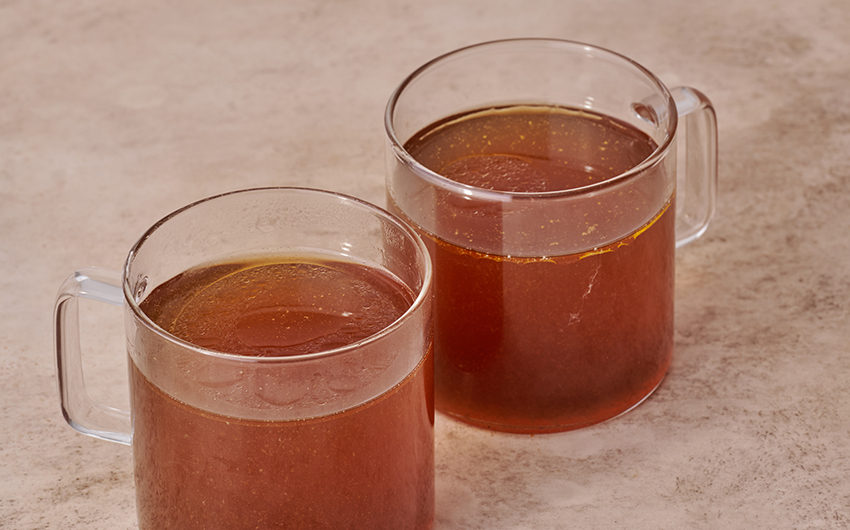
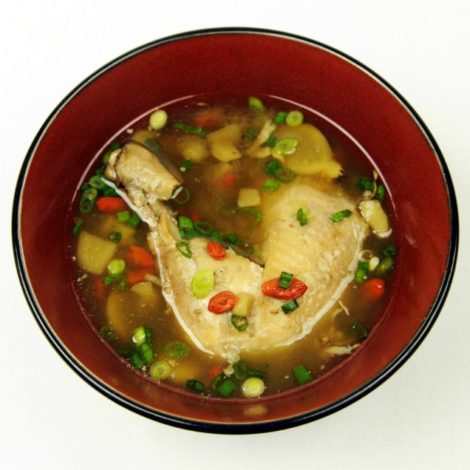
Immune-Boosting Broth with Ginseng
Herbs do not just have to be used in tinctures and capsules—they have a place in food as well. One traditional way to consume herbs is to simmer them with bones to make a nutritious, collagen-rich broth. This broth supports immune function and overall vitality, with the help of American ginseng and other herbs. Feel free to add or omit herbs that suit your body’s needs and what you have on hand. This can be sipped like a savory tea, used to make a nourishing soup or used in place of water to cook rice or vegetables.
More Stories by This Author

Edible in your mailbox
