


With concepts like “Meatless Monday” going mainstream, it’s no secret that eating less meat is better for the environment.
The industrial livestock sector, in particular the feedlot cattle system, uses significant amounts of freshwater, fouls surface and ground waters, destroys grasslands, and causes soil erosion. With significant greenhouse gas emissions, industrial meat production also contributes significantly to global warming. But with a recent study released by the North American Meat Institute and the FMI, Food Industry Association showing that 80% of Americans describe themselves as meat eaters, it’s unlikely people will be giving up their hamburgers anytime soon. With the health of the planet in mind, climate-forward meat, produced with regenerative agricultural practices, offers a different path forward for producers and consumers of meat.
Randy Jackson, UW–Madison Professor of Grassland Ecology, has spent over 20 years studying the grasslands of the Upper Midwest and his definition of regenerative agriculture is focused on how the prairies and savannas of Wisconsin are managed. “For me, agriculture can’t be considered regenerative unless it does two things. One, it builds soil rather than erodes it,” Jackson says. “Two, it increases and diversifies people on the landscape doing farming rather than reducing and homogenizing people doing farming.” While Jackson acknowledges that raising cattle contributes to global warming—“cows burp a lot of methane,” he says—there are data showing that well-managed perennial grasslands grazed by livestock can help clean water, enhance biodiversity and reduce flooding. “What’s really clear is that livestock grazing can stimulate grass production, which increases the amount of carbon coming into the system and gives you a better chance of holding onto and building carbon in the soil,” Jackson says. “And when we build carbon in the soil, we’re taking it out of the atmosphere.”
Jackson has had the opportunity to work with farmers, researchers, and other public and private sector leaders through his work with UW-based project Grassland 2.0. The project’s goals include increasing farmer profitability while improving water quality, soil health, biodiversity and climate resilience through grassland-based agriculture, a counter to the factory farms found across the United States today. “The idea that like three-quarters of our ag land would be for confined livestock and gas tanks is just ridiculous,” Jackson says. “We have to move away from that.”
Peter Allen, co-owner of Mastodon Valley Farm along with his wife, Maureen Allen, never intended to become a farmer. “I didn’t grow up on a farm and I wasn’t actually planning on farming,” Allen says. But after studying restoration ecology at UW–Madison, specifically the restoration of Wisconsin’s oak savanna ecosystem, Allen began to theorize it would be artificial to try to restore ecosystems without animals. Allen credits the mastodons, horses, sloths and other large mammals of the Pleistocene savannas (an ecosystem that existed during the geologic period that lasted until about 12,000 years ago) who grazed the land and kept it from being taken over by forest. Today, Allen says, this role can be played by animals like cows, sheep, goats and pigs. Noting that Indigenous people managed the landscape for millennia while producing fruit, nuts and meat, Allen says he realized that to restore the land he needed to focus on agriculture. “So, I decided to start a farm and put those ideas into practice,” he says.
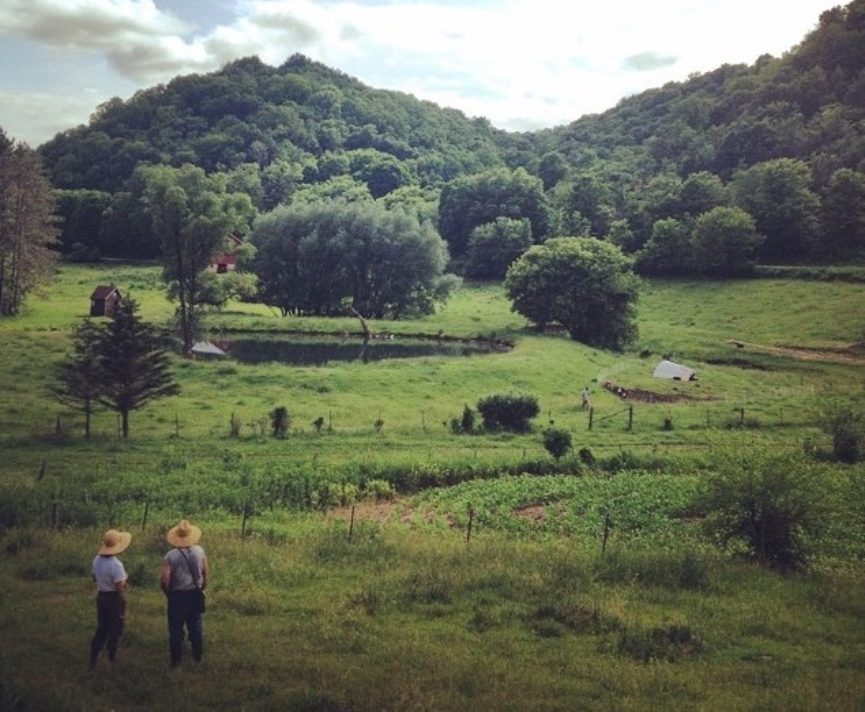
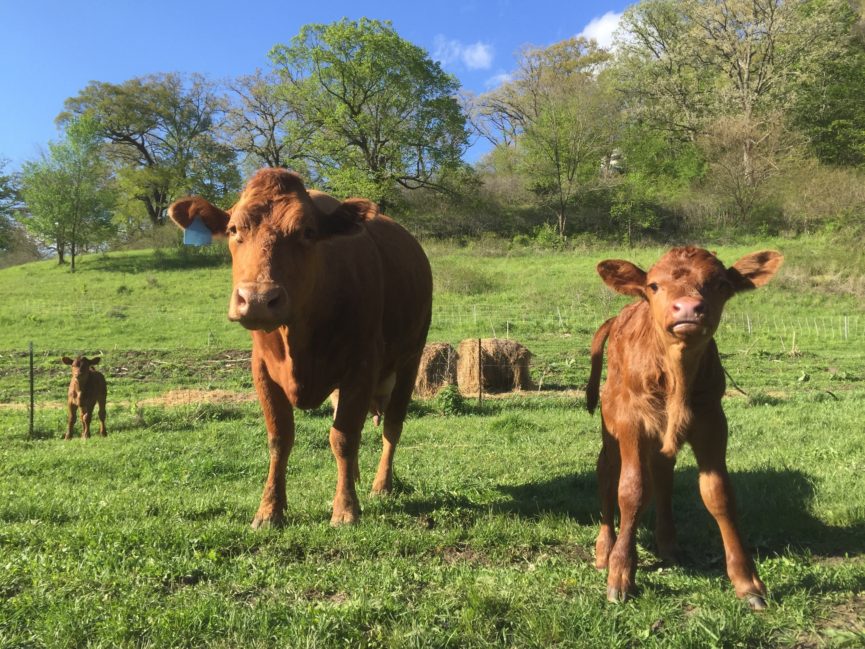
With the primary objective of restoring oak savannas and creating a healthy, functional ecosystem that could help sequester carbon and build topsoil, Allen realized that to make this work financially viable he would need to sell meat. Fast-forward 13 years and Mastodon Valley Farm consists of 220 acres nestled in the hills of the Kickapoo River Valley in the heart of Wisconsin’s Driftless Region. A large valley with woods, steep hillsides, pastures, springs, trout streams, a pond and orchards, animals, including cows, pigs and chickens, roam the land and graze on rotation. A keystone practice of regenerative farming, rotational grazing allows areas of pasture to rest and recover between grazing events. “It’s the main component of being able to build up your soil,” Allen says.
Available through a monthly or bimonthly meat CSA (Community Supported Agriculture), Mastodon Valley’s grass-fed beef, pastured pork and prairie-fed chicken are available for pick up in Madison and Viroqua, and are available for home delivery in Madison, La Crosse, Minneapolis and Chicago. The farm’s frozen meat can also be shipped anywhere nationwide.
Beyond raising grass-fed meat in a way that is healthier for the soil, water and animals, the Allens have seen numerous other benefits to their approach to farming that takes a holistic view of the entire ecosystem. When they recently took a 40-acre crop field and planted it with tallgrass prairie grasses they gained new residents. “Now we have meadowlarks and bobolinks, these rare grassland songbirds, that are nesting here every year,” Allen says.
This is the sweet spot with regenerative farming, Jackson says. While industrial farming “tries to squeeze as much as possible out of the land and animals,” a regenerative approach takes the long view. “It’s really just not taking more than you give back to the land,” Jackson says.
More Stories by This Author

Edible in your mailbox
