

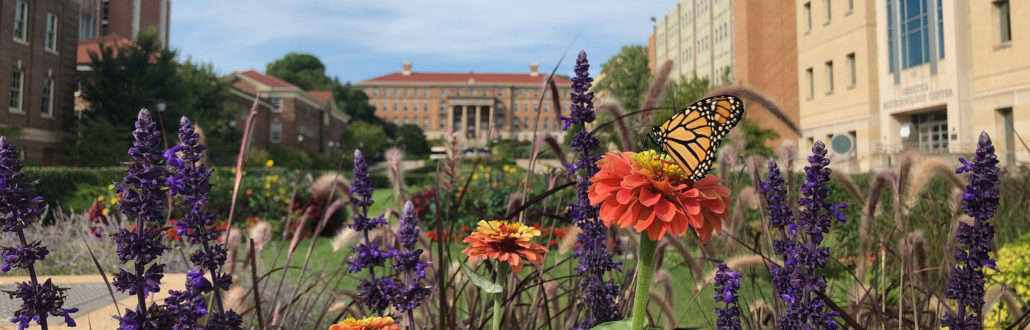
When it comes to the subject of pollinators, honeybees get a lot of airtime. From elementary school classrooms to a Hollywood movie, many people are familiar with the work that honeybees do collecting pollen from flowers on their fuzzy yellow-and-black striped bodies.
“But when you think of bees, there’s really a whole bunch of different types,” says Patrick (PJ) Liesch, an Extension Entomologist with UW–Madison. “In Wisconsin, we have somewhere in the ballpark of close to 500 different bee species.” And while honeybees are agriculturally very important, “they aren’t native to Wisconsin or even North America,” says Liesch, who is also known as “The Wisconsin Bug Guy.” “[Honeybees] are a managed species…The bulk of our bee diversity are really these wild bees that are for the most part solitary.” And while bees are a key player in the world of pollination, they aren’t the only insects who perform this important task. “There's a lot more to pollination than bees, and we are learning more and more about this all the time,” says Liesch.
In its most basic form, pollination is the movement of pollen from one flower to another, a crucial service that is necessary for the reproduction of over 85% of the world’s flowering plants—including more than two-thirds of the world’s crop species—according to the Xerces Society for Invertebrate Conservation, an international nonprofit organization that protects the natural world through the conservation of invertebrates and their habitats. The United States alone grows more than 100 crops that either need or benefit from pollinators. When pollination occurs, “plants can produce their fruiting structures,” says Liesch. And while pollination can happen in other ways, including when pollen travels by wind like in the case of certain grasses, the role that insects play with crops is critical. “If we did a thought experiment and all the insect pollinators disappeared overnight, our lives would be greatly impacted by this. We'd go to the grocery store and essentially the produce section would be gone for the most part,” says Liesch. And in some cases, insects native to Wisconsin, including the squash bee, have evolved closely with the crops that they pollinate. “The squash bee will literally nest in the soil, maybe a foot or more down, in the same fields where squash and pumpkins are being grown,” Liesch says. Mason bees, a wild, solitary bee native to Wisconsin, emerge from underground in spring and can be found in orchards carrying out pollination among apple trees, and bees also help produce cherries in orchards found in Door County. Cranberries, of which Wisconsin is the number-one producer in the country, also rely on bees and other pollinators for production. “If you were to look at a list of the fruits and vegetables that need insects for pollination, it’s a very, very long list,” Liesch says.
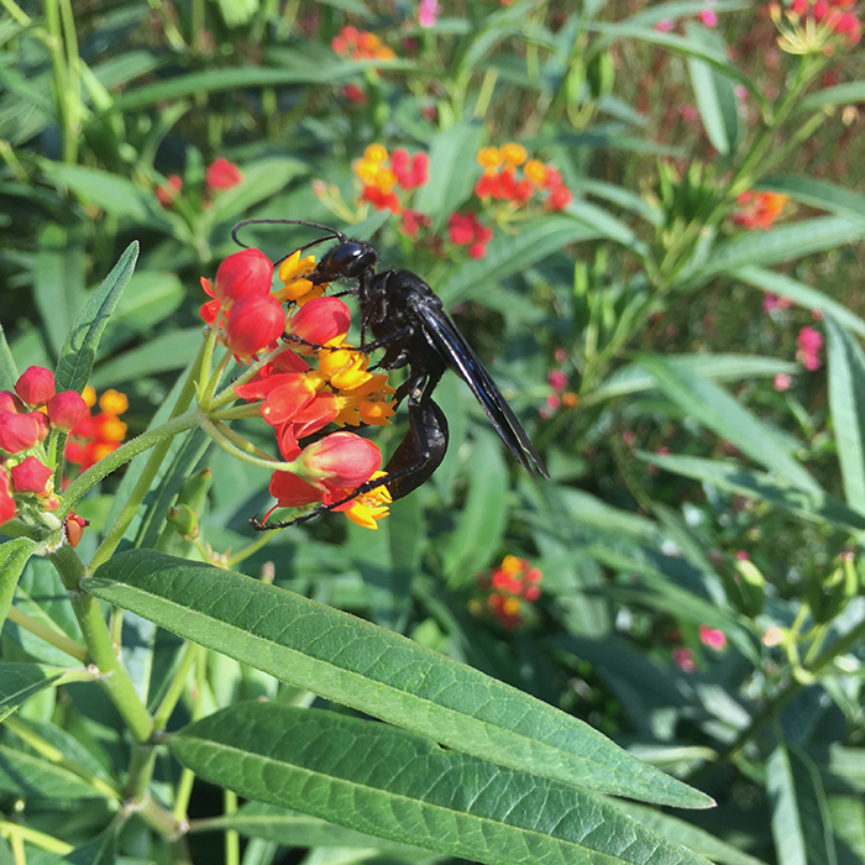
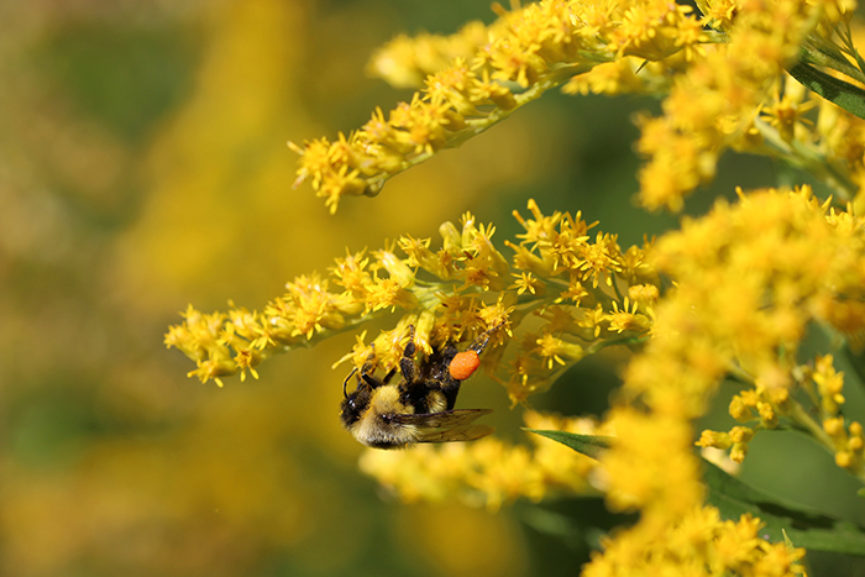
Micah Kloppenburg, Restoration Outreach Coordinator with the UW–Madison Arboretum, previously worked with the Wisconsin chapter of the Xerces Society as a Pollinator Conservation Specialist. Kloppenburg credits bees, including the wild bees native to Wisconsin, with providing the bulk of this pollination work. “Bees are our primary pollinator because they're literally built to collect pollen in order to feed their young,” he says. But in addition to bees are a group of pollinators that Kloppenburg refers to as “secondary pollinators,” including beetles, wasps, butterflies, moths and flies. They are almost incidental in pollinating plants," Kloppenburg says. Secondary pollinators, he explains, don't intentionally collect pollen from plants. Instead, they get pollen on their bodies when they land on a flower for other purposes such as eating nectar or hunting prey. These pollinators, in addition to supporting crop pollination, are also critical to most ecosystems. According to the Xerces Society, fruits and seeds derived from insect pollination are a major part of the diet of approximately 25% of all birds and of mammals ranging from red-backed voles to grizzly bears.
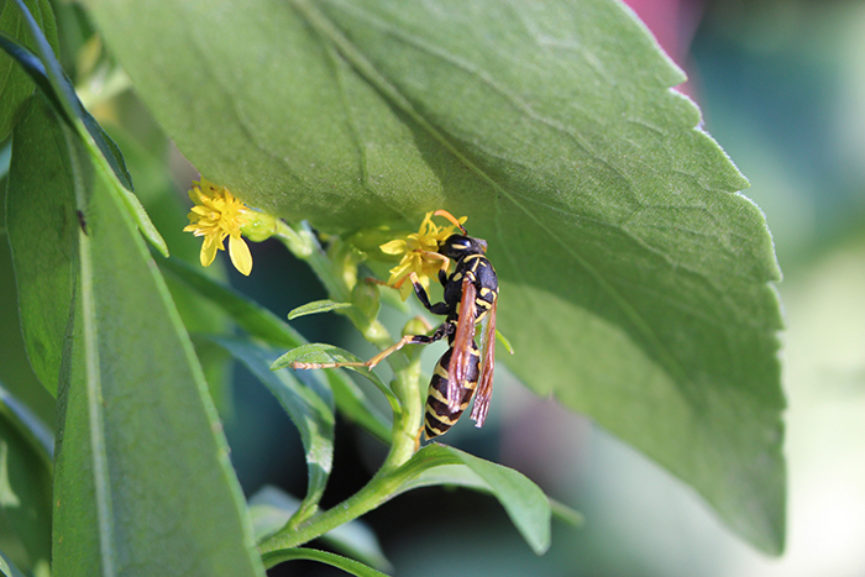
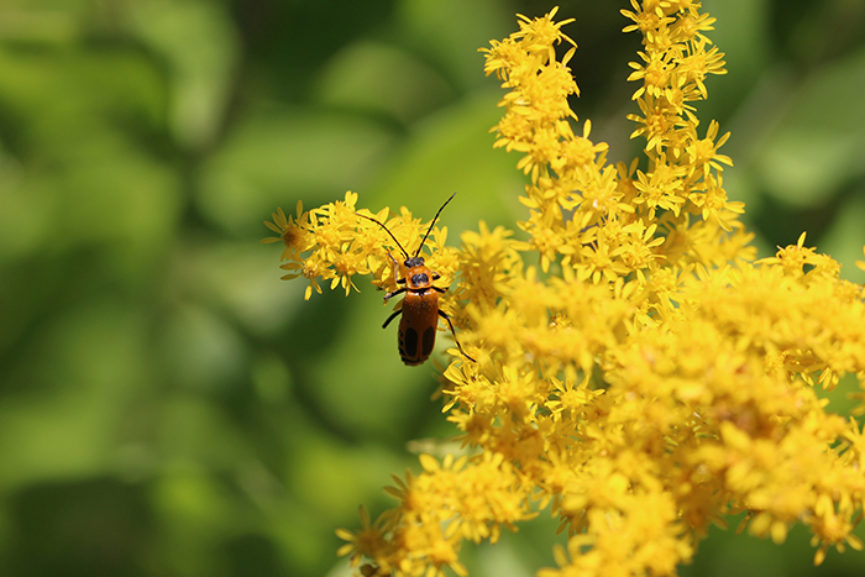
“Folks don’t think of beetles as being pollinators but if you go out to a prairie you can find a lot of beetles hanging out on flowers,” Liesch says. “A really good example of that would be a common species that somewhat resembles a firefly in appearance which is the goldenrod soldier beetle that can be very common on flowers in late summer.” Flies, often maligned for being an annoying pest in the case of the housefly, can also play a critical role in pollination, especially in colder climates. “In some habitats we know flies may actually be the single most important pollinators,” Liesch says. “In Arctic regions of Canada or various spots around the globe at higher elevations it’s generally too cold for bees to be active.” Another high-profile pollinator— the butterfly—is found in Wisconsin where there are more than 100 species, but moths, also members of the order Lepidoptera, are also valuable pollinators. Liesch points to a study in Arkansas where scientists covered flowers during the day to prevent daytime pollination by bees but removed the covering at night to find out how it would affect fruit trees in an orchard. At the conclusion of the study the scientists determined that the trees still produced fruit. “The reason for this was nocturnal pollination by moths,” Liesch says. “And they were basically doing as good of a job as bees. The caveat is that how many of us are going out after dark at 10, 11, 12 at night or wee hours of the morning with a headlamp looking at flowers? Few to none of us [but] we're finding more and more about the importance of moths as key pollinators.”
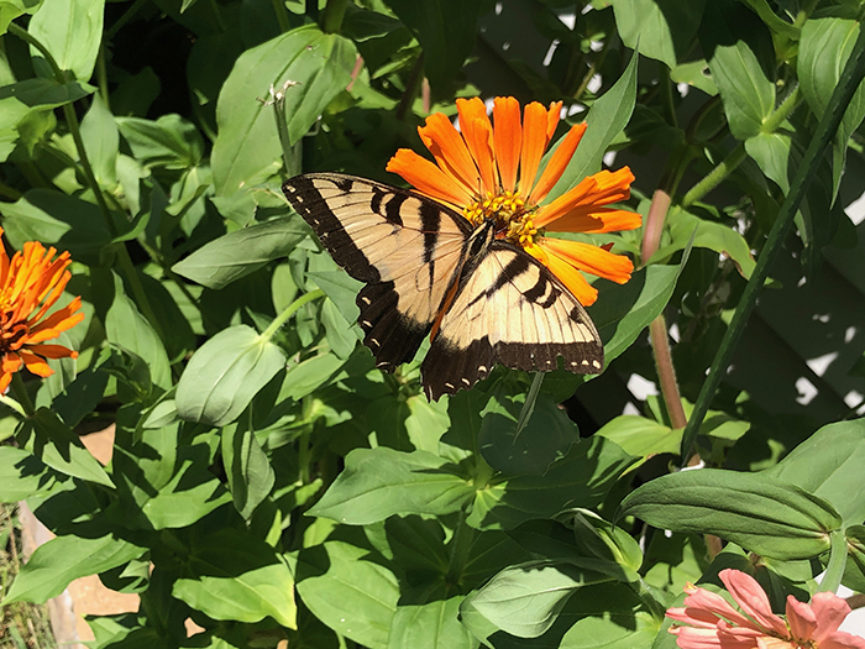
Liesch and Kloppenburg both point to a number of actions that humans can take in order to promote habitats that support pollinators, including learning about and appreciating insects, and increasing the overall diversity of flowering plants in yards and gardens. “Habitats need to contain an abundance of different species that bloom at different times of the year, as early as April all the way through the growing season into September and October,” Kloppenburg says. “A number of our fall blooming asters are providing nectar and pollen sources.” Another critical factor is avoiding pesticides. “Don't spray your lawns, don't spray your gardens,” says Kloppenburg.
On a larger scale, farms can also help support pollinator- friendly habitats by planting wildflowers or prairie strips, strategically planted native prairie plants integrated into croplands. When Kloppenburg was still with the Xerces Society he worked with MAD! Agriculture to collaborate on a project at Meadowlark Organics, a regenerative farm and mill in Ridgeway, to put in a lot of acres of new seed. This spring the farm planted 25 acres of prairie, says Meadowlark owner Halee Wepking.
When it comes to protecting pollinators, it’s natural to focus on the catastrophic impact that a loss of these insects would cause to our food crops. “But pollinators are also contributing to the function of our native habitat...and I would argue that each and every one of those insect pollinators are just a value unto themselves and add beauty…. We should find value in that diversity of life and do our best to sustain that,” Kloppenburg says. “And it’s always just fun to see a bee or a fly or a wasp or a bug.”
More Stories by This Author

Edible in your mailbox
