

No one goes into farming thinking that it will be an easy way to make a living, but unpredictable weather due to climate change is making an already challenging profession even harder.
According to a recent article published by University of Wisconsin–Extension, Wisconsin springs are becoming warmer and wetter. From 1979 to 2021, there has been a 2.6-inch increase in average precipitation in March, April and May, and precipitation during the spring season is now more likely to come in the form of extreme events. While warmer springs can mean longer growing seasons, varying temperatures and precipitation levels can make it riskier to plant annual crops outdoors. To make the best out of a difficult situation, some farmers in southern Wisconsin are getting creative and turning to infrastructure like greenhouses and hoop houses—protected shelters normally intended for season extension—to grow food throughout the growing season.
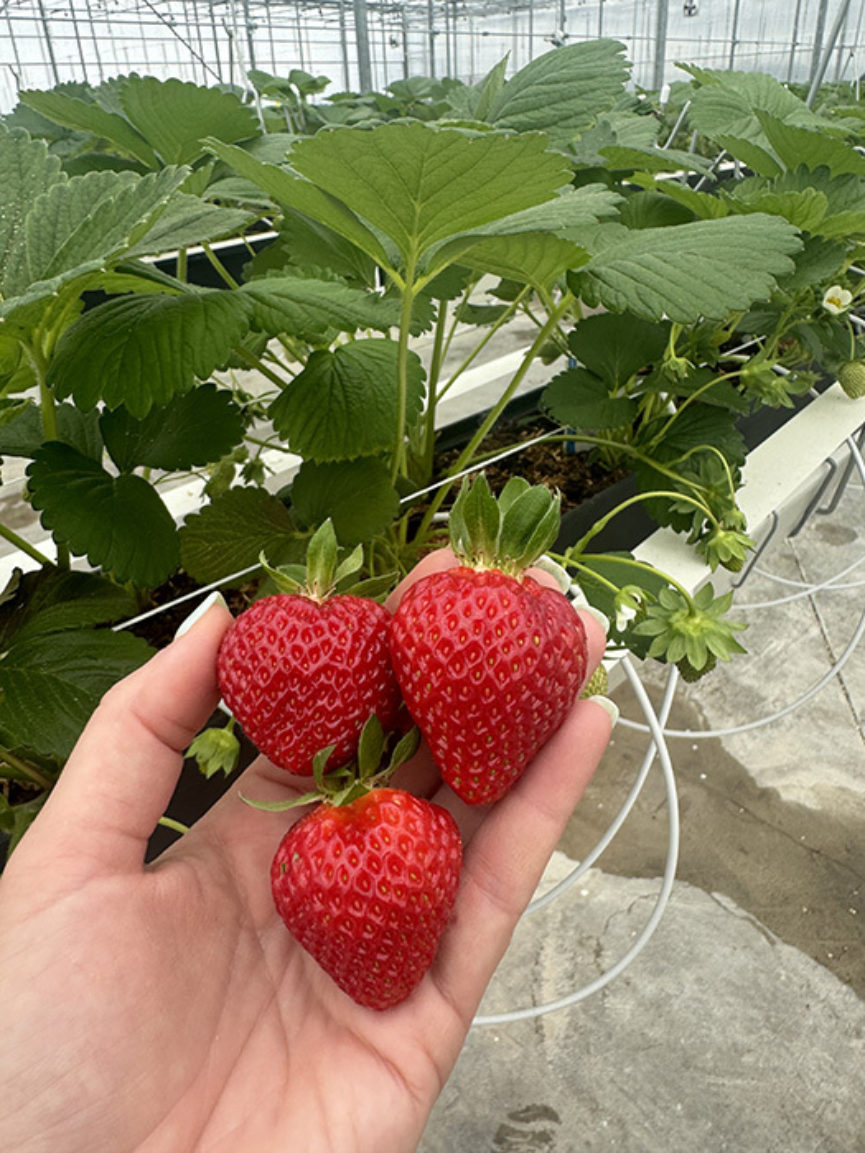
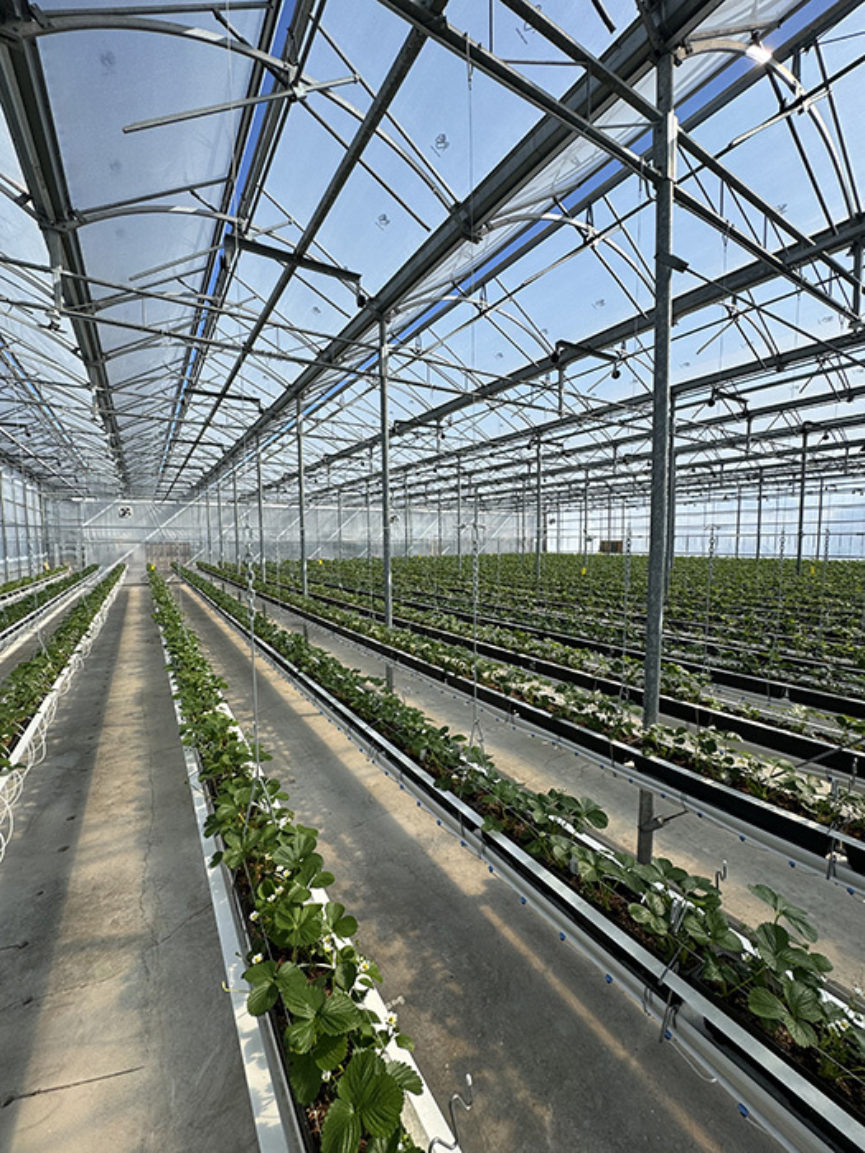
Local strawberries, one of summer’s earliest and most anticipated crops, have taken a hit in recent years due to excessive heat and amounts of spring rain that have massively disrupted strawberry harvests. But at popular Warm Belly Farm, a u-pick operation in Cottage Grove, an everbearing variety of strawberry called Albion is grown indoors in a greenhouse using a hydroponic system that allows the staff to control some of the variants like temperature and irrigation. “Being able to have a predictable baseline in your growing environment is beneficial to having a productive and successful crop,” says Erin Warner, horticulturist at Warm Belly. “We do a three-season approach, we start early in spring and go into the fall, that way we can have strawberries throughout that whole extended season and getting an early start means we have fruit earlier and can get people out to the farm earlier.” Calling Warm Belly Farm’s greenhouse a “mid-tech” approach to season extension, the structure has heat to warm plants in the spring but no way to cool them in summer aside from vents, says Warner. “So, we are still at the mercy of the environment,” she says. In addition to temperature considerations, there is also another crucial thing that the strawberries need to grow even inside a protected greenhouse, says Emily Hebbe, Warm Belly’s chief operations officer. “It could be a really cloudy spring, and if they don’t get enough sun, they won’t grow,” Hebbe says.
Garden-ripe tomatoes, another quintessential summer crop, are also grown in a protected environment at Blue Heron Community Farm in Reedsville, where farmer Alex Young isn’t shy about his feelings on hoop houses. “They are great tools for farmers in the Midwest,” says Young. “I am full-on in love with them. I think they are the greatest things on earth.” A hoop house, also sometimes known as a high tunnel, is a covered structure usually consisting of a steel frame and heavy-duty plastic that protects plants from harsh weather and can be used to extend the growing season. Young says using a hoop house for tomatoes, his farm’s number-one crop, has been a game changer. “The biggest thing is predictability…We can plant tomatoes the first week of April no matter what,” Young says. “In eight seasons on our farm, the outdoor soil conditions the first week of April have varied a lot, some years we get 12 inches of rain and we can’t even get in the fields, and last year it was warm in February, but when you have a hoop house, you are guaranteed the soil will be dry and the temperatures will be warm enough that you can get in and plant.”
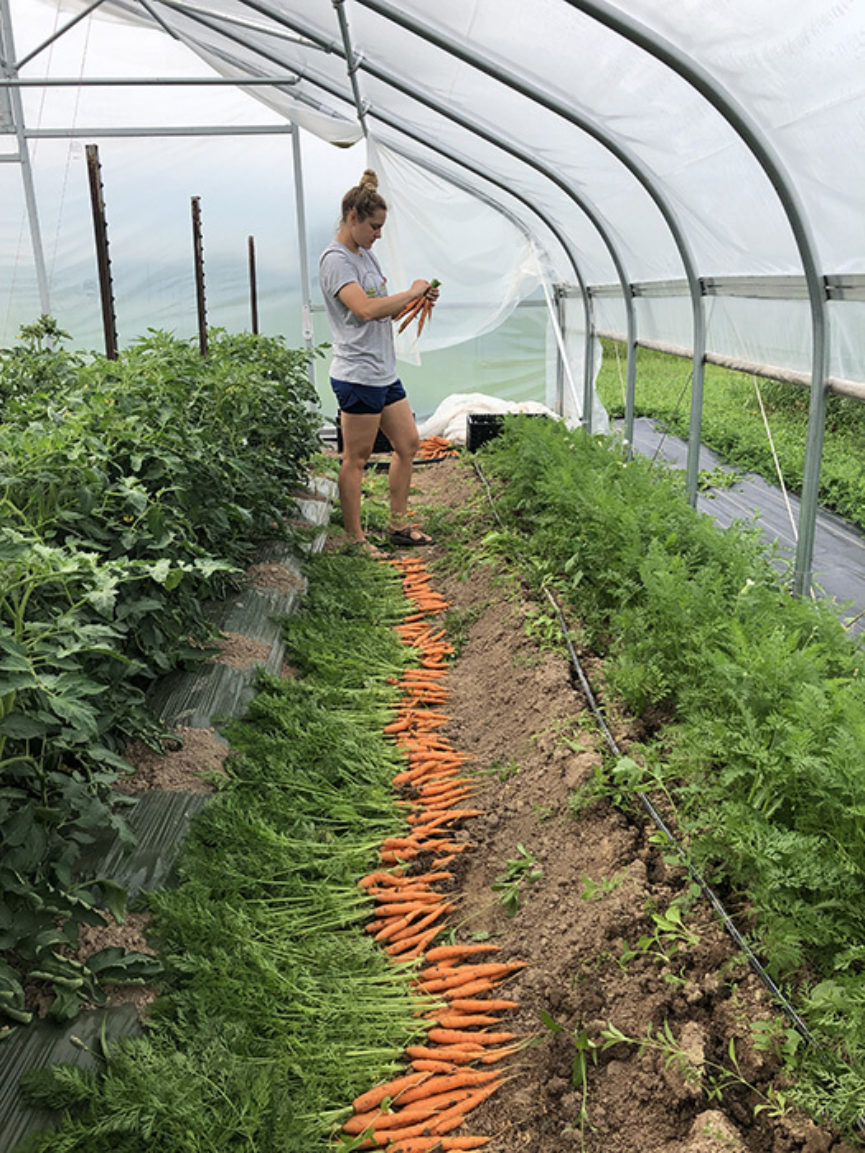
But while greenhouses and high tunnels can help make an unpredictable process a little more predictable, extreme weather events can also upend efforts meant to safeguard against the effects of climate change, something Young experienced in December 2021 when his new hoop house blew away in unusually high winds. “We had just built that hoop house in November, and some derechos and tornadoes came through in December and blew it away,” Young says. “It was maybe standing for two weeks and then it was gone, we didn’t even get one growing season.” With a small farm, Young decided not to rebuild the new hoop house, focusing instead on growing outdoors and adding low tunnels which aren’t as expensive or susceptible to damage. “It’s too stressful,” Young says. “Wind and catastrophic events that would only happen only once in a generation now seem much more common.” But with one hoop house still standing, Young plans to use it to grow tomatoes indefinitely. “The variability that happens with climate change, having predictability in one aspect of farming is really helpful,” Young says. “Throw your hands up with what you can’t control, but being able to control four to five degrees is very helpful.”
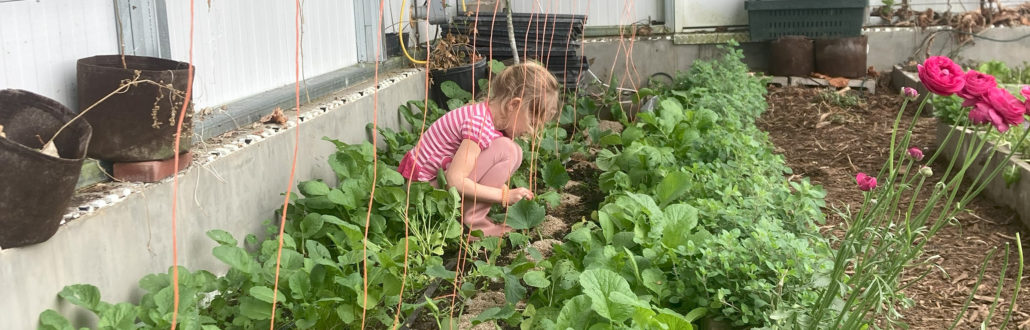
Farmer Bethanee Wright of Winterfell Acres says that climate change was one of the main reasons she started farming. “I felt like it was a tangible way that I could make a difference with all of the earth changes that it feels like we are experiencing,” she says. Having grown food for 15 years, now in her 12th season of owning her own farm, Wright says she has experienced “way more intensity” when it comes to the weather. “It’s not that it’s been drier or overly wetter, it’s that every year is different and it’s been amplified,” she says. “There have been several years where I lost crops because it was too wet.” Frustrated with the limitations that come with growing outdoors in fields, Wright received a grant to build a high tunnel and in the first year grew “3,000 or 4,000 pounds of produce,” she says. “I could start having a spring CSA, I was selling April through November, depending on frost, to my chefs…That was my first, ‘Oh wow,’ instead of having to make all of my income basically June through October, I can extend that.” While excessive amounts of rain can devastate crops, “it’s never a problem in the high tunnel or greenhouse,” Wright says. “It’s always easier for me to add water through irrigation but you can never take water away.” Sold on the high tunnel, next Wright and her husband decided to build a greenhouse using a geothermal kit that uses passive solar to heat the space where she now can grow greens and herbs throughout the winter which she sells to Madison-area chefs. While propane is used in the spring to start seedlings, the majority of the year the greenhouse uses the earth's natural heat to provide heating and cooling. “It’s like a zone 8/9, think like southern Georgia or more Mediterranean,” Wright says. “So, it’s like Italy, which is just delightful.”
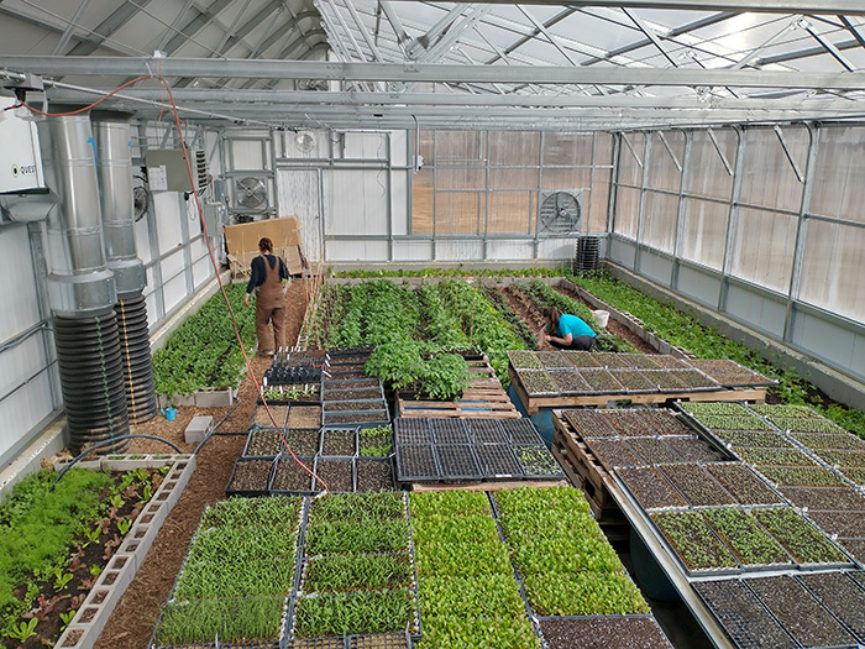
Making the best of a bleak situation like climate change, Wright is also trying to keep things new and exciting. “I’m trying to grow figs in my high tunnel, and that is one of the things with climate change. I wasn’t willing to risk that a few years ago because it would have been too cold in the winter,” she says. Wright also planted thornless blackberries in one of her fields in 2017 and hadn’t had a crop until last growing season, when she harvested 50 pints. “The plants are saying that there is a shift, it’s interesting to notice it and intellectually know that it’s going on— and to have plants confirm it is fascinating to me,” Wright says. “It's bittersweet for sure, but it’s where we are at now, we have to do our best to adapt.”
More Stories by This Author

Edible in your mailbox
