

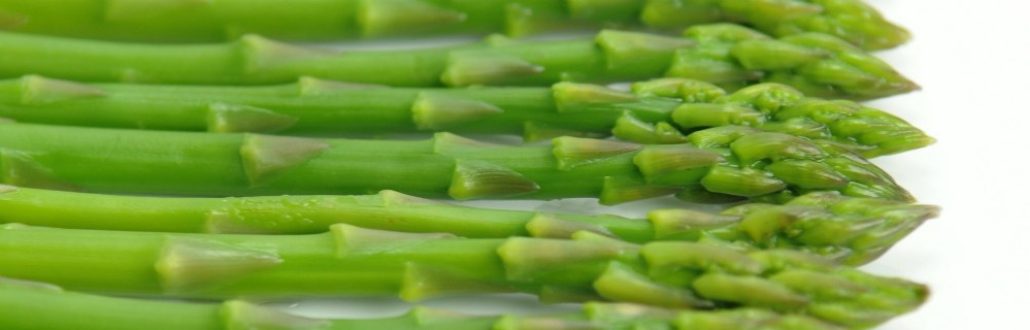
As far as vegetable superstars go, asparagus is King.
Even though it might be my favorite vegetable, I’ve avoided writing about asparagus for this column because it’s just so obvious. I usually prefer to write about more obscure seasonal vegetables, like spring-dug parsnips and sorrel; the underdogs of the vegetable world, you could say—the ones you might need some hand-holding to try.
Asparagus is no underdog, however. As far as vegetable superstars go, asparagus is King. Every spring, food magazines and newspapers feature articles and recipes lauding asparagus. But off-season asparagus imported from California, Mexico or Peru has become so common almost year-round in grocery stores and on restaurant menus that many folks don’t even think of it as a seasonal vegetable anymore. Let’s reclaim it as one!
There’s nothing like truly fresh-picked asparagus, and in this region, fresh, local asparagus is an exclusively spring and early-summer affair. Asparagus also has an incredibly remarkable history, which I’m a sucker for. And a warning: we’re going to talk about that—ahem—“certain” asparagus smell phenomenon, too, because I just find it fascinating.
Rather than eating mediocre asparagus all year, fresh, local asparagus should be embraced wholeheartedly while it’s in-season. Truly fresh asparagus is vastly superior in flavor and texture to asparagus that has been shipped across the country or, especially, around the world. Even with air shipping and fancy packaging—it’s shipped upright in custom-designed, tall, tapered, ventilated, waxed boxes with a special wet pad in the bottom to keep the tips from drying out— asparagus is best eaten within a few days of harvest, which is almost impossible to achieve when it’s coming from Mexico or Peru. After a few days, its natural sugars start turning to starch, the stems start getting tough, and the tips start to decay. At local farmers markets, though, chances are the grower picked their asparagus within the last 24 hours.
Asparagus shoots come from underground perennial crowns and can grow up to ten inches a day during peak season, usually late-May through early June, which means when you grow your own, you can eat it fresh every day during this time. When it’s going crazy in the garden, I can happily eat it for breakfast, lunch and dinner, plus a really fresh snack while picking it—my idea of vegetable heaven.
Asparagus worship is not a new fad. Native to Europe, western Asia, and northern Africa, asparagus has a long and illustrious history as food and medicine. Five-thousand-year-old friezes depict Egyptians using asparagus as a sacred offering to their gods. Ancient Greeks used the whole plant, drying it so they could use it year-round in a wide variety of medicinal concoctions. They believed it to be a digestive aid, heart tonic, and cure for toothaches and obstructions of the liver and kidneys.
Romans were really nutty about eating it, cultivating many varieties and spreading it to all of the lands under their rule. Ancient Romans would bring spring asparagus high up into the Alps to freeze it for winter use, and 2,000 years ago, Emperor Augustus supposedly dedicated an entire fleet of ships to transport it.
An Arabic book of eroticism from the 15th century called The Perfumed Garden hailed asparagus as an aphrodisiac, claiming that eating it fried in butter with egg yolks for several days in a row will have a similar effect on men as Viagra. This notoriety may have led to asparagus’ popularity in the 17th and 18th century at the French Court at Versailles. There, it was nicknamed points d’amour, or “love tips,” and the famously foodie King Louis XIV had special greenhouses built for forcing asparagus shoots year-round.
Colonists brought asparagus to America, where it became a home garden staple and was a favorite of Thomas Jefferson. He grew large quantities and enjoyed it marinated in vinaigrette and garnished with hard-boiled eggs (maybe he read The Perfumed Garden as well!).
In more recent times through the present, continental Europeans have been obsessed with white asparagus, which is the same species as green asparagus but is grown under deep hills of soil, depriving it of sunlight and making it very tender and sweet. Germans are particularly cultish about white asparagus. They celebrate their two-month asparagus season—Spargelsaison— with festivals, eating contests, beauty pageants and feasts throughout the country. For some reason, Americans haven’t gotten white asparagus fever, but I keep expecting it to be the next big thing.
OK, WARNING! To those who are squeamish about toilet talk (like my husband, Mike, who’s absolutely mortified that I’m writing about this), you might want to skip the next section.
As I mentioned earlier, I’ve always been enthralled by how eating asparagus causes the crazysmelling… um…bodily elimiations. It’s like magic! I never understood why more people weren’t fascinated by it, but apparently—and amazingly—not everyone can smell it. Scientists have recently discovered that everyone produces fragrant urine after eating asparagus, but only about one in four people have the sensory cells in their noses capable of detecting the particular scent compounds that cause it. They’ve actually identified it as a genetic trait! They’ve also discovered that the particular smell is a cocktail of 21 different volatile organic compounds, mostly types of sulfur and ammonia, and one that is particular to asparagus, called “aspargusic acid.”
Famous authors were also interested in the phenomenon. Marcel Proust lovingly wrote in Swann’s Way about asparagus “transforming my humble chamber into a bower of aromatic perfume.” Quite the delicate depiction, don’t you think? Gabriel Garcia Marquez’s character, Dr. Urbino, from Love in the Time of Cholera, was obsessed with consuming asparagus simply “so he could take pleasure in the vapors of his own fragrant urine.” (I actually remember reading that passage in college and thinking, “Yes! I’m not the only one!”)
Turns out I’m not such a freak when it comes to my fascination with this strange and unique fragrance after all! If anyone wants to talk more about this, I have much to expound upon (we just won’t talk about it in front of my husband).
Ok, squeamish folks, you can jump back in here.
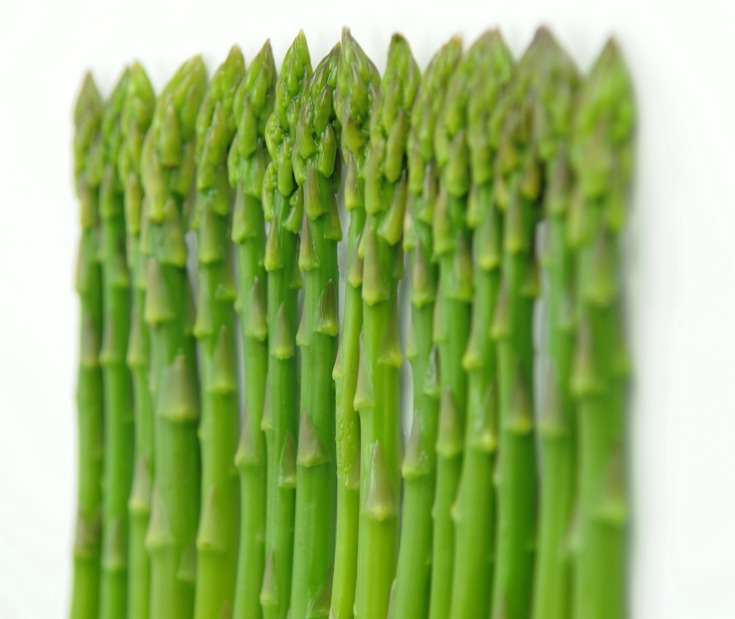
Whether you love to eat fresh asparagus for its flavor, its history or its famous after-the-fact perfume, now is the season. Look for asparagus with bright green coloring, freshlycut, pliable stems, and crisp tips without any black spots or mushiness. Once you get it home, give the stems a fresh trim and immediately place them in a cup or tub, depending on your quantities, with an inch or so of fresh water and store in the fridge (this will keep the stems from getting woody). Or better yet, eat them right away. If the stems are a bit tough, you can still eat them if you peel the bottom couple inches (or cut them off and save them for soup stock).
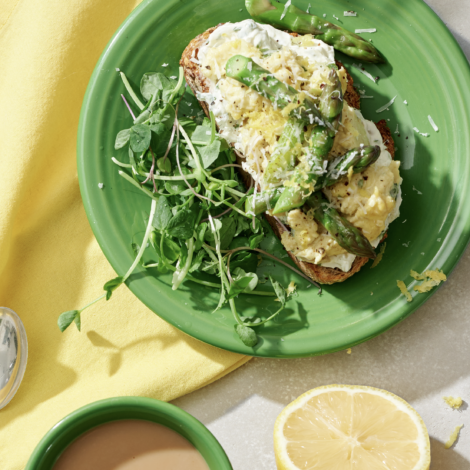
Asparagus is high in vitamins K, B-complex, C and E, many minerals, phytonutrient antioxidants, vegetable protein and fiber. Enjoy it raw, marinated, blanched, pickled, steamed, sautéed, baked, roasted, deepfried or grilled. I especially love it in omelets, grated lengthwise atop salads, cut on the bias and stir-fried, and simmered in curries. It’s incredible the classic French way: steamed and topped with Hollandaise sauce. But probably more than anything, I love to toss it with oil and salt and cook it very quickly on a hot grill, just until it has a bit of char but is still bright green and crisp.
These recipes make good use of the spring asparagus rush:
Asparagus Hazelnut Pesto
This pesto is a bit chunkier and lighter than your typical herb-based pesto. You can use the whole spear or just the stems if you're using the tips for another recipe. I love to serve it on crackers with soft cheese and hard-boiled eggs, as a spread on sandwiches or pizza, or tossed in pasta. It freezes well, so be sure to put some away for later use.
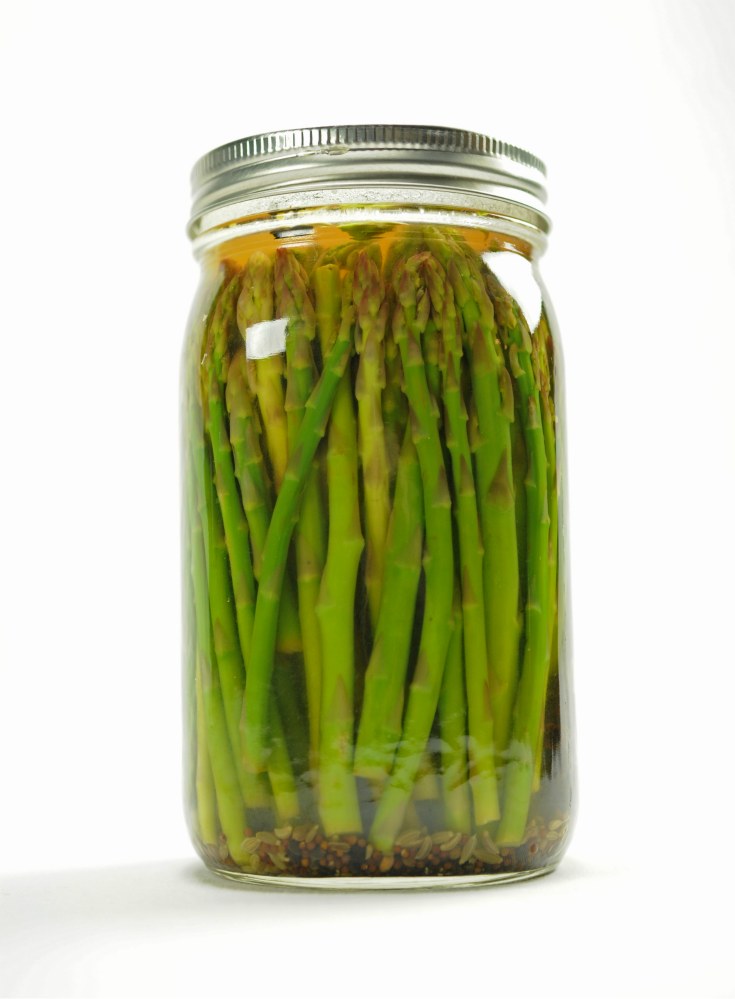
Pickled Asparagus
This small-batch recipe requires no special canning supplies; it simply brines in the refrigerator for a few days. A large pot with colander insert works quite well for steaming all the asparagus at once, but it can also be done in batches.
Featured Recipes


More Stories by This Author

Edible in your mailbox
