

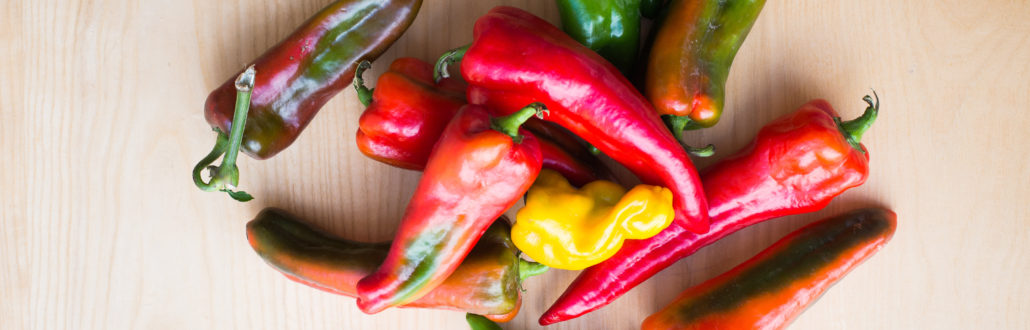
Sweet peppers are one of my favorite vegetables. (Yeah, yeah, I know they’re botanically a fruit.) They’re equally delicious raw or cooked, they’re beautiful, they’re nutritious, there are endless varieties that vary in shape and color and flavor, they’re the easiest vegetable to freeze for later use, and they’re endlessly versatile in the kitchen! Here are just some of the ways you can use them:
- Raw in salads or with dip
- Raw in salsa or fresh chutney
- Pickled
- Roasted whole under broiler, on a grill, or over gas stove flames
- Sliced and roasted in oven with oil, garlic, and fresh herbs
- Stir-fried with other veggies
- Sautéed/simmered in pasta sauces, soups, stews, and chili
- Chopped and sautéed w/ onions and garlic as a sofrito base for rice or beans
Sweet peppers are in the same genus as hot peppers, but have little or no capsaicin content, the chemical that causes spiciness in hot peppers. Capsaicin is measured in Scoville Units, with sweet bell peppers at 0 on one end of the spectrum and Carolina Reaper hot peppers at 2,000,000 on the other end. Peppers with 1,000 or less Scoville Units are considered sweet peppers, and fall into these basic categories:
- Bell peppers: Blocky, thick-walled peppers of varying colors when ripe with no heat whatsoever.
- Italian peppers: Elongated and pointy, with lots of variation, from the skinny, wrinkly pepperoncini types to the smooth-walled bull’s horn types. Primarily used for frying, roasting, or pickling, but many are also good fresh.
- Pimiento peppers: Small, usually squat, thick-walled peppers that are super flavorful and excellent pickled or roasted (or roasted and pickled). Some varieties have a bit of heat, but not much.
- Sweet paprika peppers: Mostly developed in Eastern Europe, these are traditionally used for drying and grinding into paprika powder, but are also excellent roasted or sautéed. Different varieties have different levels of spiciness – from moderate to almost no heat..
Then there are some sweet peppers that defy categorization, like shishitos, sweet bananas, and some new-fangled ones (thanks to creative seed breeding) like mini sweets and heatless jalapenos and habaneros.
In almost all varieties of sweet peppers, green peppers are simply unripe peppers that are picked before they develop their color. Because of this, green peppers have less nutrition (half the vitamin C as a red pepper!) and lower sugar content (a.k.a. flavor) than their colorful ripe incarnations. Why then are green bell peppers the best selling pepper on the market? Probably because they’re always the cheapest! They can be harvested far earlier than ripe ones, making them cheaper to grow. I’ll argue that you get what you pay for, and I for one would rather buy one delicious beautiful-colored pepper than two bland green ones.
Speaking of buying peppers, consider ordering a case of seconds from a grower at your farmers’ market to freeze for use all winter. (There’s no need to blanch them.) It’s one of the best investments you can make!
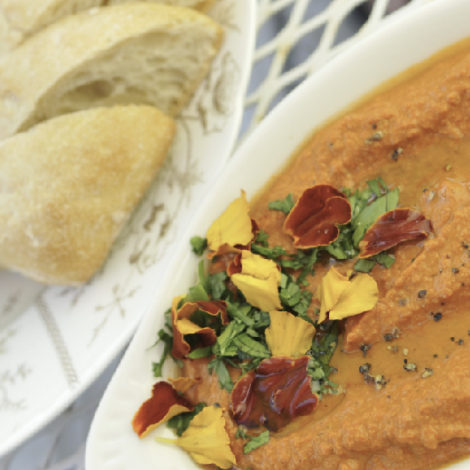
Dani's favorite sweet pepper recipes:
Featured Recipes

More Stories by This Author

Edible in your mailbox
