

Though cultivated mushrooms are available year-round, their freshness makes them extra-special in winter and they’re perfect for winter’s savory dishes. Read on…
Mushrooms might be the only fresh produce locally available year-round. Certain varieties of wild fungi are only seasonal—morels in the spring, hen-of-the-woods in the fall—but most cultivated ones are grown all year indoors. Inside indoor mushroom farms, air temperatures, humidity levels, airflow and even atmospheric gases are tightly regulated so that the weather outside doesn’t affect their growth.
Neither a vegetable nor a fruit, mushrooms are the “fruiting” bodies of certain kinds of fungi. Mushrooms don’t produce seeds; instead, they reproduce via spores, microscopic single-cells that drop from the gills of full-grown mushrooms. The spores spawn in the organic matter, or “substrate,” they fall into and grow threadlike mycelium that acts like roots from which the mushrooms eventually grow. Rather than using the sun and photosynthesis to grow like plants do, mycelia grow in the dark and convert the carbohydrates present in their substrate into glucose for energy.
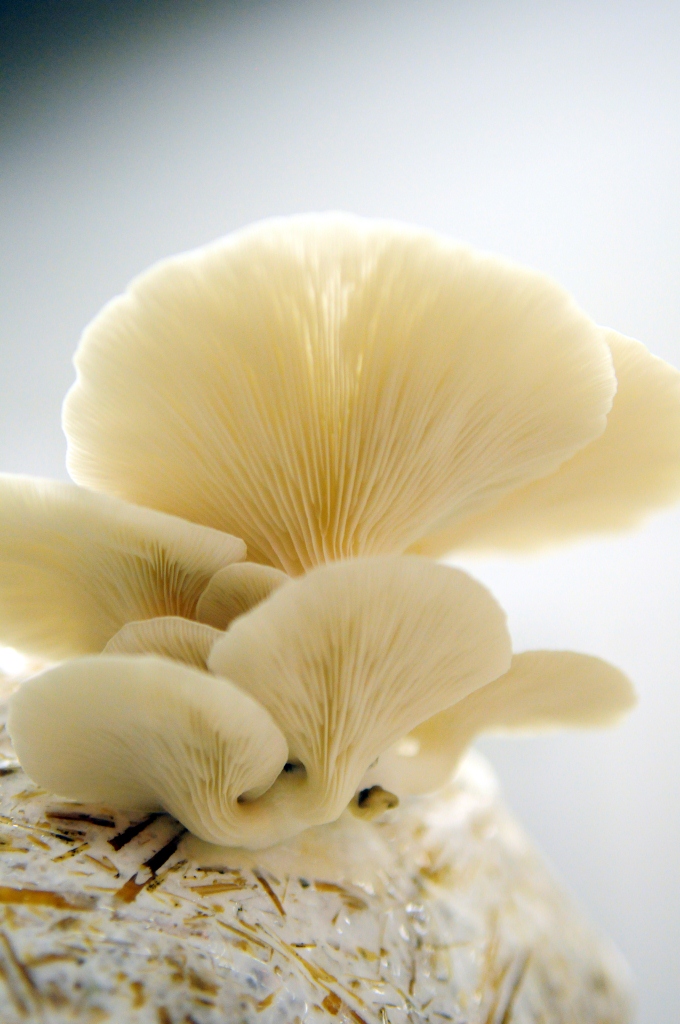
There are more than 10,000 species of mushrooms, but only about 300 of them are edible. Of those, only about 30 have been domesticated, and only about 10 of those are commonly grown commercially. Commercial mushroom production is an involved, multi-step process, whether grown indoors or out, designed to emulate mushroom environments in the wild.
First the raw materials for the substrate must be sourced. Different mushroom species prefer different substrates, but they all include agricultural byproducts such as straw, manure, corncobs, sawdust, even used coffee grounds, spent brewing grains, leaves, and cocoa hulls. These raw substrate materials must be composted to achieve the desired consistency and then pasteurized to kill off any unwanted bacteria or fungus.
This sterilized compost substrate must then be shaped into trays or artificial logs, depending on the species of mushroom to be grown, and inoculated with specially grown spawn. The correct temperature, moisture, humidity, carbon dioxide, and light levels must be maintained to ensure proper mycelium growth.
Eventually, through a designed shift in environmental conditions, the mycelium can be forced to “pin,” or send up mushrooms. After that things happen fast, with most mushrooms doubling in size every 24 hours.
Harvest is done by hand, and afterward, the mushrooms must be trimmed, cleaned and cooled and sent off to market quickly, as they only have a few-days of shelf life.
Next time you’re in a grocery store, check out where the fresh mushrooms are from. There are only a few large mushroom farms in Wisconsin, so if they’re not from Wisconsin or Minnesota, they’re probably from Pennsylvania, where more than half of our country’s mushroom production comes from one tiny region.
Why Pennsylvania? Turns out, in the 1880s a couple Quaker flower farmers in Kennett Square, Pennsylvania, decided grow mushrooms in the wasted space under the carnation beds in their greenhouses. No one in the States grew mushrooms yet, so they had to go to Europe for the spores to start their new endeavor. With a ready supply of horse manure and hay for substrate material, a burgeoning out-of-work Italian population from declining stone quarries available for labor, and large East Coast city markets all nearby, the industry took off. The Italians, who had a long culinary tradition of mushroom foraging and eating, eventually took over most of the business. Today there are many multi-generation family farms still going strong around Kennett Square.
So why aren’t there more year-round mushroom farms in Wisconsin to meet local demand? Because it's challenging! Climate-controlled facilities are expensive to build and operate, especially in extreme weather. Mushroom production is a highly technical and precise process and very speciesspecific. Growers have to have lots of experience and really know what they’re doing.
Facilities must be kept extremely clean. Substrates must be sourced carefully, composted carefully and pasteurized properly—if any step is compromised, the entire crop can fail. Spawn production usually has to be outsourced because it’s so highly specialized and technical. Pests and contaminants can wipe out crops.
In addition, it’s very labor-intensive, and it can be difficult to find people willing to do such hard, physical work. Certain mushroom’s spores can cause dangerous allergic reactions in workers.
Demand for fresh mushrooms keeps increasing but so does the national production, keeping prices low and making it hard for smaller or start-up mushroom farms to compete.
The list goes on.
Some Wisconsin mushroom producers have responded to these challenges in a variety of ways. Gourmet’s Delight, of Eden, has been in business since 1982 raising white and portabella mushrooms. Brothers John and Rich Floyd eventually became certified organic, gaining them premium organic prices and exclusive shelf space in food co-ops and Whole Foods stores.
Other mushroom farms have specialized in more exotic mushroom species that fetch higher prices, like Song’s Mushrooms in Gays Mills. The Song family raises shiitakes and oyster mushrooms in a renovated school building and ship their bulk mushrooms to produce distributors that service grocers and restaurants around the Midwest.
Herb’n Oyster, of McFarland, specializes in higher-priced exotic varieties and prefers to direct-market their mushrooms very locally to farmers markets and restaurants. Joe and Kari of Herb’n Oyster have been selling their gorgeous exotic mushrooms year-round at Madison area farmers markets and restaurants since 2009. For this winter, they’ve decided to take a break from growing fresh mushrooms during the harshest part of the season, but you can still find them at the Dane County Winter Farmers' Market with dried mushrooms, mushroom seasoning and ready-to-fruit mushroom kits for growing your own at home (along with lots of friendly advice).
If common mushrooms are season-less, why feature them in the winter edition? For one, their very freshness makes them extra special in winter, when fresh local vegetables are scarce. But it’s especially because their rich, savory earthiness simply suits winter comfort foods like a warm fuzzy glove. Sauces, soups, casseroles, risottos, pastas, pizzas, egg dishes, savory pastries—they’re all so much more satisfying with mushrooms.
The addition of small amounts of exotic mushrooms, either fresh or dried, can add a tremendous amount of flavor, color and textural complexity to dishes that already highlight more common mushrooms like white buttons, criminis, and portabellas. Some of the exotic mushrooms commercially grown in the Midwest are shiitake, oyster, maitake, reishi, lion’s mane, nameko, beech, enoki, king oyster, and woodear. Others are grown or wild-crafted seasonally outdoors and dried for out-of-season availability. All have different flavors and textures you can get to know throughout the long dark winter.
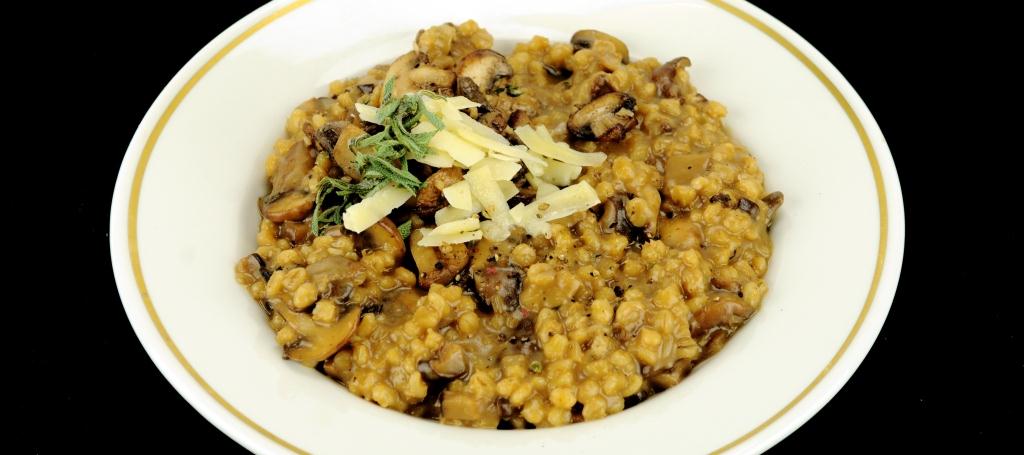
These mushroom recipes are sure to warm you up this winter:
More Stories by This Author

Edible in your mailbox
