

The Champions of Cheese: Wisconsin's Women Master Cheesemakers
If Wisconsin were its own country, it would rank 4th in the world for cheesemaking. Not only is Wisconsin the only state where making cheese requires a license, but it’s the only place in the world outside of Switzerland where cheesemakers can formally earn the title of “master” through an arduous and lengthy process. “We take anything dairy quite seriously,” says Pam Hodgson of Sartori Cheese. “This is America’s Dairyland.”
But while cheese production is a leading industry in our state, it has long been a male-dominated field. Hodgson, who received her cheesemaking license in 1996, is one of only five women who have earned the designation of Master Cheesemaker. Although this fact becomes apparent when scrolling through photos of each year’s class of Wisconsin’s Master Cheesemakers, Hodgson can sense a shift. “There are a lot of women in Wisconsin making fantastic cheeses, but it takes 15 years to become a master,” she says. “It’s a reflection of where we have been, but not where we are going.”
Established in 1994, the Wisconsin Master Cheesemaker program is a partnership between the Center for Dairy Research (CDR) and Dairy Farmers of Wisconsin (DFW). The program, which was designed to honor the very best in the cheese industry, provides advanced training for experienced cheesemakers who must hold a Wisconsin Cheesemaker License for at least 10 years and have been actively making their certification cheese for a minimum of five years. After their application has been accepted, candidates must complete three intensive years of training courses, plant inspections, sample submissions, and examinations while continuing to produce high-quality cheese.
In 1991 Hodgson and her husband Dave were beginning farmers but needed additional income “to make that dream possible,” Hodgson says. “I applied to do quality control at a cheese plant and somehow convinced them to hire me. The plant manager was astute and probably saw something in me that I didn’t know I had.” As Hodgson moved up the ranks, she took on more leadership, something some people considered “a big deal,” as the plant’s only female employee in a leadership role. “Ninety-five percent of my colleagues were supportive,” she says. “But 5% made it harder.” When the plant hired another woman a few years into her tenure, Hodgson says the change was immediately noticeable. “Overnight the plant changed to a place where men and women work,” she says. “The pressure wasn’t all on me.”
After receiving her cheesemaking license in 1996, Hodgson took a job with Sartori in 2005 where she was encouraged to experiment and had room to be creative. “They gave me permission to fail,” she says. Bolstered by a new confidence to innovate, coupled with wisdom gained from her maternal grandfather who was also a cheesemaker, Hodgson made the decision to apply for the Master Cheesemaker program. “My grandfather would say, ‘you always go back to what you know works,’” she says. “If you have trouble, something changed, go back to what you know.”
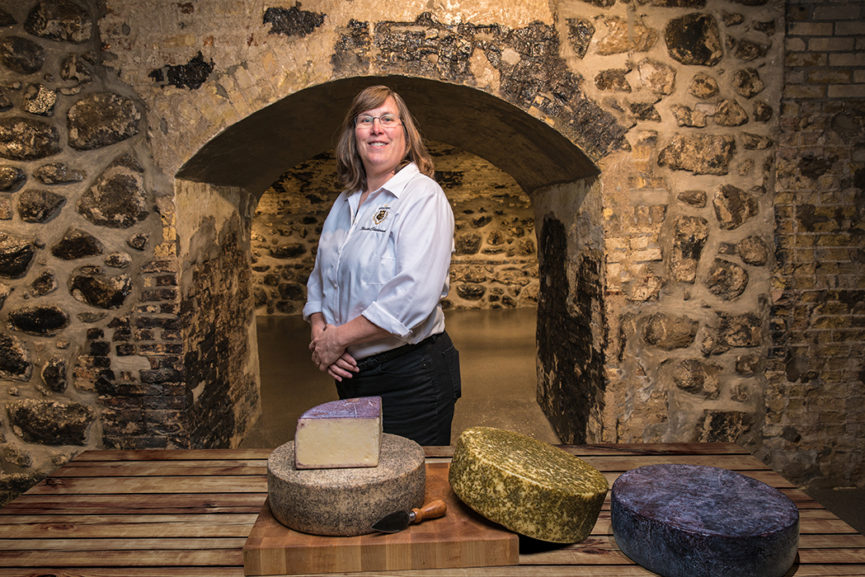
In 2013 her hard work paid off when Hodgson became the second woman to earn the designation of Master Cheesemaker, recognized for cheeses in two categories: Open hard (hard cheeses are defined by their aging process, think Parmesan or Romano) and fontina. Following in Hodgson’s footsteps over ten years later were Sara Griesbach of Nasonville Dairy in 2024, Marieke Penterman of Marieke Gouda in 2025, and most recently, Hodgson’s colleague at Sartori, Erin Radtke, in 2026.
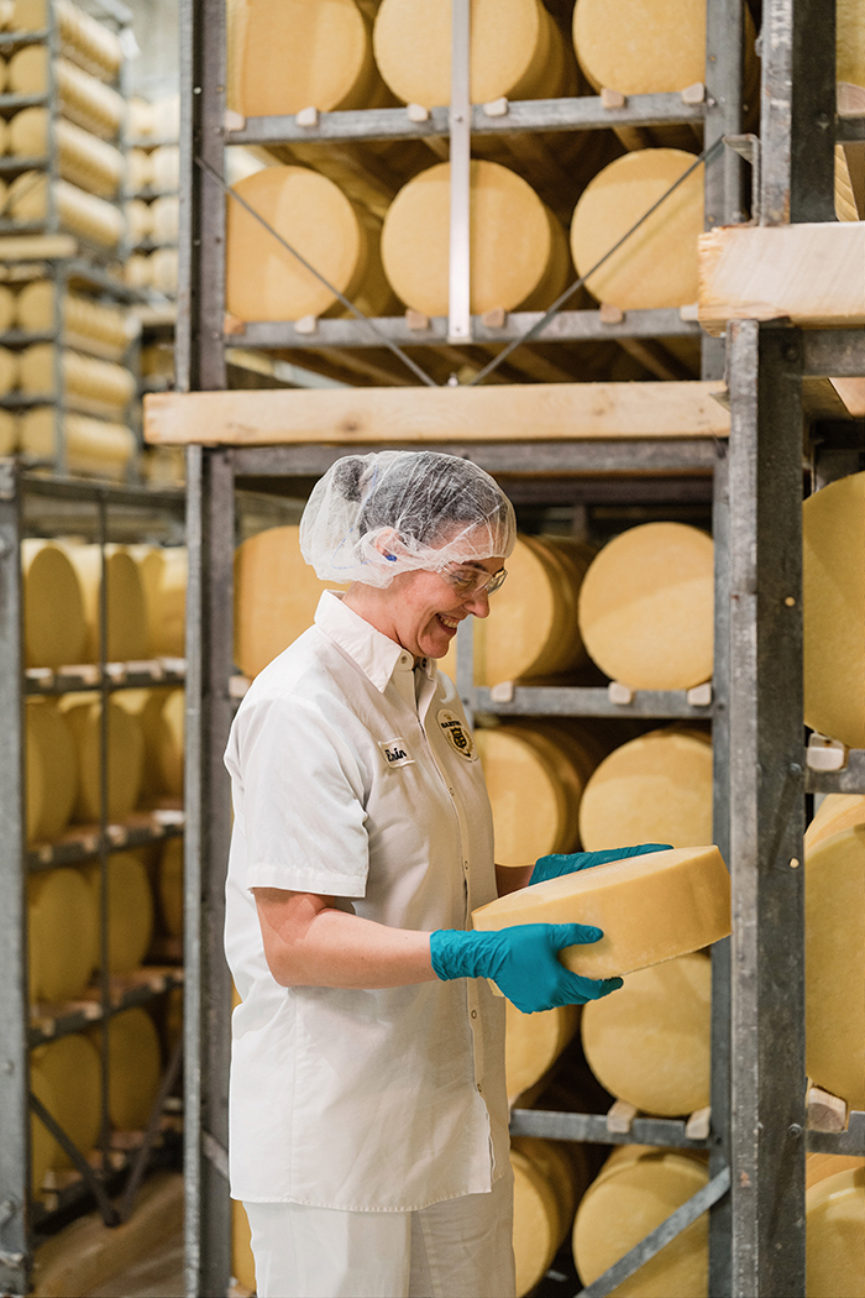
Radtke, who became Wisconsin’s fifth female Master Cheesemaker this past April, grew up a few houses down from the plant in Antigo where she used to ride her bike and where she now has a job making award-winning cheese. Radtke began her cheesemaking journey in 2004 when she first got a job working all of the positions—from sanitation to packaging—on the plant’s floor. Radtke believes that while women can handle all of the physical tasks that come with cheesemaking, certain changes in the process have made it more of a welcoming environment. “I think the advancements in equipment have helped introduce women into the plants,” she says. “When I started in 2004 there was a lot of manual labor and it can be intimidating when you walk into a plant and there are no other women working.” Now Radtke looks at her Master Cheesemaker title as a way to help more women join her field. “I think about all of the things I can do as a mentor now and how I can share my knowledge to help them,” she says.
Since becoming coworkers at Sartori, Radtke and Hodgson talk once a week and love the opportunity to collaborate, dream up award-winning cheeses and, something that happens to all cheesemakers, mess up. “We have had a few things that have failed miserably,” Hodgson says with a laugh.
“Pam has been a huge inspiration to me, we have worked together on challenges in the plant, worked on cheese for competitions, we brainstorm and troubleshoot,” Radtke says. The feeling is mutual. “Erin is the real deal,” Hodgson says. “When I look at what Erin has accomplished, she is so amazing and inspirational…I’m so happy to see her become certified and become recognized.”
Wisconsin’s first female Master Cheesemaker, Carie Wagner, never considered her gender to be a barrier into the cheesemaking industry. A cheesemaker for 42 years, Wagner grew up on a dairy farm where she was the oldest of three girls. “We just did everything that a boy would do,” Wagner says. “We drove tractors, we pitched manure.” While she planned on continuing in the footsteps of multiple generations of family dairy farmers before her, Wagner’s parents encouraged her to first go to college. Working her way through college at UW–River Falls by milking cows at a local farm at 4 a.m. seven days a week, Wagner started as a pre-vet major but made the decision to switch to the food science department where she met cheesemaker Ranee May. When May asked Wagner to help run the program’s new pilot plant, Wagner began making ice cream, sherbet and cheese by hand. Wagner says the job made her a better field hockey player. “A cheese make can take four hours—that is a lot of hand-stirring except for a 30-minute break for the cheese to coagulate!”
While working for May, Wagner had the opportunity to continue to gain new skills. “I learned how to drive a bumper hitch trailer,” she says. “I would take the milk tank, drive it to the dairy farm and fill up a tank of milk.” Wagner credits May with encouraging her to pursue cheesemaking as a profession. “Ranee was really supportive and made sure we understood the whole process of making cheese. She was a great mentor.” After gaining enough hours as an apprentice working for May, Wagner applied for and received her cheesemaking license in 1984 before graduating from college in 1986.
Now retired from Organic Valley, Wagner reflects on what it meant to be the first female Master Cheesemaker. “Nobody ever said ‘you are a woman and you can’t make cheese,’” Wagner says. “I didn’t meet resistance. I never had anything but support.” Today she is still in touch with her fellow Master Cheesemakers. “It’s this passion we all have for making wonderful cheese and helping farmers be successful in their own right,” she says. “I have been so fortunate in my career to work with such great people and great mentors.”
Since becoming a Master Cheesemaker for the first time in 2013, Hodgson earned recognition again in 2020. Long relying on advice from her grandfather, Hodgson now has her own wisdom to share with fellow cheesemakers like Radtke, whom she feels a calling to help guide. “Everything is connected. When managing a biological process, a small tweak can affect everything. You touch a spider web in the corner and the whole thing vibrates,” Hodgson says. “So let the process speak to you, listen to the process, let it tell you what is happening.”
More Stories by This Author

Edible in your mailbox
