

Wormfarm Institute: Fostering Art and Agriculture
Wormfarm Institute co-founder and Chicago transplant Jay Salinas doesn’t hesitate when asked how he landed on a 40-acre farm near Reedsburg, a rural farming community with a population hovering around 10,000. “Serendipity,” Salinas says. “Becoming smitten, becoming passionate, then falling in love with the Driftless region, and now we are cheeseheads.”
It was the mid-1990s when Salinas and his partner, Donna Neuwirth, first left the city to relocate to Reedsburg, located about an hour northwest of Madison. Both artists, they had no previous farming experience. “We were completely ignorant of how to do that sort of thing,” Salinas says. Within a couple of years Neuwirth and Salinas had taught themselves how to grow vegetables and even started a farm CSA, which stands for community supported agriculture, a model where people buy shares of a farm's harvest in advance to receive regular deliveries of produce throughout the season. With their customers consisting mostly of family and friends back in Chicago, Neuwirth and Salinas had to come up with a creative solution to transport their vegetables the more than three-hour drive back to Illinois. “The only efficient way to get the vegetables back to Chicago was to have the shareholders themselves get them,” Salinas says. Conveniently their new digs, a large farmhouse, had a separate three-bedroom apartment upstairs. “Our CSA came with a stipulation that you had to visit the farm at one point during the 20-week season and load your minivan up with vegetables and take them back to Chicago to two or three drop-off sites,” Salinas says.
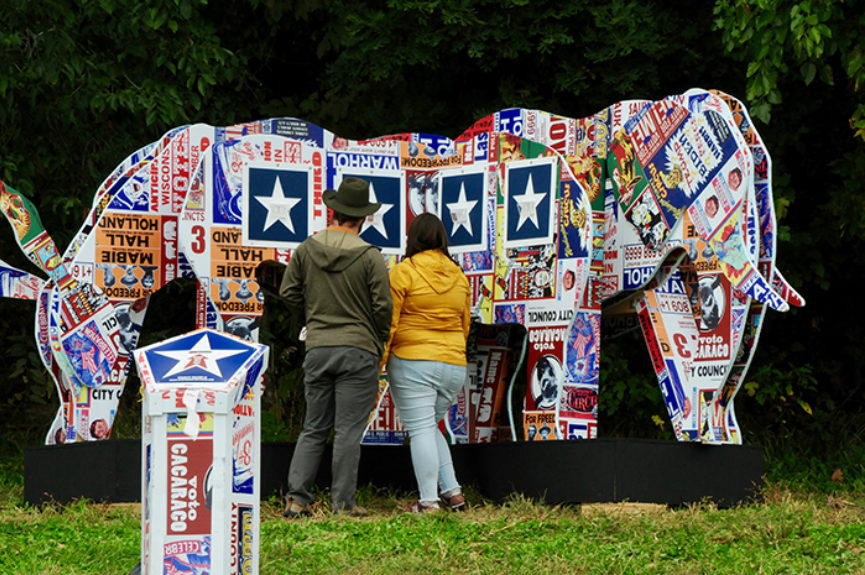
What they initially lacked in farming experience Neuwirth and Salinas made up for with their resourcefulness. “Owning 40 acres is constant work if you are doing it right,” Salinas says. “People are welcome to visit but if you hang out more than 24 hours, you are put to work.” It wasn’t long before they also leaned into their background as artists—Neuwirth trained in theater and Salinas in sculpture—to begin to intertwine their love of art with their newfound love of agriculture and their need for farm labor.
In 2000, Wormfarm Institute became a nonprofit organization with the mission of integrating culture and agriculture. Wormfarm’s farm-based artist residency program, which continues today, became the organization’s foundational program. Throughout the growing season, the program invites three artists and writers to engage in life on a working CSA farm, contributing 15 hours a week of labor in exchange for “time and space and facilities to create their own work,” Salinas says. Since 2000 the program has supported over 200 artists from around the world. In addition to the residency program, when Wormfarm became a nonprofit organization they also bought and restored a historic building in downtown Reedsburg. “So instead of being ‘these weirdos from Chicago living five miles outside of town—who knows what they were doing’—now we were literally invested in Main Street in Reedsburg,” Salinas says. The building became the homebase for arts-based programs within Reedsburg that included gallery shows, mural creations and maybe most popular, puppet festivals. “People loved them,” Salinas says.
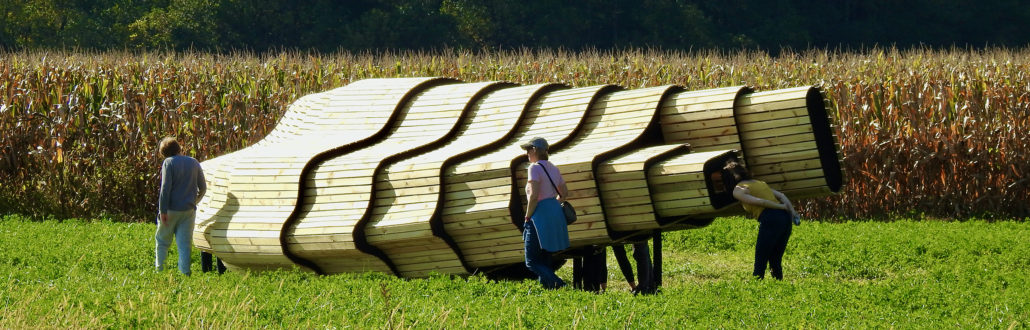
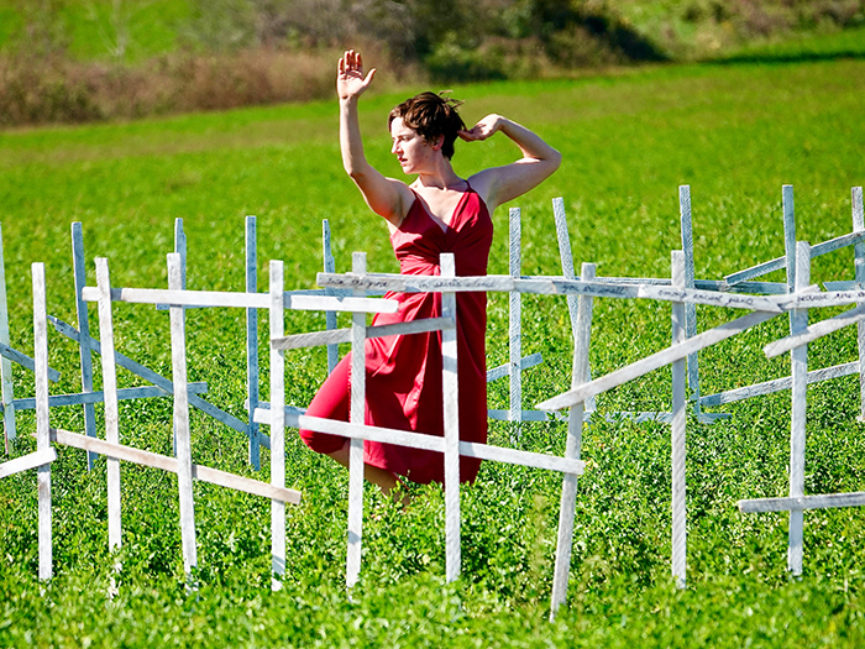
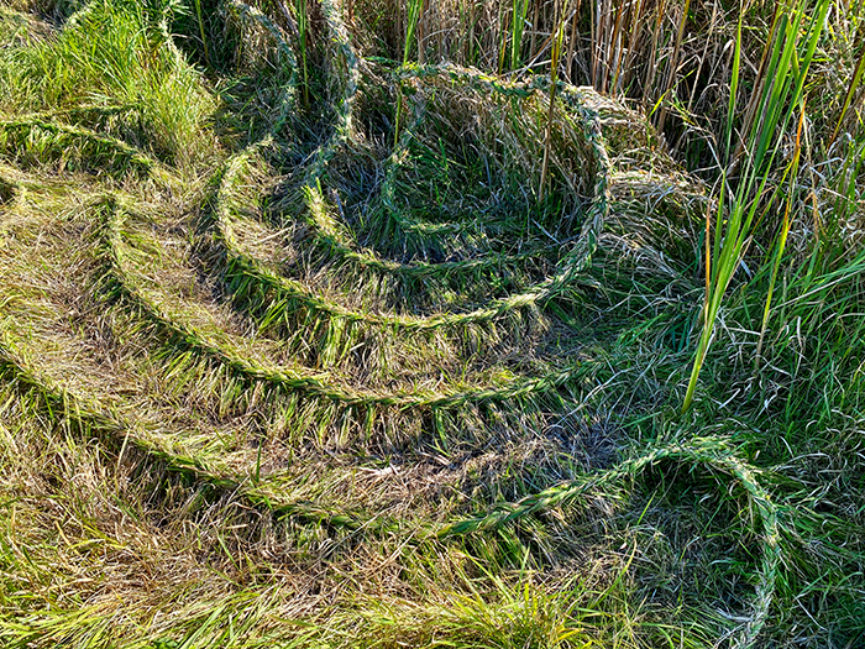
A pivotal moment in the organization’s history came in 2010 when Wormfarm hosted a traveling Smithsonian exhibit entitled “Key Ingredients: America by Food.” As Salinas and the other event planners thought about the region's eating habits and culinary practices, they decided to propose a celebration of fermented foods, including sauerkraut. Hitting the timing right as “the fermentation boon was beginning to crest,” the event was very successful, Salinas says. Although the traveling exhibit moved on, Wormfarm wanted to keep the momentum going in 2011 and Fermentation Fest, a multi-day celebration of all-things fermented, featuring classes and demonstrations, was born. In order to give the event more “heft,” Neuwirth and Salinas decided to add a farm-based fall art tour. “The idea of installing temporary artwork in fields is not a new idea but to create a tour around it is what we decided to do,” Salinas says. “We handpicked some artists we thought would understand the challenge and then we started talking to farmers who said, ‘Sure, you can put something in my hayfield in October; I’m done with it.’” Calling it the Farm/Art DTour, the event drew 4000 people in its first year. “First stop, first day, there were 20 cars parked along the side of the road and people were out in the farmer’s field engaging with this work,” Salinas says. “It’s grown from there. We have cultivated a lot of collaborations, both within and outside of our community.”
Now a biennial event (occurring every other year), the self-guided DTour takes place over ten days in October and covers a 50-mile route through Sauk County. This year 156 artists from around the world applied to participate—the most to date—and the event draws over 20,000 visitors from both rural and urban areas, says Philip Matthews, Wormfarm’s director of programs. Matthews, who first came to Reedsburg to participate in the artist residency program, says the DTour reflects the idea of rural urban connectivity, which is rooted in the organization’s founders' story of Neuwirth and Salinas encouraging their Chicago friends to spend time with them in rural Wisconsin. “We really think of our work as not only bridging culture and agriculture and reintegrating those two fields, but also bridging rural places and urban places…discovering what [people] have in common and the ways in which they are interconnected.” During increasingly volatile election seasons, there has been a lot of national attention on Wisconsin and Sauk County—a county reflective of the divisions between Democrats and Republicans and national voting patterns—in particular. While Wormfarm is not a political organization, “we know that our work to bridge culture and agriculture is happening in a politically charged environment,” Matthews says. “Our mission is to draw people closer, not only to the land, but also to each other. To use arts and culture to pique their curiosity and get them to have conversations with one another.”
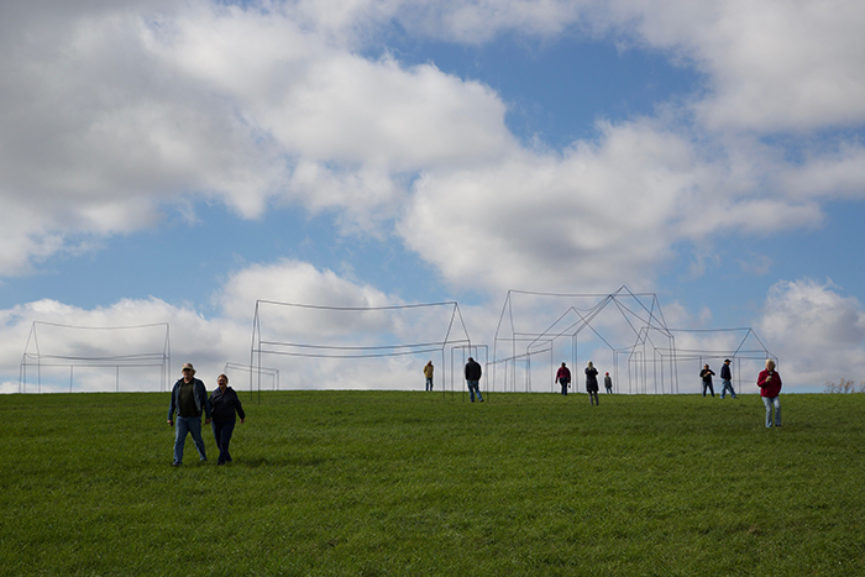
Salinas is proud of the work that Wormfarm has been able to do to bring artists from around the world to rural Wisconsin to “do things that are outside of their wheelhouse” and the opportunity to highlight the work of local farmers. The event is also “a huge economic engine,” bringing awareness to local businesses. While misconceptions can remain between people from rural and urban areas, Salinas says that the event has real benefits for the people who live year-round in Sauk County who understand the DTour’s impact on their community. “If people are spending money at the Schellter Bar in Leland, then they are going to stay open. If [local people] want to go there in February, they will probably be open because Connie and LeRoy had an awesome October when all those folks in the Subarus and Priuses came by and had a fish fry.”
Matthews notes that in 2020, during the Covid pandemic, the event helped both artists and entrepreneurs make ends meet. “A new farm stand said [the DTour] was the best marketing they could have done that year and a cheese shop along the route reported that they did 10 times the number of sales that they normally would have done in that 10-day period.” Matthews is proud of this powerful economic story and Wormfarm’s work to bring more attention to rural areas. “I feel like the predominant narrative is often one of ‘brain drain,’ of resources being pulled out of rural downtowns,” Matthews says. “Of course, those stories are based in some reality, but I also think there is this other emerging narrative that is equally and maybe more based in reality, of very intelligent, community-minded, passionate, creative people, deciding to stay or move to rural places and reinvest in them and help transform them and evolve them into 21st century prosperous communities.”
More Stories by This Author

Edible in your mailbox
