


The satisfaction you feel as you open a jar of homemade pickles, pour a cup of tea made with home-dried herbs, take a bite of yogurt you fermented yourself: this simply cannot be matched by commercially-produced food. Whether you’re a hardcore homesteader, backyard gardener, farmers market devotee or simply someone looking to reduce food waste in your home, then food preservation is for you! The act of taking fresh food and preparing it for long-term storage can be done in many ways and on any scale with nearly any food.
For those who grow their own food, you can reap the benefits of your hard work all year round, not just during peak harvest season. At-home food preservation can lock in nutrition and flavor that are hard to match when purchasing from the store. Some methods, such as fermentation, actually add nutrition to foods as well. When you make and preserve your own food, you can control what goes into the food and how it was grown, often avoiding preservatives, pesticides and additives that health-minded home cooks are typically trying to avoid.
There are non-nutritional reasons to do your own food preservation as well. Making most things at home, including preserved items, is typically lower in cost than buying them at the store. Food preservation is a key part of reducing food waste in our home kitchens. It is estimated that over half of all wasted food comes from homes and almost all of that goes to landfills. By increasing the shelf-life of fresh food, using up food that may be past its prime but still edible, cooks and growers can start moving away from more wasted food. Preservation can be done on larger scales to accomplish this goal as well, such as on vegetable farms at the end of the season.
Gaining skills to preserve food adds to our personal food security, making folks more self-sufficient and less dependent on commercial food sources. Perhaps best of all, there is a deeper connection with our food when we take part in preparing or preserving it and an immense sense of satisfaction and accomplishment when we gain a new skill. And bonus: our brains really like it when we complete tasks with our hands!
Though I have most certainly convinced you to at least dip your toe in the water of food preservation, getting started can be overwhelming. Here is a brief primer on the main forms of preserving, or “putting up” food at home, complete with some recipe ideas and resources to guide you on your journey. Now get your apron, some mason jars, and let’s get preserving. There are certainly no shortages of new recipes and methods to try this season!
Fermentation: This is my favorite form of food preservation. Fermented foods are becoming very popular, but these have been around for at least 10,000 years. Fermentation simply means the transformation of food through microbial action—i.e. Cabbage into sauerkraut, grapes into wine, milk into cheese. In the case of most foods, these microbes are bacteria or yeast or a combination of the two. The increased acidity that results from the fermentation process, along with the use of salt, keeps ferments edible for a long time. Unlike preservation methods using heat, fermentation preserves nutrients and adds some as well, including vitamins K2 and B12, pro- and post-biotics, which support gut health and beyond. It also improves the digestibility of foods, such as dairy, as fermentation dramatically reduces the lactose content in dairy products. Vegetable fermentation can typically be done with simple equipment and getting started usually only requires a vessel (glass or ceramic), salt and weighing tools, and ferments can be kept in the fridge or root cellar for 6–12 months, a significant increase in shelf-life from fresh vegetables.
Fermented foods to make this season: sauerkraut, kimchi, yogurt, kefir, carrots, radishes, cucumbers, fermented pickled vegetables, sourdough bread, beet kvass, kombucha
Books and resources to get started: Fermented Vegetables by Kirsten Shockey, Wild Fermentation by Sandor Katz, The Cultures for Health website: culturesforhealth.com
Freezing: A more energy-intensive form of food
preservation, freezing preserves the nutrient content
of foods for the most part, and allows flexibility in
how foods are prepared prior to freezing (blanched
whole veggies, soups, jams, etc.). Before the advent
of home freezers, freezing was traditionally done by
cultures who had access to ice for at least part of the
year, but we can now enjoy it as a way to preserve
food at peak freshness. You can freeze a wide variety
of foods right after harvesting, then simply pull
them out of the freezer as needed throughout the
year—my favorite uses for the freezer are probably
frozen fruit for a taste-of-summer pie during the
chilly months and frozen veggies for a stir-fry or
quick side dish. Using vacuum-sealed bags can
prevent freezer burn, but to avoid plastic, many
things can be frozen in glass storage containers.
Be sure to use freezer-safe jars if freezing liquid
items such as jellies or soups in glass to prevent
your jars from breaking!
Things to freeze this season: Blanched green beans
and broccoli, pre-made bone broths and soups
(I like to freeze in silicone cubes, then package),
pesto, chimichurri, or other herb purees, berries,
rhubarb, sweet corn, freezer jams
Books and resources to get started: Freeze Fresh
by Crystal Schmidt and Eve Kilcher; It’s Always
Freezer Season by Ashley Christensen and Kaitlyn
Goalen; The Farm Girl’s Guide to Preserving the
Harvest by Ann Accetta-Scott
Drying: This is the oldest form of food preservation,
dating back at least 12,000 years, so you
can dry food in a very low-tech way with little
equipment. Drying can be done with an electric
or solar dehydrator. Dry smoking, where the
smoke acts as the dehydrator, is most often done
with meats. A dehydrator is not always necessary,
however, and drying can often be achieved by
simply hanging or laying items flat on a screen,
which works great for many herbs. You can dry
leafy herbs like basil or oregano whole, then store
them in airtight containers, crushing them right
before adding to a dish. To keep flavor intact for
herbs, avoid crushing leaves or flowers until just
before use, which keeps more volatile oils intact
and holds on to flavor and medicinal properties.
Dried foods to make this season: homemade
fruit leather, culinary herbs (basil, oregano, thyme),
medicinal herbs and flowers (calendula, tulsi, bee
balm), tomatoes, zucchini, eggplant, onions, garlic
(make your own garlic powder!), elderberries, rose
hips, beef jerky
Books to get started: The Beginner’s Book to
Dehydrating Food by Therese Marrone; The Ultimate
Dehydrator Cookbook by Tammy Gangloff;
Preserving Everything by Leda Meredith
Canning: Believe it or not, canning is the most
recently invented of all preservation methods discussed
here—it has only been around since about
1800—since it requires the most technology: glass
jars, canning lids and large pots. There are two
methods of canning, water bath or pressure canning.
Water bath canning is great for a beginning
food preserver, and works best for high-acid foods,
such as jam, pie filling and other fruit-based items,
vinegar pickles, salsa and other tomato products.
Pressure canning is more advanced and requires
a pressure canner. This method is needed to can
low-acid foods, such as meats, beans, soups, and
low-acid vegetables, as the higher heat makes
them safe to eat when stored at room temperature.
You must use precise, safety-tested recipes
to ensure your foods are properly canned and
safe to eat—there is no winging it with canning!
Properly canned foods have a very long shelf life.
One of the reasons I prefer most other methods
over canning is that more nutrients are lost due
to use of heat and pressure. I find canning to be
the best way to preserve tomato products, and is
great for long-term storage for those that have
limited freezer space or live off-grid.
Foods to can this season: salsa, tomato paste, dilly
beans, vegetable soup, jam (any fruit), pie filling
Books to get started: The Ball Complete Book of
Home Preserving (or any book put out by Ball); Putting
It Up with Honey by Susann Geiskopf-Hadler;
Food in Jars by Marisa McClellan (great for small
batches and home cooks!) Note: Please be sure
the canning recipes you use have been tested for
food safety.
Preserving food in salt, honey, vinegar
or alcohol: Preserving foods in these substances
are all age-old traditions and were necessary before
refrigeration and canning. Salt is really the oldest
and best food preservative. It draws out moisture—
the enemy of shelf-life—and is antimicrobial in
concentrated amounts. Most often, meats are cured
with salt, sometimes with nitrate-rich “pink salt”
added for food safety on a commercial
scale, as curing meat makes it
shelf-stable and was
used before refrigeration. Well-known cured meats
include bacon, prosciutto, salami and other charcuterie.
Other foods can be salt-cured at home,
including olives and fish. Honey has an extremely
low water content and is antimicrobial, making it
a great medium for preserving food. Examples of
honey-preserved items include flowers and herbs,
which are often combined with vinegar in items
such as oxymels, most famously the well-loved
fire cider concoction. Vinegar is used to preserve
a variety of foods, including pickles and relishes,
as the high level of acidity makes these foods very
inhospitable to microbes. Shrubs, made with
fruit, sugar and vinegar, are a wonderful way to
use fruit, which can add a homegrown twist to
your cocktail menu. Honey and sugars are also
used to preserve fruits and herbs in syrups, either
culinary or medicinal, and a splash of alcohol can
increase the shelf-life of these as well. Alcohol is a
great way to preserve herbs, both fresh and dried,
and DIY tinctures are a fun and cost-effective way
to preserve the harvest while also adding to your
homemade medicine chest.
Preserved foods to make this season: Salmon
or trout lox, bacon, fire cider, elderberry syrup,
raspberry shrub, elderflower-infused honey, bee
balm oxymel, homemade bitters (for medicinal
or cocktail use)
Books and resources to get started: Charcuterie
by Michael Ruhlman and Brian Polcyn; Preserving
Food Without Canning or Freezing by The Farmers
and Gardeners of Terre Vivante; Homebrewed
Vinegar by Kirsten Shockey; Medicinal Herbs:
A Beginner’s Guide by Rosemary Gladstar; The
Herbal Academy website: theherbalacademy.com
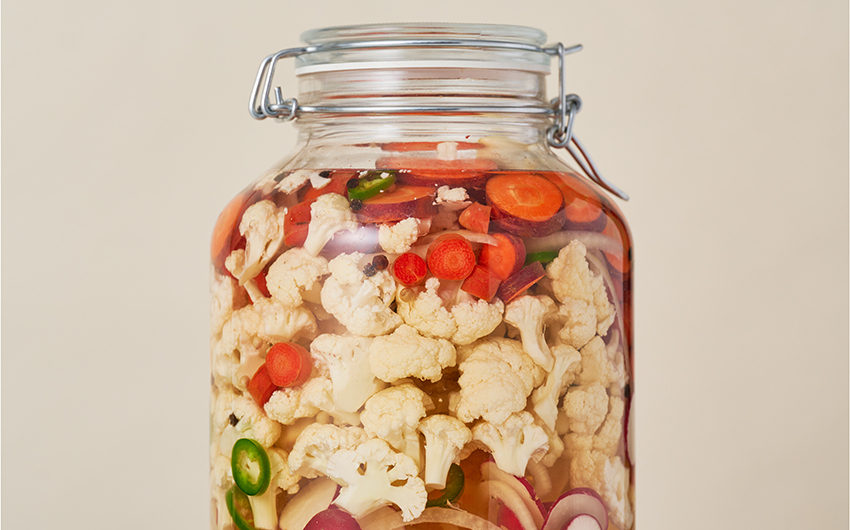
Lacto-Fermented (Pickled) Vegetable Medley
This is a great snack, side dish or condiment for any meal and is a great way to get fermented veggies in your diet! This recipe is an example of how to preserve a variety of vegetables through fermentation; once fermented, these pickled veggies are good for about six months in the fridge, extending the shelf-life of fresh vegetables considerably. You can make this as spicy or as mild as you'd like by changing the amount of peppers. This gives you the basic formula for brined vegetables so you can get creative and experiment with other vegetables you have on hand—simply use the same ratio of salt to water in the brine and go from there.
More Stories by This Author

Edible in your mailbox
