


Sumac is a a beloved old-world spice of the Middle East and Mediterranean used since ancient times to add tartness and zest to a variety of dishes. It’s also a fun thing to forage in the wild of the Midwest if you know where to look!
There’s something about foraging that’s even more satisfying than harvesting out of your garden, and certainly way more satisfying than grocery shopping. It’s not just that foraging is free (if you call hands stinging from nettles or arms scraped up from bushwhacking to pick wild berries “free”)—although I do love free stuff. For me, it’s that foraging gets my dogs and me out in the woods and wild meadows. I slow down and breathe deeper and see new things. It feels primal and simple and often downright magical. Foraging provides not only free goods, but also a little respite in nature between the all the hubbub and technology and rush involved in running a business and just navigating life these days.
Here in the Upper Midwest, there are lots of wonderful things we can forage through the seasons—mushrooms, watercress, ramps, nettles, edible flowers, berries, chickweed, dandelions—and all of these help define our regional cuisine. Because of our climate, exotic herbs and spices obviously aren’t on that list. You can’t go for a hike in the woods and find black pepper or cardamom, or take a walk through the back pasture and find rosemary or bay leaves. Nor can you grow them unless you have a heated greenhouse or big sunny window and a green thumb.
The exception is sumac—a beloved old-world spice of the Middle East and Mediterranean used since ancient times to add tartness and zest to a variety of dishes. Sumac has also always been a common medicine and wild edible of the Eastern and Great Plains Native Americans, used internally to treat sore throats, stomachaches and fevers, and topically as an astringent compress for cuts and burns. Most modern Midwesterners have never heard of sumac as a spice, and usually you have to go to a Middle Eastern specialty grocery or a well-stocked spice shop like Penzeys to even find it, which is exactly why it’s such an exciting thing to forage in my book.
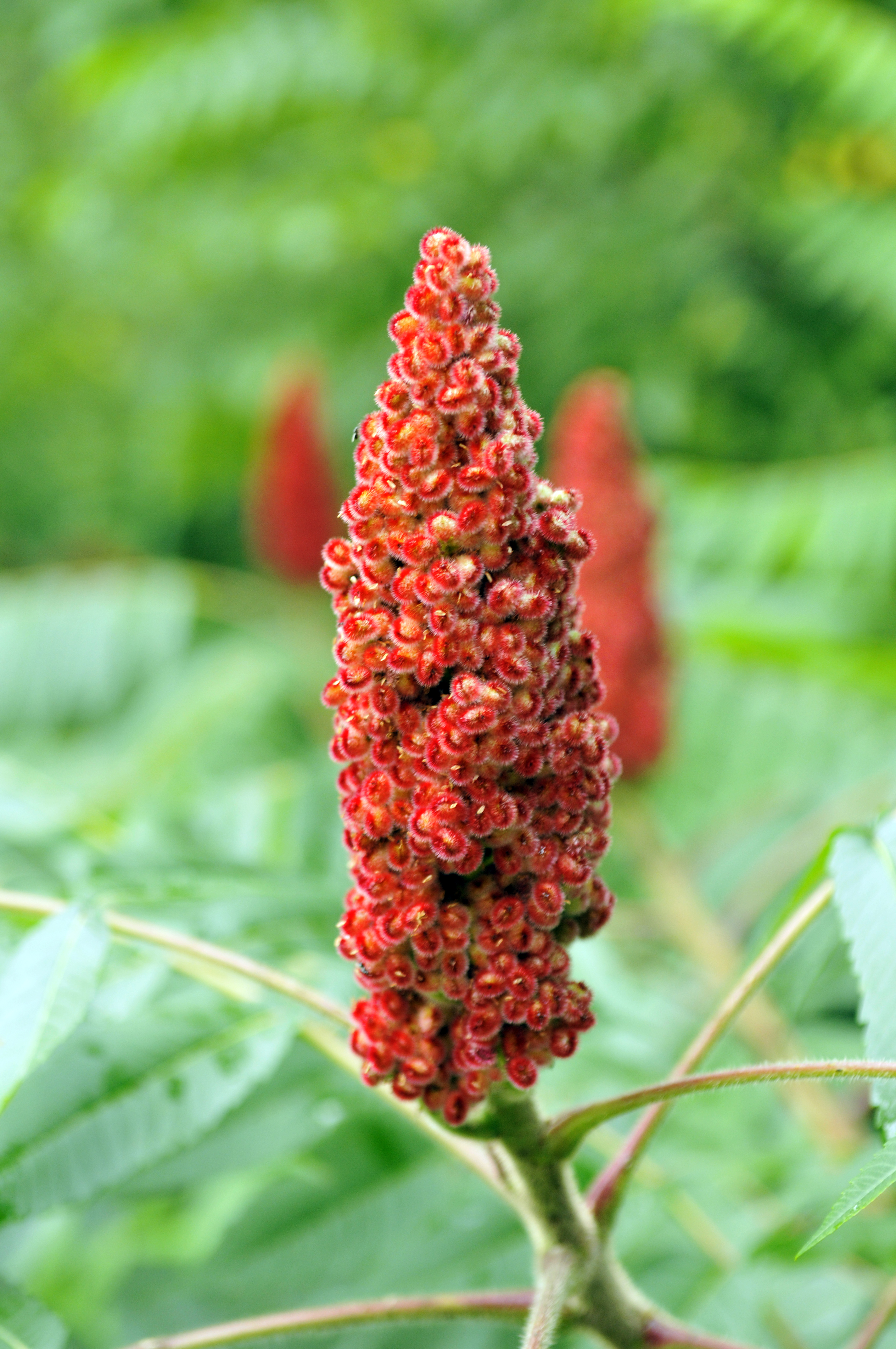
Now, before you go and say sumac is poisonous, let me stop you. It’s a common misconception. There is a type of poisonous sumac that grows in our region that, when touched, causes skin rashes similar to poison ivy, but it has loose clusters of white (never red) berries and only grows in swamps and wetlands. Edible sumacs, in contrast, always have bright, deep red berries that grow in tight, terminal clusters called “cones” or “bobs” that resemble the flames of a torch.
Staghorn sumac, Rhus typhina, is probably the most common in our parts and the easiest to identify with its velvety young branches resembling the velvet-textured new antlers of stags. But any of the several species of red-fruited sumac are edible and very much not poisonous. However, sumac is closely related to mangoes and cashews, so if you have an allergy to either of those, you probably should avoid it.
Red-fruited sumacs tend to grow in tight groups in transition areas between woods and fields and stand about 10 to 20 feet high. They start to set fruit in June or July, with the cones ripening in August. The cones are made up of tight clusters of hairy red fruit, called “drupes,” that enclose a hard seed. The hairs are covered in acids that cause sumac’s defining tart flavor.
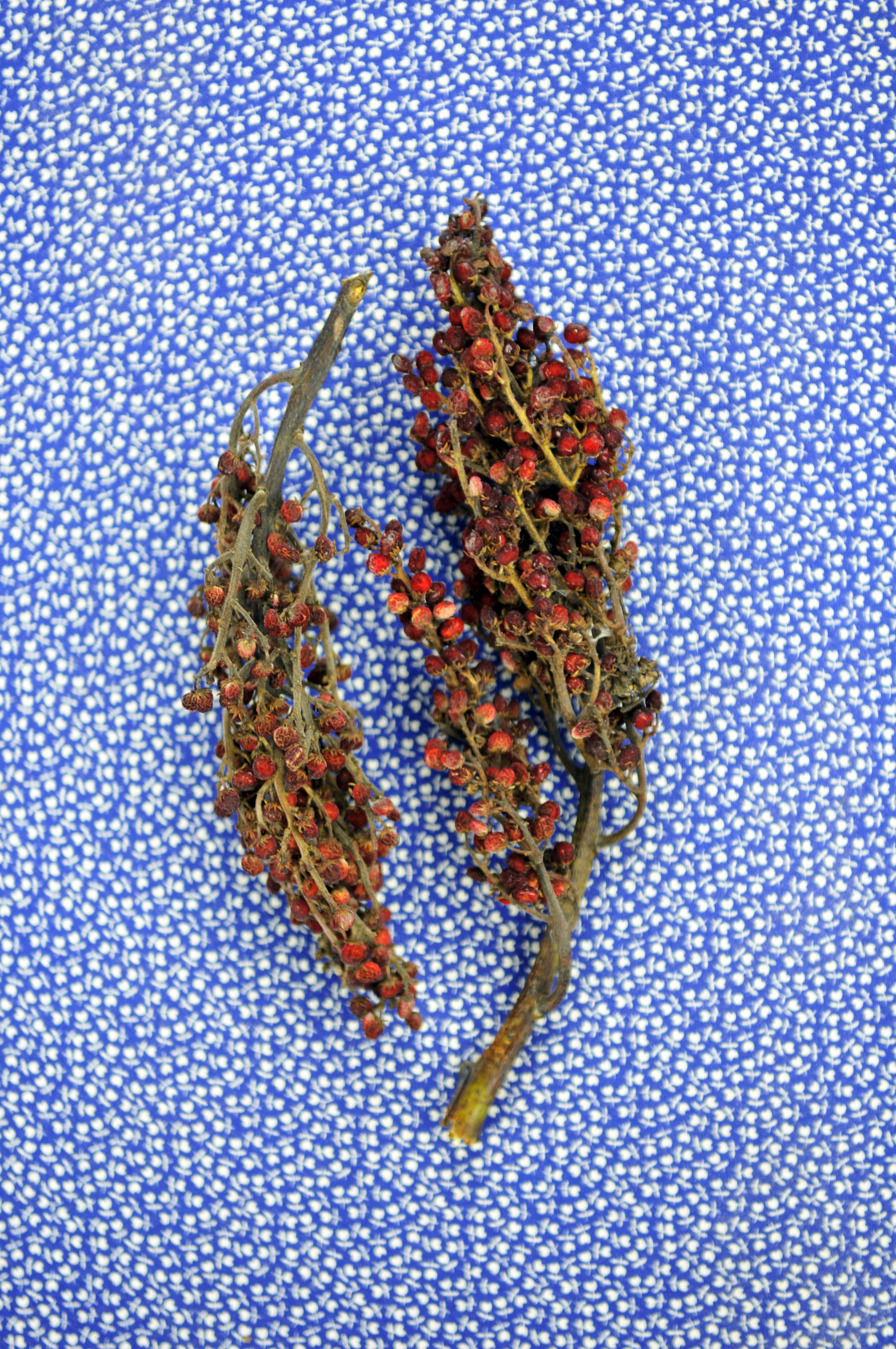
Sumac cones will dry right on the bushes and even hold into winter, but they are best harvested as soon as possible after they ripen. If left too long on the bush, rain will wash away much of the tasty acid, bugs can move in and, in humid areas, so can mold. You can test sumac drupes for ripeness by rubbing your fingers on them—if your fingers turn deep red, get slightly sticky and taste nice and tart, the sumac is ready to harvest by cutting whole cones with garden shears.
USING YOUR FORAGED SUMAC
Make a lovely pink “sumac-ade” by rubbing three or four fresh cones between your hands or gently macerating them with a potato masher or heavy pan to bruise them a bit. Then cover the sumac with a quart of cold water and let steep for a half hour to a few hours (or put in a covered quart jar and place in the sun for 15 to 30 minutes to make a quick sun tea). Using hot water will release the natural tannins in the seeds and give the drink an unpleasantly bitter, astringent quality, so stick with cold water. Remove the cones and strain the liquid through several layers of cheesecloth or a paper coffee filter to remove the fine hairs and other debris, then sweeten to taste with maple syrup, agave, honey or simple syrup.
To make sumac-infused booze, pack a couple cones into a quart jar and cover with high-proof vodka, gin, rum or whiskey. Let infuse for 8 to 24 hours, tasting here and there to achieve the flavor intensity you like.
It’s a bit more work to turn wild-harvested sumac into a powdered spice, but it’s worth it to have a stash available whenever you need it. It will keep for a year or two, or you can share with friends and family. First, you need to dry it. If you have a well-ventilated, dark-ish place, you can dry the cones in paper bags hung from the rafters—it’ll take two to three weeks. I live in a humid valley, so sumac tends to mold instead of dry that way. A more reliable and much quicker way is to break them up a bit with your hands and dry them in a food dehydrator or a warm oven (an oven with a pilot light is ideal, or on its lowest setting as long as it doesn’t go above 125 degrees). Overnight ought to do it.
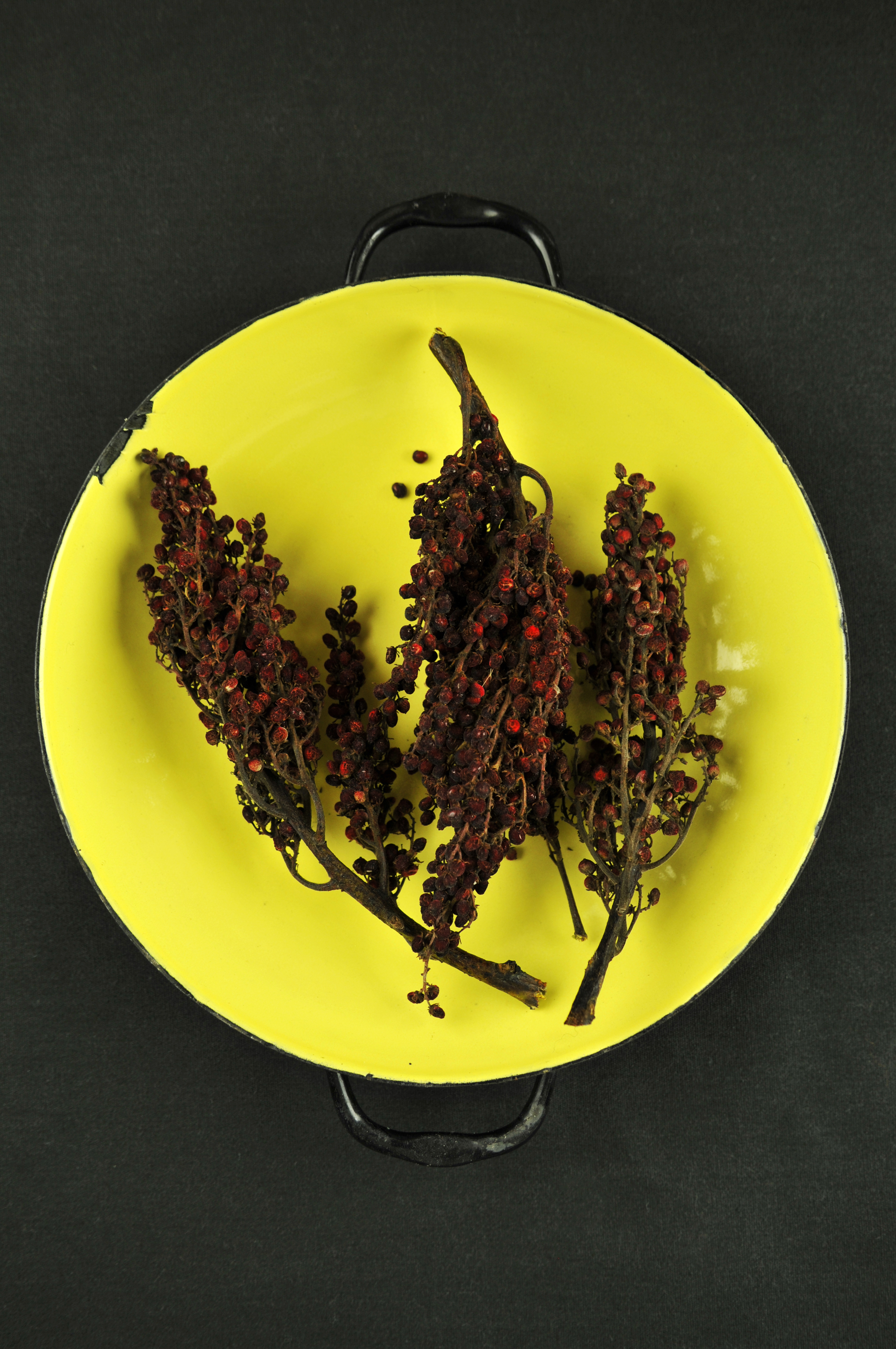
After they’re dried, pull off and toss any large stems. Pulse the remaining mix a few times in a food processor or blender to chop everything up a bit. Shake or press this coarse mixture through a medium strainer (not super fine mesh) set over a bowl. You can use the bigger seeds and debris left in the strainer to make a batch of sumac-ade or an infusion. Take the strained bits in the bowl and pulse them some more in a blender or spice grinder to form a coarse powder. Store this in an airtight jar for a year or two.
Sumac is probably best known on our side of the pond as the main component of za’atar, the Lebanese spice mix that combines sumac, toasted sesame seeds, thyme, oregano and/or marjarom, and salt. (Other variations of za’atar exist throughout the Middle East and northern Africa but refer mostly to the herbs and don’t always include sumac.) Za’atar is most commonly eaten with bread and olive oil, but it is also mixed with yogurt or sprinkled on top of hummus, chicken, vegetables and fish. I love to make up a big batch of za’atar and keep it in a jar in the fridge to always have on hand.
FEATURED SUMAC RECIPES:


Featured Recipes

More Stories by This Author

Edible in your mailbox
